Senior Multimedia Reporter
The National Trust of Trinidad and Tobago has launched a nationwide programme to assess the condition of more than 300 known archaeological sites as it races to document and protect the country’s ancient heritage from development and environmental change.
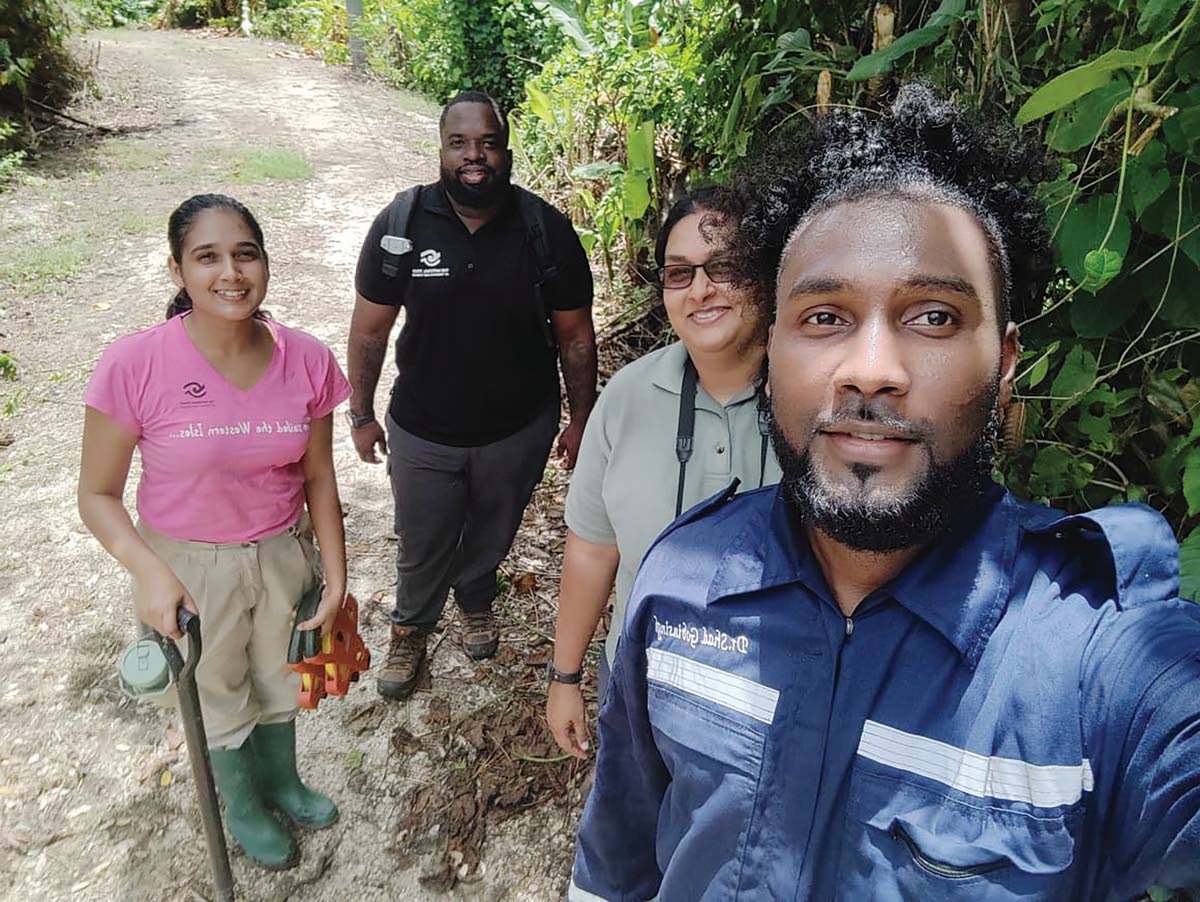
The initiative, which began with field assessments in the Ortoire and Mayaro region, will see archaeologists revisit every recorded site across Trinidad and Tobago, some of which have not been professionally examined for decades.
Senior Heritage Preservation and Research Officer and archaeologist Ashleigh John Morris said the project marks one of the most comprehensive archaeological assessment programmes undertaken in recent years.
“Archaeology has been, I would say, dormant in the country for many years,” Morris said.
“Certain sites have not been visited by archaeologists or heritage professionals for some time.”
He said the National Trust is seeking to change that by systematically revisiting each site.
The exercise, he explained, is about much more than updating records.
“We’re doing this not just to gather data for ourselves, but also to potentially put more information out there for the public.” However, Morris said the exact locations of archaeological sites would not be widely publicised because of concerns they could become targets for looting or vandalism.
“We need to be a bit cautious about the exact locations of sites because that could put them under threat.”
Instead, he said, the aim is to increase public awareness of Trinidad and Tobago’s rich archaeological heritage while ensuring vulnerable sites remain protected.
According to the National Trust, there are more than 300 known archaeological sites throughout the country.
“We’re talking about from Chacachacare straight down to Icacos, so all different ends of the spectrum. Tobago has many archaeological sites as well.”
He said the Trust intends to inspect each location to determine whether it still exists, assess its condition and record any changes since it was first documented.
“We aim to check every single one of them and assess their integrity, assess whether they still remain, because there might be instances where they have been completely destroyed by development. We hope that is not the case for the majority of them.”
Morris said the work recently carried out in the Ortoire and Mayaro district represents the beginning of the nationwide exercise.
He noted that one of the first challenges facing archaeologists is simply locating sites first recorded decades ago.
Many were documented before the advent of Global Positioning System (GPS) and Geographic Information System (GIS) technology. Morris explained: “So some of them we still have to locate using directions and, if you’re talking about 40 to 50 years ago, those directions may have changed and there may have been development in the area.”
Once located, archaeologists record precise GIS coordinates before evaluating the site’s condition. “We’re assessing the integrity of the site, whether it still exists, what type of material we can find there and any changes that have occurred during the intervening period.”
Although Ortoire and Mayaro were selected as the starting point, Morris said the region has long been recognised for its archaeological significance.
“That coastline is synonymous with travel from the South American mainland to Trinidad.
“There are multiple habitation sites dotted along that coast and evidence of that.”
He said the National Trust also works closely with other state agencies to ensure archaeological sites are considered before development takes place.
While some archaeological sites are located on active agricultural lands, Morris acknowledged the need to balance heritage preservation with farming.
“Agriculture is an issue because, of course, when you’re ploughing, you are disturbing the archaeological record,” he said. Rather than preventing agricultural activity, Morris said the objective is to identify the country’s most significant sites and ensure planning authorities are aware of them.
“We want to ensure that the most important archaeological sites are identified, and we also work very closely with the Town and Country Planning Division to ensure it has the locations of these sites.”
He noted that the National Trust has also demonstrated its commitment to preserving significant sites through land acquisition where necessary.
Morris pointed to the Banwari Trace site in south Trinidad, recognised as one of the Caribbean’s most important archaeological discoveries.
“The Banwari Trace archaeological site was identified as an extremely important site and, at that point in time, the National Trust and the Government of the day worked with the landowner and we were able to preserve the site.”
He said the National Trust currently manages three major heritage properties directly—Mille Fleurs, Banwari Trace and the Five Islands, including Nelson Island—all of which possess significant historical or archaeological value.