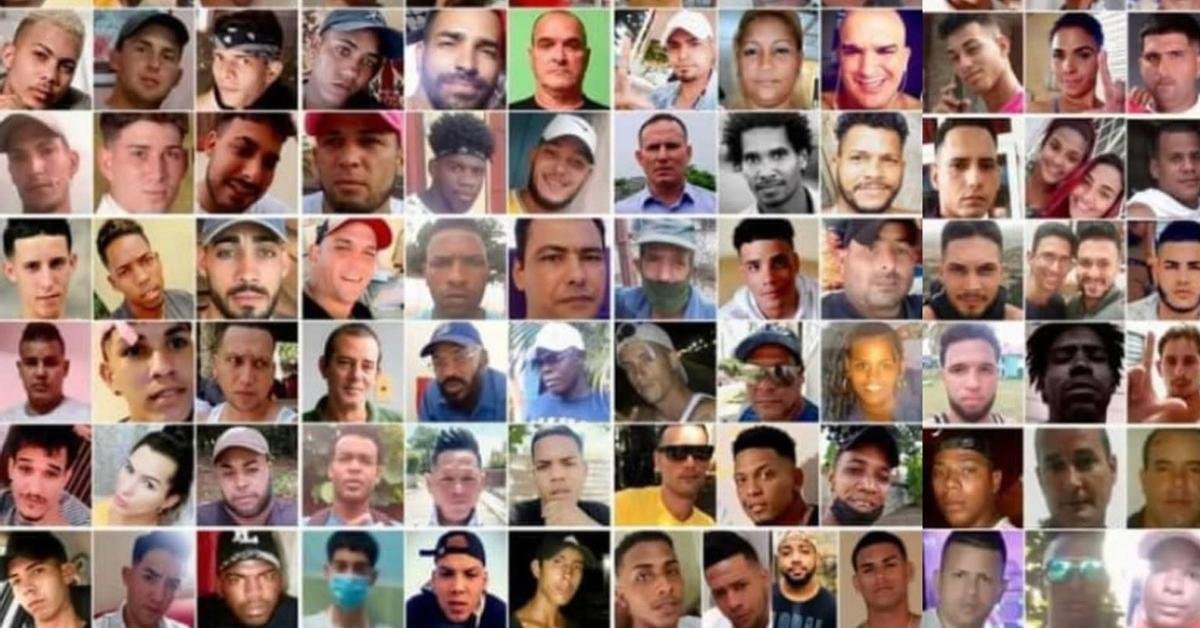
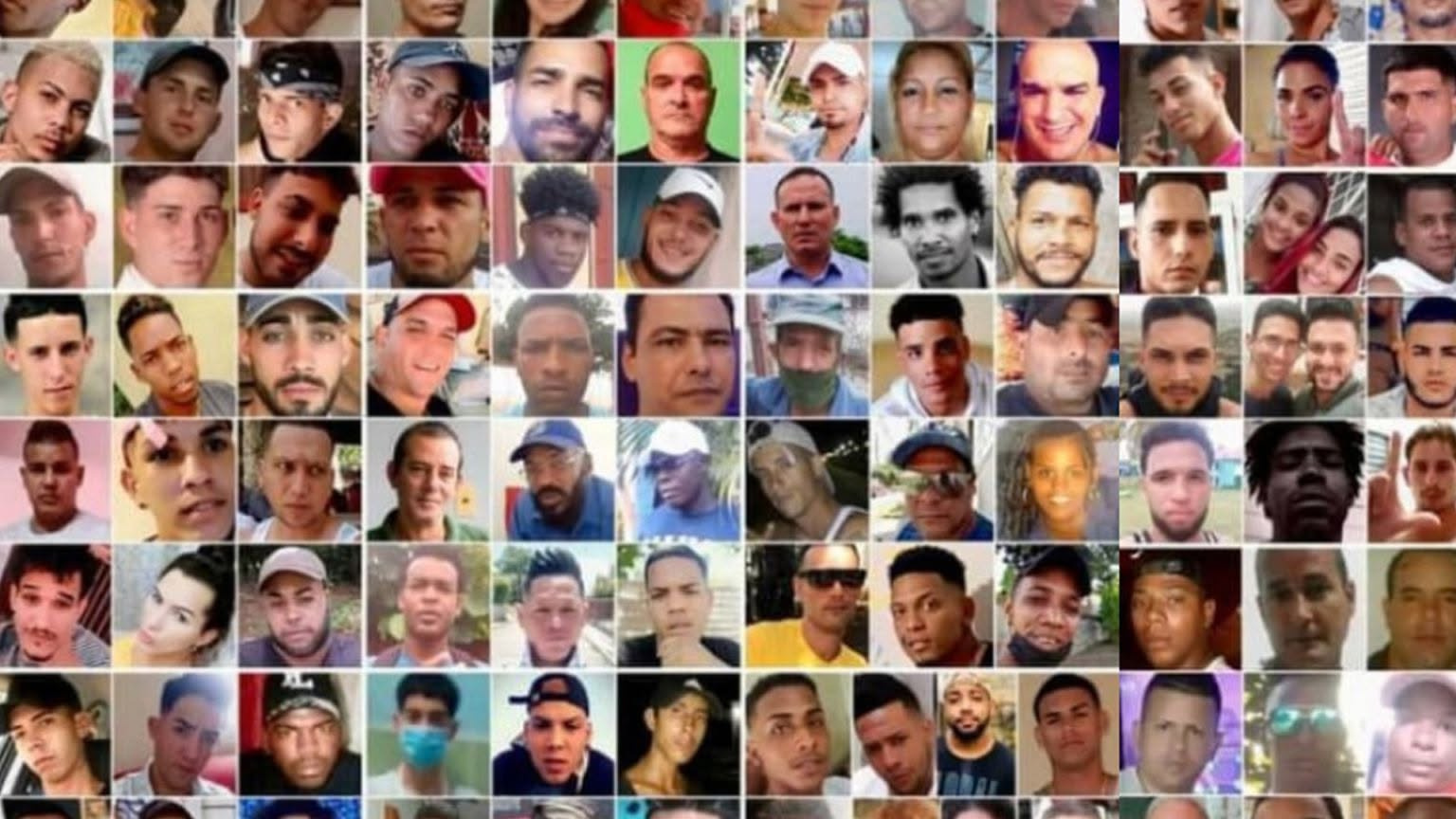
Miami/When those who govern Cuba today are asked to release twelve hundred Cubans imprisoned for exercising their rights to think differently or protest against some injustice, they allege that there are no political prisoners in their prisons, even though the reasons for which they were sentenced were political. They did not kill anyone, they did not steal or commit any crime among those considered common. They were convicted only for criticizing the government or demonstrating in the streets with the desire for a better Cuba, and they have already been in prison for five years. On the other hand, the assailants of the Moncada barracks, after having caused numerous deaths, were amnestied two years after being imprisoned, a comparison that leads one to wonder which of the two dictatorships has been more brutal.
What would be considered normal in any democratic country is a crime in Cuba. Even other dictatorships would accept calling them “political prisoners.” But in Cuba they have invented a new category: “counterrevolutionary prisoners.” If a foreigner who lived in Cuba were asked in his country what that means, he would not hesitate to translate it as “political prisoner in Cuba.” Therefore, it is nothing more than a semantic trick.
No revolution is here to stay, but only to generate new social structures.
The term contains a double contradiction: on the one hand, if it designates someone who opposes a revolution and the Government maintains that it is not the same as “political prisoner”, it is equivalent to stating that a revolution has nothing to do with politics. What is it then? A natural phenomenon like a cyclone or an earthquake, something not caused by the hand of man?
On the other hand, there cannot be counterrevolutionaries if there is no active revolution. According to the Academy of Language, “revolution” means profound changes in the structures of a national community, and these processes are not eternal, but generally very short periods, lasting a few months or a few years.
I remember that, when many Soviets began to arrive in Cuba, if anyone was asked how the revolution in their country was going, they did not understand the question; not because of the difference in languages, but because of the concept itself. “Which revolution?” And when they finally understood, they responded: “Oh, no; that was a long time ago, with Lenin.” No revolution is here to stay, but only to generate new social structures. When these are generated, there is no more revolution, because it has already fulfilled its purpose.
So what needs to be done to solve those problems? Well, another revolution.
For example, in Cuba, the so-called Revolution of 1930 triumphed on September 4, 1933 and extended, under the Grau-Guiteras administration, until the rise to the presidency of Carlos Mendieta, in January 1934.
But, although it is said that that short time was due to the betrayal of the new head of the Army, Fulgencio Batista, the profound changes produced in those months later inspired the Constitution of 1940, which Batista himself repealed twelve years later while raising, paradoxically, the flag of the same revolution that he had betrayed, that of September 4.
Something very similar happened with the revolution of ’59. These changes, with the manifest purpose of empowering the people in “a revolution as green as the palms”, were those of the Agrarian Reform, the Urban Reform, the interventions of banks and industries… and all of this in a very few years, until all the large private owners were expropriated. Finally, in 1968, they also dispossessed that own people in the so-called “revolutionary offensive.” Badly named because, in relation to what was originally pursued, it was not a revolutionary measure but a counter-revolutionary one. And what was left after all that? Well, a totalitarian dictatorship and misery, a lot of misery. Was there any profound change after that? None: only reforms, many reforms that have resolved nothing until today, because “reform” means changing the form, not going to the roots of the problem. So what needs to be done to solve those problems? Well, another revolution.
Those who today want profound changes in these structures of society are the opponents, especially those political prisoners they call “counterrevolutionaries.”
But they, despite everything, continue talking, in the present, about that revolution that no longer exists because it was betrayed by themselves. They did something similar to what Batista did, but with greater cruelty: they sent many of their fellow fighters to the shooting pits or dungeons in the name of that no longer existing revolution, as if those profound changes were still being made.
So, who are the true counterrevolutionaries and who are the revolutionaries? Because those who today want profound changes in these structures of society are the opponents, especially those political prisoners that they call “counterrevolutionaries” in that parallel reality that they have created to justify all their horrors to the world.