Havana/In recent days, the Cuban regime unleashed a day of strong repression against activists, independent journalists and opponents, as popular discontent over the blackouts increases and another anniversary of the 11J protests approaches. The influencer Anna Bensi was detained for almost eleven hours and threatened with prison for her videos, Leonardo Romero Negrín was subjected to a criminal case for participating in a cacerolazo in Central Havana and the former political prisoner Alexander Díaz Rodríguez reported torture after being held incommunicado.
“It’s the same as always, trying to silence, repress, threaten,” Bensi summarized on Thursday night, shortly after returning home. The young woman, whose full name is Ana Sofía Benítez Silvente, had entered the Alamar Police station at 10 in the morning and did not leave until nine at night.
During the first four hours, according to in a videoremained sitting in the main room of the unit without anyone attending to her. She was then questioned by a man and a woman, who again spoke to her about the US embargo, the sanctions against Cuba and the possible consequences of her publications. The agents also insisted that he should change his videos and dedicate himself to “other types of content.”

/ Facebook / Screenshot
Before releasing her, the authorities forced her to give a statement and sign a warning, or a “prophylactic work” document, as she described it. The text mentioned article 268 of the Penal Code, which punishes anyone who publicly incites to commit a specific crime and aggravates the penalties when the alleged instigation is carried out through social networks or the media.
The instructor assured him that his videos contained incitements to public disorder and that, if these came to fruition, he could end up in prison. Bensi responded in his statement that he has never asked anyone to commit a crime. “I simply express myself and those who identify themselves, well congratulations,” he reiterated later.
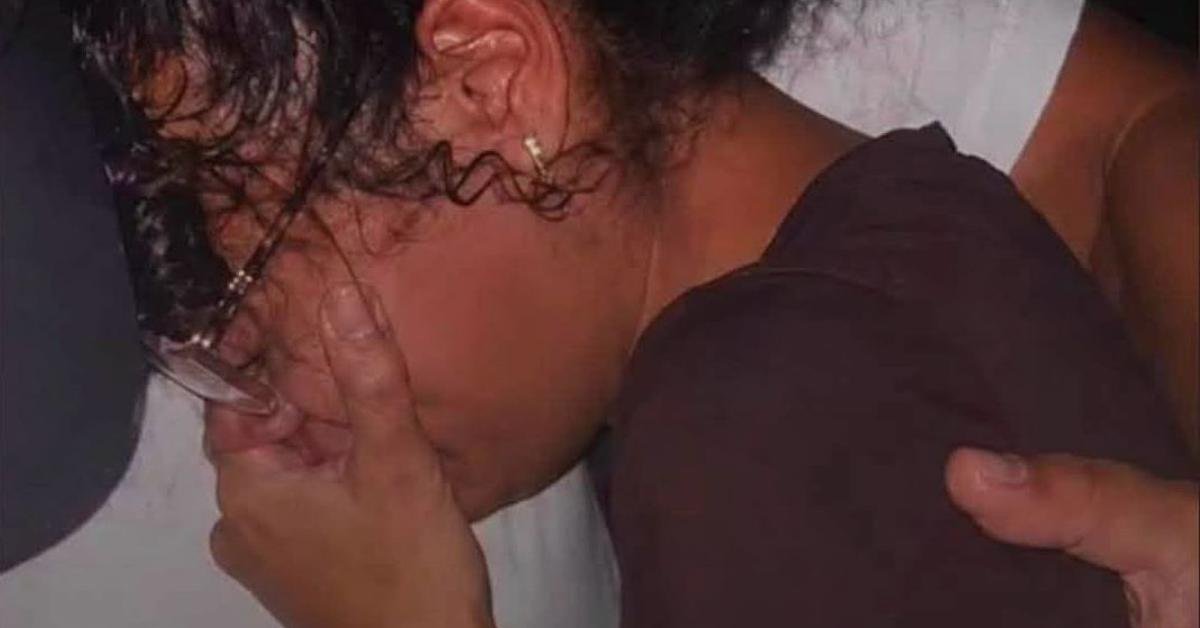
The influencer requested a copy of the document she had signed, but the agents refused to give it to her. The prolonged confinement physically affected the young woman, who suffers from anemia and explained that she was not able to eat properly during the day. When he left the station, he burst into tears as he met family, friends and activists who had waited for hours in front of the place. “I want to clarify that it is a cry of helplessness,” he said. When he returned home, he found another blackout and had to start cooking with charcoal.

/ Facebook / Lisbeth Moya González
While State Security threatened the influencer for expressing social unrest on the internet, Leonardo Romero Negrín remained detained for having expressed it in the street. The activist was violently arrested on Wednesday night on the corner of Ánimas and Consulado, after joining a cacerolazo of residents of Central Havana against the prolonged power outages and lack of water.
Relatives and friends remained for hours outside the Zanja police station without receiving clear information. The authorities successively postponed the moment when they would offer news about the detainee, while Justicia 11J, the Academic Freedom Observatory and other organizations demanded his release.
Romero Negrin left the station this Friday with a fine of 2,000 pesos, according to journalist and researcher Lisbeth Moya González. During the previous hours, she herself had warned that the authorities had opened a criminal file against her for the alleged crime of public disorder, after her participation in the cacerolazo in Central Havana.
The repressive offensive also had another immediate objective: to prevent activists, opponents and independent journalists from attending the reception at the residence of the head of the United States mission in Havana, Mike Hammer, for the celebration of the 250th anniversary of American independence.
The Editorial of 14ymedioin Nuevo Vedado, woke up under siege to prevent Yoani Sánchez and Reinaldo Escobar from leaving. Camila Acosta, a collaborator with CubaNet and ABC, also reported surveillance in front of her home. Other activists, such as Marthadela Tamayo and Osvaldo Navarro, were detained to prevent them from attending the meeting.
The most serious case known so far is that of Alexander Díaz Rodríguez, former political prisoner of 11J, who reported having remained incommunicado for almost three days.
The United States Embassy reacted publicly to the operatives. “What do you think of State Security threatening Cubans who attend or come to work at events, such as the celebration of US Independence Day?” he asked on his networks. The legation added that many guests had denounced that the regime prevented them from attending the Freedom250 event and questioned: “Why is the regime so bothered by ordinary Cubans participating in an event that celebrates freedom?”
The most serious case known so far is that of Alexander Díaz Rodríguez, former political prisoner of 11J, who reported having been held incommunicado for almost three days after being detained while on his way to the US residence. “They kidnapped me. They stripped me naked. They beat me. They pointed a gun at me simulating Russian roulette,” he said in a testimony spread by Prisoners Defenders.
According to his complaint, he was transferred between several police units, beaten repeatedly, forced to strip naked and abandoned in a mountain area with José Elías González Agüero. Díaz Rodríguez, released after serving almost five years in prison for his participation in the 11J protests, stated that during his imprisonment he lost about 50 kilos and developed thyroid cancer, hepatitis B, anemia and severe malnutrition.
In Pinar del Río, activists Lisandra Orraca and Irina León were detained in their homes. In that same province, Dagoberto Valdés and Yoandy Izquierdo, from the Centro de Estudios Convivencia, had been harassed two days before to prevent them from traveling to Havana after receiving Hammer’s invitation. Also summoned with an “official warning” were the brothers Betty and Abel, from the Fuera de la Caja project, and Rolando Fidel Pérez, known as the Crier of Christ.