The American space agency NASA plans to launch a mission to rescue the Swift space telescope on Tuesday, which is rapidly losing altitude due to increased solar activity.
The rescue operation, worth 30 million dollars, will begin with the launch of a robotic spacecraft that will try to lift the Swift telescope into a higher orbit and allow it to continue scientific research, AP reports.
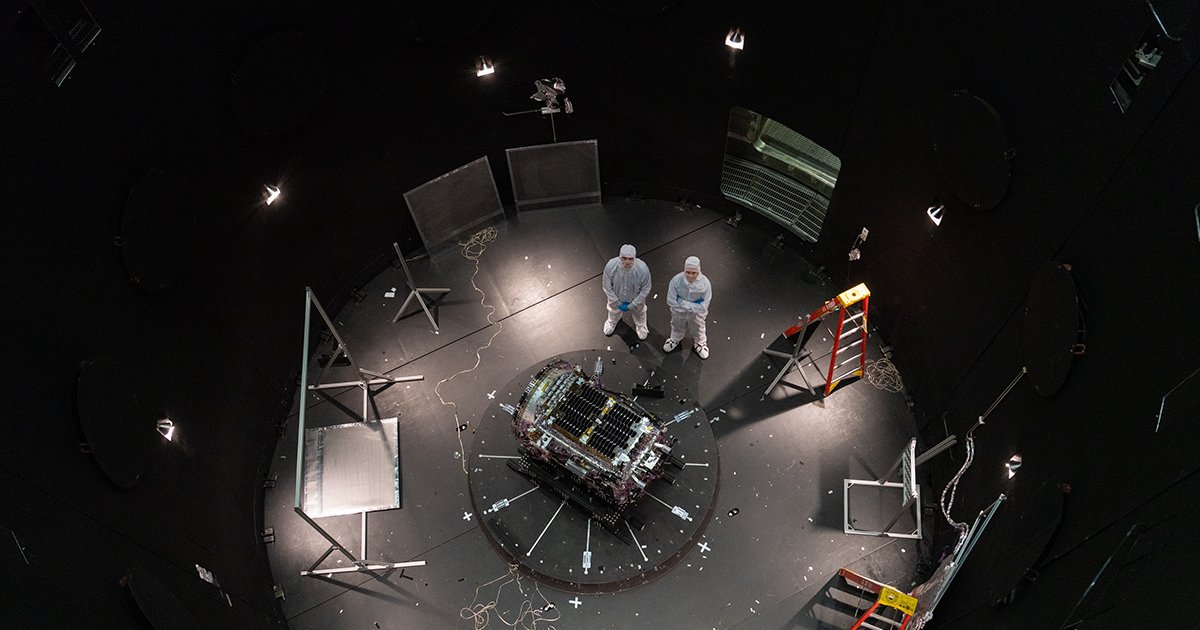
NASA hired the startup company Katalyst Space Technologies to implement the mission, whose autonomous spacecraft “Lift”, equipped with three robotic arms, will be launched by the “Pegasus” rocket from an airplane over the Marshall Islands in the Pacific.
According to the mission plan, the spacecraft will need about a month to catch up and capture the telescope, and then a few more months to raise its orbit from the current 360 to about 600 kilometers.
If the operation is successful, Swift would be operational again in September.
The “Lift” spacecraft, about the size of a small refrigerator, has solar wings with a span of 12 meters and three robotic arms with grippers that will allow the telescope to be accepted, although it was never designed to be serviced.
The mission could serve as a model for the rescue of other space observatories, including the Hubble telescope, which is also gradually losing altitude due to increased solar activity.
The Swift telescope, launched in 2004 to observe gamma rays and other powerful cosmic radiation, has been rapidly losing height in recent years due to increased solar activity.
For the mission to succeed, it is necessary for the telescope to remain above a height of 300 kilometers, while it is estimated that without intervention it could reach that critical limit as early as October.