Bhutan began construction of temple complex in Lumbini
Bhutan has officially begun construction of its Nu. 160 million (~US$1.69 million) temple complex in Lumbini, Nepal, strengthening cultural, religious and diplomatic ties while enhancing the global Buddhist pilgrimage destination.
On 28 June 2026, Bhutan has officially begun construction of its long-awaited temple complex in Lumbini, Nepal, marking a significant milestone in the country’s efforts to strengthen cultural, religious, and diplomatic ties with its Himalayan neighbour.
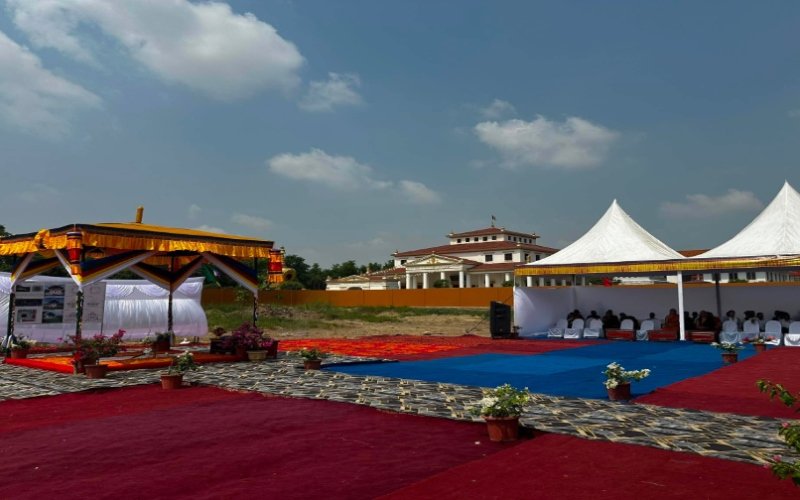
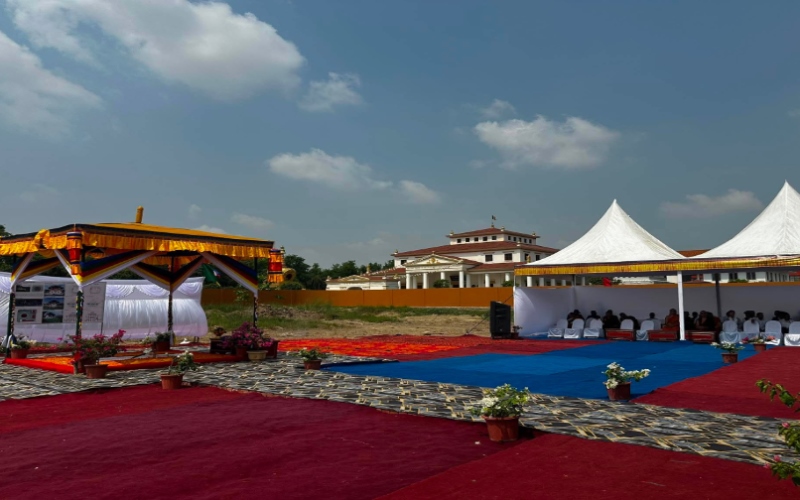
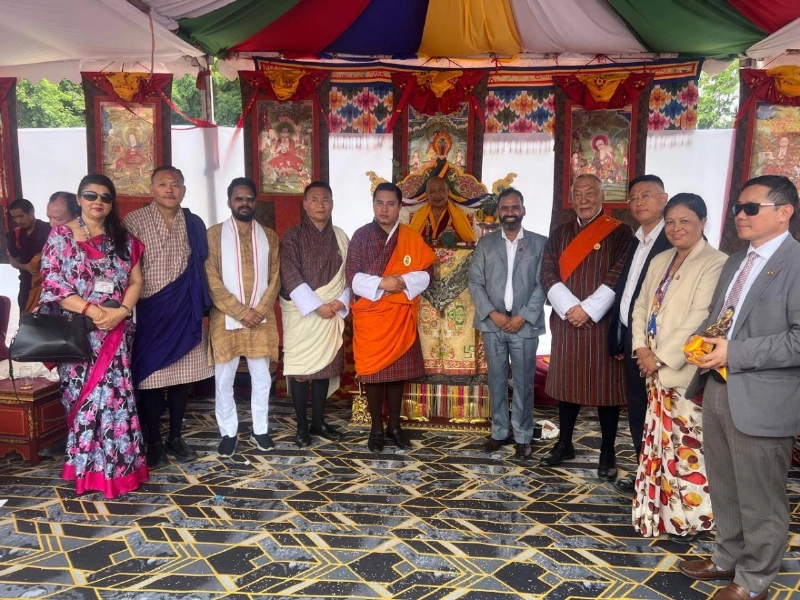
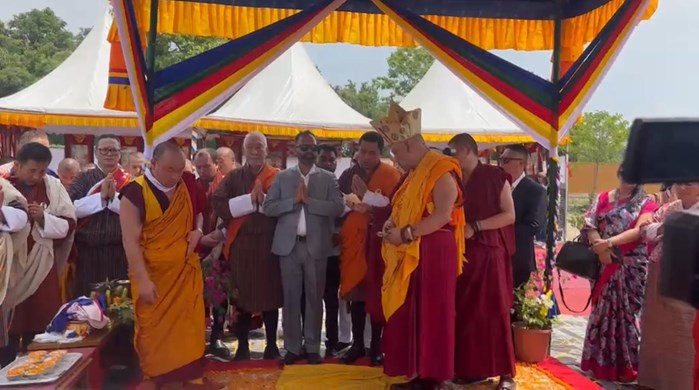
The Salhang-Tendrel, or ground-breaking ceremony, was held on Friday at the Sacred Garden in Lumbini, the birthplace of Lord Buddha. Senior government officials and religious leaders from Bhutan and Nepal attended the ceremony, highlighting the importance of the project for both countries.
The ceremony was presided over by His Eminence Dorji Lopon and senior monks of Bhutan’s Central Monastic Body. Bhutan’s delegation was led by Home Affairs Minister Lyonpo Tshering, while Nepal was represented by Minister for Culture, Tourism and Civil Aviation Khadga Raj Paudel, who also chairs the Lumbini Development Trust.
A Bhutanese temple in the birthplace of Buddha
The Bhutan Temple Complex will be built on an 80 metre by 80 metre plot in the Western Monastic Zone of Lumbini. The site is located beside the central canal and the main road leading to the Maya Devi Temple, the most sacred site within the Lumbini World Heritage area.
The land is the final remaining plot allocated under the original Lumbini Development Master Plan prepared by renowned Japanese architect Kenzo Tange.
Fully funded by the Royal Government of Bhutan at an estimated cost of Nu. 160 million (~US$1.69 million) , the complex will feature traditional Bhutanese Dzong architecture centred around a three-storey temple inspired by the Utse of Tango Monastery. The development will also include residential quarters for monks and facilities for pilgrims and visitors.
Preparatory work, including site clearance and construction of the boundary wall, has already been completed following the signing of the land lease agreement between Bhutan and the Lumbini Development Trust in June 2025.
Construction is expected to take about two years and is targeted for completion in 2028. The project is being implemented by Bhutan’s Department of Culture and Dzongkha Development under the Ministry of Home Affairs.
A historic milestone for Bhutan
Speaking during the ceremony, Magsud Ozme, Director General of the Department of Culture and Dzongkha Development, described the project as a landmark achievement for Bhutan.
“We are gathered here to seek the blessings of the Earth Goddess to begin the construction of the new Bhutanese temple within the Lumbini premises. This project will connect Bhutanese Buddhist tradition and culture with the birthplace of Buddha.”
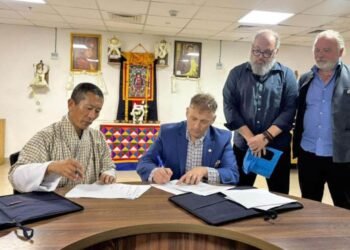
She noted that the project fulfils the commitment made following the signing of the Memorandum of Understanding between Bhutan and the Lumbini Development Trust last year.
Ozme said the completed monastery will showcase Bhutan’s traditional architecture, religious art and cultural heritage, allowing pilgrims and visitors from around the world to experience Bhutanese Buddhist traditions in Lumbini.
“As a Buddhist nation, we want to showcase our unique architecture and reverence for Buddha here. This will help establish Lumbini as an even more international and multicultural Buddhist center.”
Strengthening Bhutan-Nepal cooperation
Alongside the foundation stone-laying ceremony, senior officials from Bhutan and Nepal held bilateral discussions focused on tourism, cultural exchange and future cooperation.
Nepal proposed the introduction of direct flights between Paro International Airport and Gautam Buddha International Airport in Bhairahawa. Nepali officials said such a connection could support a regional Buddhist pilgrimage circuit linking Paro, Lumbini and Bodhgaya, making travel easier for pilgrims across South Asia.
The Nepali delegation also requested Bhutan to consider reducing or waiving the Sustainable Development Fee (SDF) for Nepali citizens visiting Bhutan, citing the close historical, cultural and religious relationship between the two countries.
Responding to the proposals, Bhutan’s Home Affairs Minister Lyonpo Tshering said the requests would be taken forward for discussion at the appropriate government levels.
He also thanked the Government of Nepal for allocating land and supporting the construction of the Bhutanese monastery in Lumbini. He reaffirmed Bhutan’s commitment to strengthening cooperation in preserving Buddhist heritage, promoting pilgrimage tourism and expanding people-to-people exchanges.
A shared Buddhist heritage
Once completed, the Bhutan Temple Complex is expected to become an important spiritual and cultural landmark within Lumbini, one of the world’s most significant Buddhist pilgrimage destinations.
The project reflects Bhutan’s longstanding commitment to preserving Buddhist traditions while strengthening its friendship with Nepal. It is also expected to contribute to local tourism, employment and cultural exchange, while offering visitors a deeper understanding of Bhutan’s distinctive Buddhist heritage in the birthplace of Lord Buddha.