The parties “Alternative Force and Salvation of Moldova” and “Greater Moldova”, as well as the party “Heart of Moldova” lost the dispute in the Constitutional Court. They challenged the legislation that allowed the Ministry of Justice to submit a request to the court to suspend the activities of these parties. In the case of the “Alternative Force and Salvation of Moldova” and “Great Moldova” parties, the ministry considered them to be the successors of the unconstitutional “Shor” party, and in the case of the “Heart of Moldova” – on suspicion of illegal financing.
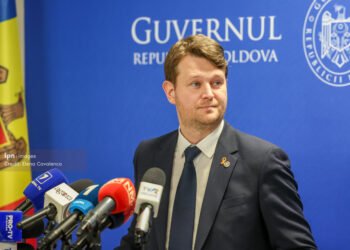
Commenting on the decision of the Constitutional Court at a briefing on June 30, the President of the Constitutional Court, Domnica Manole, recalled that political parties challenged the articles of the law regarding the status of the successor of a party declared unconstitutional, as well as the criteria for establishing this status and limiting the activities of political parties as an interim measure. Let us note that the parties sent requests to the Constitutional Court separately, but the Court decided to make a general decision.
The Constitutional Court recognized that assigning the status of successor to a party declared unconstitutional is in accordance with the Constitution. Manole explained that Parliament prohibited the creation and registration of a new political party and the use of an already registered political party to continue or resume as a successor party the activities of a party declared unconstitutional.
“Parliament considered that such activity constituted an abuse of the right of political association. In this regard, the parliament regulated the procedure for identifying political parties that are the successors of a party declared unconstitutional, determined the circumstances that could be taken into account by the court, and provided a time frame for assessing the behavior in question,” she noted.
According to her, the Constitutional Court considered that parliament did not introduce a new category of restrictions on freedom of association, but clarified the constitutional requirement for the fair exercise of fundamental rights. It established criteria that authorities and courts must take into account. These criteria do not apply on their own and do not automatically confer such status. They must be considered in their entirety, in context and in connection with the grounds that led to the recognition of the unconstitutionality of the party.
“The court found that these criteria were formulated with sufficient precision and objectivity, since they involve an analysis of specific facts, such as political programs, public statements or joint activities. In particular, the use of the wording “form a totality” demonstrates the fact that parliament did not allow the establishment of succession on the basis of isolated actions, but demanded a comprehensive assessment of the behavior of a political party. The criteria are predictable in terms of their consequences and satisfy the condition of legality as long as they are interpreted as symptomatic elements or signs of continuity,” Manole said.
She believes that by prohibiting the continuity of parties declared unconstitutional, the authorities are fulfilling their obligation to protect the constitutional order and democratic values from fraudulent strategies to maintain the activities of such parties and their “reincarnation” in existing or new political formations.
She also explained why the Court considered it constitutional to dissolve the successor party. First of all, Manole noted that dissolution is not an automatic measure, and the application of this measure is possible only after an individualized judicial assessment. “Dissolution can be ordered only after the court, based on the evidence collected, determines that the activities of a political party fall within the category of prohibited conduct,” she added.
Manole clarified that if the court finds that the violations are not serious enough to justify the dissolution of the party, it may, as an alternative measure, order the activities of the party concerned to be limited. In this context, the Constitutional Court noted that the possibility of individualizing a measure is an important procedural guarantee, since it ensures that there is a reasonable balance of proportionality between the severity of the violations identified and the measure prescribed by the court.
The court also spoke about the constitutionality of restricting the activities of parties as a punitive measure. Manole noted that Parliament regulated a mechanism to limit the activities of political parties, establishing both substantive and procedural conditions under which such a measure could be imposed.
“There are situations that allow for urgent government intervention: large-scale bribery of voters, etc. The court held that these provisions satisfied the condition of legality. The restriction measure is temporary, its maximum duration is 12 months. The law allows for the resumption of the activities of a political party after eliminating the inconsistencies that served as the basis for state intervention,” said the chairman of the Constitutional Court.
In conclusion, the Constitutional Court rejected requests for constitutionality review submitted by the parties “Alternative Force and Salvation of Moldova”, “Great Moldova” and “Heart of Moldova”. It is worth noting that the decision of the Constitutional Court does not mean that these three parties are the successors of the Shor party.
***
In 2025, the Ministry of Justice, based on new provisions of the law on political parties, appealed to the Chisinau Court of Appeal with a request to limit the activities of the parties “Alternative Force and Salvation of Moldova” and “Greater Moldova”. The Ministry of Justice accused them of being successor parties to the unconstitutional Shor party – that is, using the same sources of funding, the same leadership and coordinating their actions with the same center.
In the case of the Heart of Moldova party, the Ministry of Justice asked to suspend the party’s activities due to suspicions of illegal financing. We wrote earlier that the working group of the Central Election Commission (CEC) found no traces of financing of the Heart of Moldova party from Russia.
In their appeals to the Constitutional Court, the parties tried to prove that the very mechanism that allows the Ministry of Justice to quickly restrict the activities of parties through ordinary courts violates the right to association and is contrary to the Constitution. The parties “Alternative Force and Salvation of Moldova” and “Greater Moldova” also insisted that these restrictions are excessive and violate the rights of members of these parties, who are in no way connected with the Shor party.
Note: The original text of the news contained inaccuracies related to the consideration of the claim in the case of the Heart of Moldova party. NM has made changes to the text and apologizes for the inaccuracy.
Subscribe to our Telegram channel @newsmakerlive. Everything that is important to know right now about Moldova and the region quickly appears there.
Want to support what we do?
You can contribute to quality journalism by supporting us one-time through the E-commerce system from maib bank or by taking out a monthly subscription to Patreon! This way you will become part of changing Moldova for the better. Thanks to your support, we will be able to implement even more new and important projects and remain independent. No matter how you support us, you will receive a small gift. Follow the link to become our partner. It’s not difficult and even pleasant.