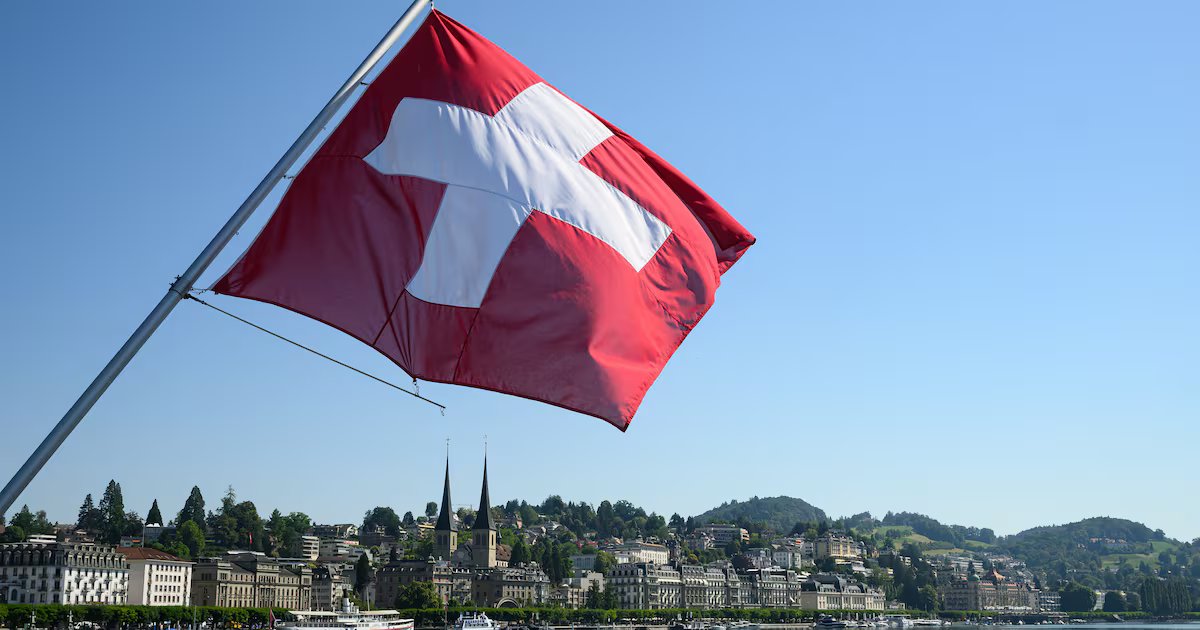
The headlines about last Sunday’s Swiss referendum on immigration focused on how those opposed to the proposal of capping the size of the population at 10 million had a comfortable win. But the remarkable thing was not that 55 per cent voted No. It was that 45 per cent of voters in a country that has built up extraordinary wealth over the years based in large part on its open policies – to a migrant workforce, trade and finance – voted Yes to a proposal that would have been likely, before long, to create significant economic cost.
It shows the force of the immigration debate sweeping across the industrialised world. And it is a debate that is already an important part of Irish politics, notwithstanding the absence to date of a big party with an anti-immigration agenda.
The right in Switzerland was, in all likelihood, denied a win only due to fears about the risks to the country’s links with the European Union, built on a 2000 referendum introducing a free movement agreement with the EU. Capping the population at 10 million, as the referendum proposed, would have threatened the free movement deal and Swiss access to the EU single market. It would have been like a kind of slow-motion Brexit-type vote.
The Swiss People’s Party, the key supporter of the referendum, has a long history of pushing anti-immigration policies. But this referendum was framed around pressure from migration on housing, transport, environment and the overall quality of life.
Sound familiar? The pressure on areas such as housing and Ireland’s creaking infrastructure is central to the Irish migration debate. But, like Switzerland, Ireland has an economic interest in migration. Historically, this has been as a kind of safety valve, with Irish people moving overseas to work, particularly in poor economic times like the 1950s and early 1980s. But in recent years the flow has been the other way. Six out of 10 jobs in the post-Covid boom in the Irish jobs market have been filled by foreign nationals.
Key sectors are now hugely reliant on foreign national labour – it accounts for 40 per cent of jobs in accommodation and food, for example and 41 per cent in the digital tech sector. About three out of every 10 of the 4,500 Dublin Bus employees are from outside Ireland.
The Celtic Tiger immigration surge came largely from the newer EU member states in eastern Europe. Post-Covid, the big increases have come from India and Brazil, in particular. With unemployment low, those coming to work here are generally filling positions for which there is no available domestic workforce. Recent ESRI research shows that foreign nationals contribute a bit more to the public finances than the native population, largely because they are on average a bit younger and a bit more likely to be at work.
Immigration has thus been vital to economic growth. But at the same time it has, as in Switzerland, led to pressures on housing availability and costs – and added to the feeling of a country bursting at the seams.
Ireland’s population last year was 5.46 million, so a Swiss referendum-style limit here would cap the population at about six million. According to the Department of Finance, this would require net migration to fall from about 60,000 last year (125,000 arrivals and 65,000 departures) to below 20,000, meaning the labour force would shrink from 2041 onwards
This has provided the backdrop for arguments to reduce immigration and for nods in this direction from Government Ministers in recent months. Ireland is moving along with the EU to impose tighter control on the number of asylum seekers. But while Ukrainians have been a part of the story of the recent immigration surge into Ireland, those coming to work here or following family members working in Ireland – where rules have been tightened recently – are the main driving force.
And here we get to the crux of it all. Ireland’s jobs market needs migrant labour. How much will depend in part on economic growth. But the ageing of the Irish population is key – Ireland needs to find more young people to support a population that is getting older. A recent Department of Finance report estimated that if net migration – the number leaving minus the number arriving in Ireland – fell to zero by 2035, then Ireland’s labour force would fall from then onwards, with significant economic costs.
“The potential economic consequences of such a fall would be very negative” the department warns.” posing major challenges for Ireland’s enterprise base, diminishing the capacity of the State to provide public services and infrastructure, constraining economic growth and ultimately reducing living standards.”
The Swiss vote was so striking because it went there in terms of addressing this issue, proposing that if the population reached 10 million – from just over nine million now – the government would have to act decisively to control it, including tearing up the free-movement deal with the EU. It was a proposal to address the trade-off by, effectively, accepting slower economic growth.
Ireland’s population last year was 5.46 million, so a Swiss referendum-style limit here would cap the population at about six million. According to the Department of Finance, this would require net migration to fall from about 60,000 last year (125,000 arrivals and 65,000 departures) to below 20,000, meaning the labour force would shrink from 2041 onwards.
Can Irish immigration be held down? There is free movement from the UK and EU. So the bit that can be controlled is people coming from other countries. Minister for Justice Jim O’Callaghan has said he believes Ireland’s population is growing too rapidly. The Government believed that the population should grow, just not as quickly as it is now, he said. Getting to the “Goldilocks” position of some kind of perfect balance looks mightily difficult to achieve.
Those who support this approach need to consider its impact both on domestic businesses and foreign investment and on Ireland’s economic growth prospects. If Ireland makes it harder for migrant workers to come here and imposes tougher rules on family reunification, will the necessary workforce just go elsewhere?
In my view, as Europe ages, the fight for mobile, young, skilled labour is only going to pick up. Businesses do not talk as much as they did about diversity and inclusion policies, but these were seen as a key way to attract talent. The anti-Trump agenda could have its economic advantages, too, in attracting investment and skills. Those of us who would more naturally support this approach also have responsibilities to outline how Ireland can adapt and grow.
And lying behind this is the wider debate about the economic growth at – almost – all costs agenda that Ireland has traditionally followed, with its implications for climate policy as well as migration and a host of other things. The question is that if the tanker that is the Irish economy stalls, what does that mean for the future? Switzerland rejected the idea of that the trade-off should be changed. But only just.