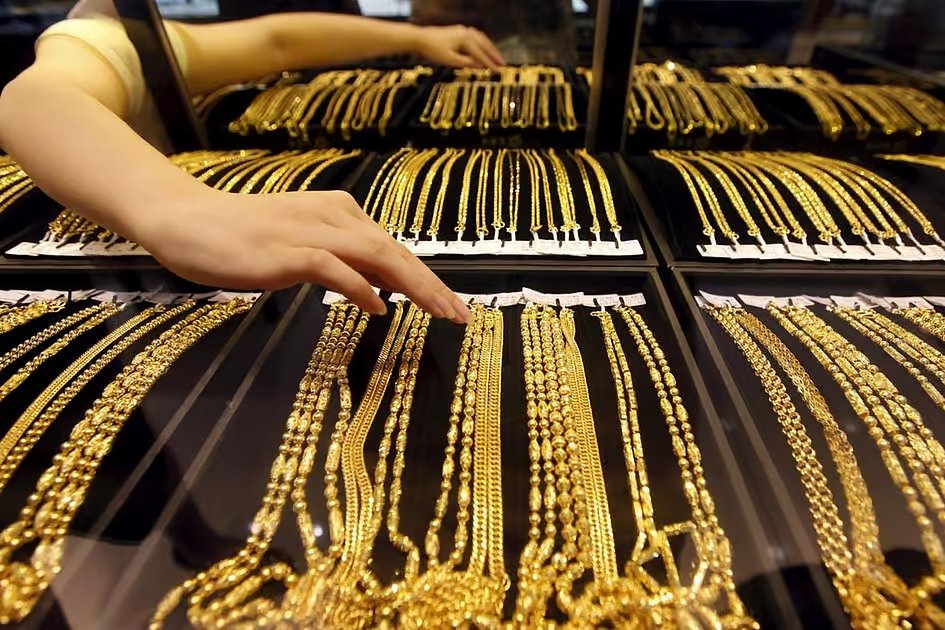
Gold rates in the UAE traded lower on Tuesday, with global spot gold seeing the biggest monthly drop since late 2008.
The 24K variant was trading at Dh480.25 per gram at the open of the markets on Tuesday, down from Dh485.75 at the close of the markets the previous day.
The other variants, 22K, 21K, 18K, and 14K, were trading lower at Dh444.75, Dh426.50, Dh365.50, and Dh285, respectively.
Stay up to date with the latest news. Follow KT on WhatsApp channels.
Globally, spot gold fell below the $4000 mark, trading at $3,987 per ounce as of 9:10am UAE time. Silver lost around 1.1 per cent, trading at $57.53 per ounce. Analysts say the recent decline in precious metals appears to be a healthy consolidation phase rather than the beginning of a broader bearish cycle.
“Gold has retreated toward the $4,000 area after reaching record highs earlier this year, yet the fundamental drivers that propelled the rally remain firmly in place,” Awad Issawi, MENA Regional Spokesperson & Market Analyst at iFOREX, said.
“Persistent central-bank accumulation, expanding fiscal deficits across major economies, elevated geopolitical uncertainty, and the ongoing diversification away from the U.S. dollar continue to provide a constructive long-term backdrop for bullion,” he explained.
While gold prices were set for their biggest monthly decline since October 2008, the precious metal’s long-term trend remains positive as long as prices hold above the $3,700-$3,800 “support zone,” Issawi said.
“A sustained break below this region could open the door toward $3,400, while renewed upside momentum could initially target $4,300,” he added, which could be followed by a retest of the historical highs near $4,600-$4,700 over the longer term.
“For investors in the Gulf region, the current correction should be viewed primarily through a strategic lens rather than a tactical one,” the analyst said. “Historically, pullbacks within secular bull markets have often represented accumulation opportunities rather than signals to exit positions. Going forward, investors should closely monitor the trajectory of the U.S. dollar, inflation trends, Federal Reserve policy expectations, the pace of central-bank purchases, and evidence that AI and industrial demand continue to underpin silver consumption.”