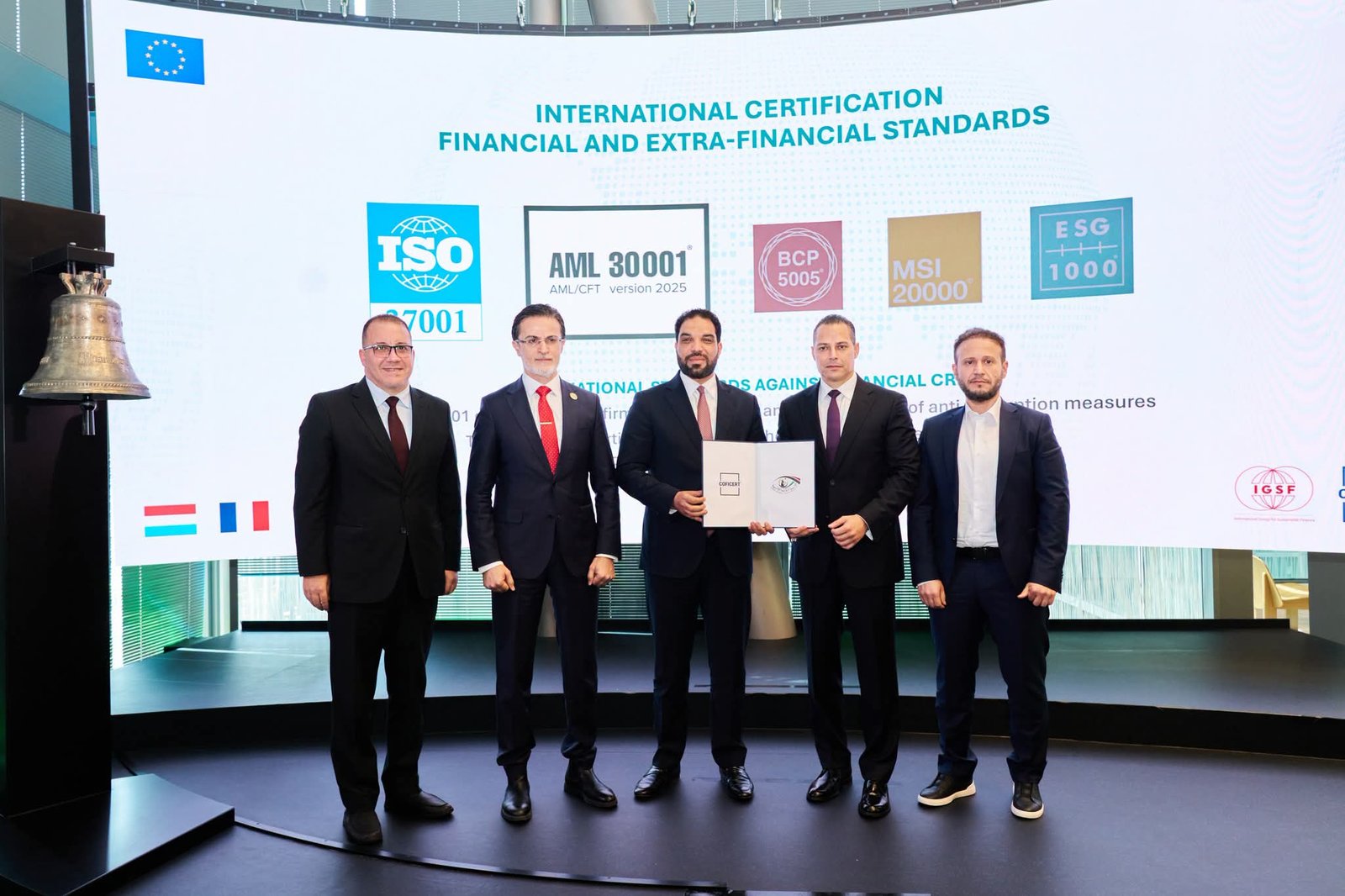
The Chairman of the Administrative Control Authority, Abdullah Gaderboh, and the President of the French COFICERT, Jérôme Gacoin, signed a Memorandum of Understanding (MoU) to foster cooperation in the fields of good governance, anti-corruption, anti-money laundering and counter-terrorism financing (AML/CFT), institutional performance enhancement, capacity building, and knowledge transfer in line with international best practices and standards.
The agreement forms part of the Administrative Control Authority’s broader efforts to modernize Libya’s governance and oversight systems while reinforcing national institutions’ commitment to internationally recognized standards of integrity, transparency, and institutional compliance.
The MoU outlines several key areas of cooperation, most notably supporting and strengthening anti-corruption and anti-bribery systems through internationally recognized standards, particularly ISO 37001, the global benchmark for evaluating the effectiveness of anti-bribery management systems within organizations.
The agreement also seeks to enhance compliance with anti-money laundering and counter-terrorism financing requirements in line with Libya’s international obligations. This will be achieved through the adoption of specialized international standards and certifications, most notably AML 30001, an internationally recognized certification demonstrating an organization’s compliance with AML/CFT requirements and its commitment to financial integrity.
The memorandum aims to support public institutions and state-owned enterprises in obtaining specialized international certifications and accreditations, thereby strengthening their international standing and increasing confidence among international partners, investors, and other stakeholders.
In the field of capacity building, both parties agreed to cooperate on implementing training programs, exchanging expertise, and transferring knowledge to develop national competencies and promote a culture of governance and institutional compliance based on internationally recognized standards.
The MoU is expected to open new avenues for technical and institutional cooperation between the two sides, supporting the Administrative Control Authority’s efforts to enhance Libya’s governance and oversight framework, consolidate the principles of integrity and transparency, strengthen institutional compliance in line with national legislation and international best practices, and contribute to building more efficient institutions capable of advancing sustainable development and institutional reform.