Monday, May 4, 2026
    The GeoStrategic Consensus
    No Result
    View All Result
    • Login
    • HOME
    • AMERICAS
      • Argentina
      • Brazil
      • Canada
      • Chile
      • Colombia
      • Costa Rica
      • Cuba
      • Dominican Republic
      • Ecuador
      • El Salvador
      • Greenland
      • Guatemala
      • Honduras
      • Mexico
      • Nicaragua
      • Panama
      • Paraguay
      • Peru
      • United States
      • Uruguay
      • Venezuela
    • ASIA-PACIFIC
      • Australia
      • Brunei Darussalam
      • Cambodia
      • China
      • Federated States of Micronesia
      • Fiji
      • Indonesia
      • Japan
      • Kiribati
      • Laos
      • Malaysia
      • Marshall Islands
      • Mongolia
      • Myanmar
      • Nauru
      • New Zealand
      • North Korea
      • Palau
      • Papua New Guinea
      • Philippines
      • Samoa
      • Singapore
      • Solomon Islands
      • South Korea
      • Taiwan
      • Thailand
      • Timor-Leste
      • Tonga
      • Tuvalu
      • Vanuatu
      • Vietnam
    • CARICOM
      • CARICOM – Non-English
        • Haiti
        • Suriname
      • CARICOM Associates
        • Anguilla
        • Bermuda
        • British-Virgin-Islands
        • Cayman-Islands
        • Curacao
        • Turks-and-Caicos
      • CARICOM English
        • Antigua and Barbuda
        • Barbados
        • Belize
        • Dominica
        • Grenada
        • Guyana
        • Jamaica
        • Montserrat
        • Saint Kitts and Nevis
        • Saint Lucia
        • Saint Vincent and the Grenadines
        • The Bahamas
        • Trinidad and Tobago
    • EURASIA
      • Armenia
      • Azerbaijan
      • Balarus
      • Georgia
      • Kazakhstan
      • Kyrgyzstan
      • Moldova
      • Russia
      • Tajikistan
      • Turkmenistan
      • Ukraine
      • Uzbekistan
    • EUROPE
      • Albania
      • Andorra
      • Austria
      • Bosnia and Herzegovina
      • Bulgaria
      • Croatia
      • Cyprus
      • Czech Republic
      • Denmark
      • Estonia
      • Finland
      • France
      • Germany
      • Greece
      • Holy See
      • Hungary
      • Iceland
      • Ireland
      • Italy
      • Kosovo
      • Latvia
      • Liechtenstein
      • Lithuania
      • Luxembourg
      • Malta
      • Monaco
      • Montenegro
      • Netherlands
      • North Macedonia
      • Norway
      • Poland
      • Portugal
      • Romania
      • San Marino
      • Serbia
      • Slovakia
      • Slovenia
      • Spain
      • Sweden
      • Switzerland
      • United Kingdom
    • MIDDLE EAST AND NORTH AFRICA
      • Algeria
      • Bahrain
      • Egypt
      • Iran
      • Iraq
      • Israel
      • Jordan
      • Kuwait
      • Lebanon
      • Lybia
      • Morocco
      • Oman
      • Palestinian Territories
      • Qatar
      • Saudi Arabia
      • Syria
      • Tunisia
      • Turkey
      • United Arab Emirates
      • Western Sahara
      • Yemen
    • SOUTH ASIA
      • Afghanistan
      • Bangladesh
      • Bhutan
      • India
      • Maldives
      • Nepal
      • Pakistan
      • Sri Lanka
    • SUB-SAHARAN AFRICA
      • Angola
      • Benin
      • Botswana
      • Burkina Faso
      • Burundi
      • Cabo Verde
      • Cameroon
      • Central African Republic
      • Chad
      • Comoros
      • Cote d’Ivoire
      • Democratic Republic of the Congo
      • Djibouti
      • Equatorial Guinea
      • Eritrea
      • Eswatini
      • Ethiopia
      • Gabon
      • Gambia
      • Ghana
      • Guinea
      • Guinea Bissau
      • Kenya
      • Lesotho
      • Liberia
      • Madagascar
      • Malawi
      • Mali
      • Mauritania
      • Mauritius
      • Mozambique
      • Namibia
      • Niger
      • Nigeria
      • Republic of the Congo
      • Rwanda
      • Sao Tome and Principe
      • Senegal
      • Seychelles
      • Sierra Leone
      • Somalia
      • South Africa
      • South Sudan
      • Sudan
      • Tanzania
      • Togo
      • Uganda
      • Zambia
      • Zimbabwe
    • HOME
    • AMERICAS
      • Argentina
      • Brazil
      • Canada
      • Chile
      • Colombia
      • Costa Rica
      • Cuba
      • Dominican Republic
      • Ecuador
      • El Salvador
      • Greenland
      • Guatemala
      • Honduras
      • Mexico
      • Nicaragua
      • Panama
      • Paraguay
      • Peru
      • United States
      • Uruguay
      • Venezuela
    • ASIA-PACIFIC
      • Australia
      • Brunei Darussalam
      • Cambodia
      • China
      • Federated States of Micronesia
      • Fiji
      • Indonesia
      • Japan
      • Kiribati
      • Laos
      • Malaysia
      • Marshall Islands
      • Mongolia
      • Myanmar
      • Nauru
      • New Zealand
      • North Korea
      • Palau
      • Papua New Guinea
      • Philippines
      • Samoa
      • Singapore
      • Solomon Islands
      • South Korea
      • Taiwan
      • Thailand
      • Timor-Leste
      • Tonga
      • Tuvalu
      • Vanuatu
      • Vietnam
    • CARICOM
      • CARICOM – Non-English
        • Haiti
        • Suriname
      • CARICOM Associates
        • Anguilla
        • Bermuda
        • British-Virgin-Islands
        • Cayman-Islands
        • Curacao
        • Turks-and-Caicos
      • CARICOM English
        • Antigua and Barbuda
        • Barbados
        • Belize
        • Dominica
        • Grenada
        • Guyana
        • Jamaica
        • Montserrat
        • Saint Kitts and Nevis
        • Saint Lucia
        • Saint Vincent and the Grenadines
        • The Bahamas
        • Trinidad and Tobago
    • EURASIA
      • Armenia
      • Azerbaijan
      • Balarus
      • Georgia
      • Kazakhstan
      • Kyrgyzstan
      • Moldova
      • Russia
      • Tajikistan
      • Turkmenistan
      • Ukraine
      • Uzbekistan
    • EUROPE
      • Albania
      • Andorra
      • Austria
      • Bosnia and Herzegovina
      • Bulgaria
      • Croatia
      • Cyprus
      • Czech Republic
      • Denmark
      • Estonia
      • Finland
      • France
      • Germany
      • Greece
      • Holy See
      • Hungary
      • Iceland
      • Ireland
      • Italy
      • Kosovo
      • Latvia
      • Liechtenstein
      • Lithuania
      • Luxembourg
      • Malta
      • Monaco
      • Montenegro
      • Netherlands
      • North Macedonia
      • Norway
      • Poland
      • Portugal
      • Romania
      • San Marino
      • Serbia
      • Slovakia
      • Slovenia
      • Spain
      • Sweden
      • Switzerland
      • United Kingdom
    • MIDDLE EAST AND NORTH AFRICA
      • Algeria
      • Bahrain
      • Egypt
      • Iran
      • Iraq
      • Israel
      • Jordan
      • Kuwait
      • Lebanon
      • Lybia
      • Morocco
      • Oman
      • Palestinian Territories
      • Qatar
      • Saudi Arabia
      • Syria
      • Tunisia
      • Turkey
      • United Arab Emirates
      • Western Sahara
      • Yemen
    • SOUTH ASIA
      • Afghanistan
      • Bangladesh
      • Bhutan
      • India
      • Maldives
      • Nepal
      • Pakistan
      • Sri Lanka
    • SUB-SAHARAN AFRICA
      • Angola
      • Benin
      • Botswana
      • Burkina Faso
      • Burundi
      • Cabo Verde
      • Cameroon
      • Central African Republic
      • Chad
      • Comoros
      • Cote d’Ivoire
      • Democratic Republic of the Congo
      • Djibouti
      • Equatorial Guinea
      • Eritrea
      • Eswatini
      • Ethiopia
      • Gabon
      • Gambia
      • Ghana
      • Guinea
      • Guinea Bissau
      • Kenya
      • Lesotho
      • Liberia
      • Madagascar
      • Malawi
      • Mali
      • Mauritania
      • Mauritius
      • Mozambique
      • Namibia
      • Niger
      • Nigeria
      • Republic of the Congo
      • Rwanda
      • Sao Tome and Principe
      • Senegal
      • Seychelles
      • Sierra Leone
      • Somalia
      • South Africa
      • South Sudan
      • Sudan
      • Tanzania
      • Togo
      • Uganda
      • Zambia
      • Zimbabwe
    No Result
    View All Result
    Agentially
    No Result
    View All Result
    Home EURASIA Kazakhstan

    Europe tightens up on migration: how the new pact changes the rules of the game for refugees

    The Analyst by The Analyst
    April 23, 2026
    in Kazakhstan
    Europe tightens up on migration: how the new pact changes the rules of the game for refugees


    Response to the political shift to the right

    This is a very important document, given the intensity of political passions that has been raging in European public opinion for the last 15 years and the changes this has already led to in local politics. Actually, the adoption of this document is precisely the reaction of political circles in European countries to the strengthening of the ultra-right.

    READ ALSO

    Pashinyan assessed progress with Azerbaijan

    Ecology is the basis of the nation’s health: Deputy Arman Kalykov

    It has become extremely inconvenient for centrist forces in different countries to restrain the growth of the influence of radical ultra-right circles and not allow them to come to power. They are forced to make compromises that further weaken their political positions. In doing so, they face criticism from both the left and the right.

    For example, in Germany, the center-left Social Democratic Party (SPD) is forced to be junior partners in a coalition with the center-right Christian Democrats (CDU). The former are being squeezed on the left flank by more left-wing populist parties – the Left and the Sarah Wagenknecht Union. Second on the right flank are the far right from the Alternative for Germany (AfD). At the same time, neither the far left nor the far right are allowed to participate in parliamentary coalitions, which sharply narrows the space for political maneuver.

    The situation is similar in France, where the traditional moderate center-left from the Socialist Party and the traditional center-right from the Republican Party are inferior in popularity to the far-right from the National Rally and the far-left from Unconquered France. Here the room for maneuver is even narrower than in Germany. The only thing that keeps the situation in a centrist format is the model of a presidential republic.

    Identity crisis in Europe

    Across Europe, one of the main reasons for the rise in popularity of the far right and the weakening of the centrists is the issue of migration. Public opinion is increasingly expressing dissatisfaction with the increasing number of migrants and the growing burden on the social sphere and the healthcare system.
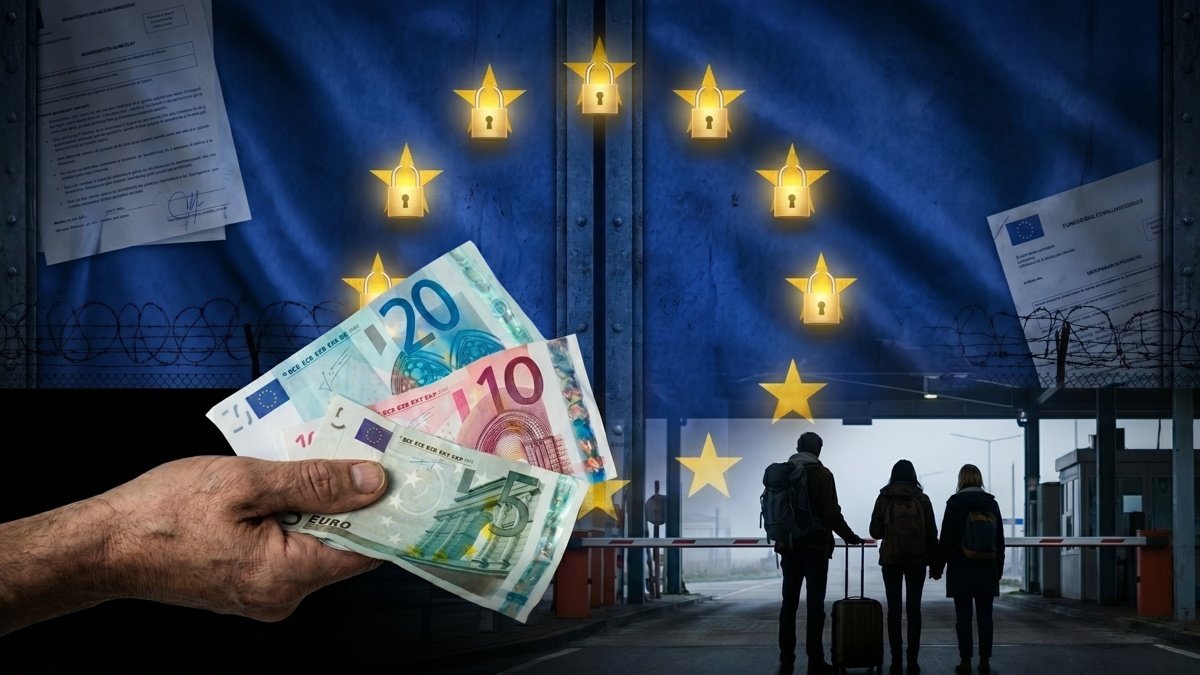
    Migration
    Collage: Kazinform / Nano Banana Pro

    Against the backdrop of economic difficulties, slowing growth and rising inflation, governments are forced to raise taxes, which leads to a decline in living standards. This, in turn, increases dissatisfaction with increased budget expenditures to support migrants.

    This is precisely what causes dissatisfaction among the former electorate of centrist parties and pushes them to go over to the side mainly of the ultra-right, and to a lesser extent – of the ultra-left. These processes are interconnected: both groups are dissatisfied with the deteriorating economic situation. But the ultra-left demands greater government spending on social policy, and the ultra-right requires stricter criteria for admission to this very policy.

    Although this is only what is in plain sight. A more complex issue is that of identity. The influx of migrants poses a very serious challenge to local identity in European countries. Overall, this poses a very difficult problem for local politics because it can contribute to the strengthening of a nationalist agenda, mainly in far-right movements.

    Migration under new rules

    Accordingly, it is quite logical that these reasons are forcing politicians in Europe to change the rules of the game for mass migration in order to try to somewhat limit it. Including because in this way it is possible to intercept some of the slogans from the ultra-right and weaken their positions. The old trick is that if you can’t cope with a trend, you need to organize and lead it.

    However, everything happens within the framework of an institutional process, so it takes time and requires all the necessary approvals. Accordingly, the new European Pact on Migration and Asylum will enter into force only on June 12, 2026, and it does not provide for radical measures, such as those currently taking place in the United States as a result of the American administration’s fight against illegal migration.

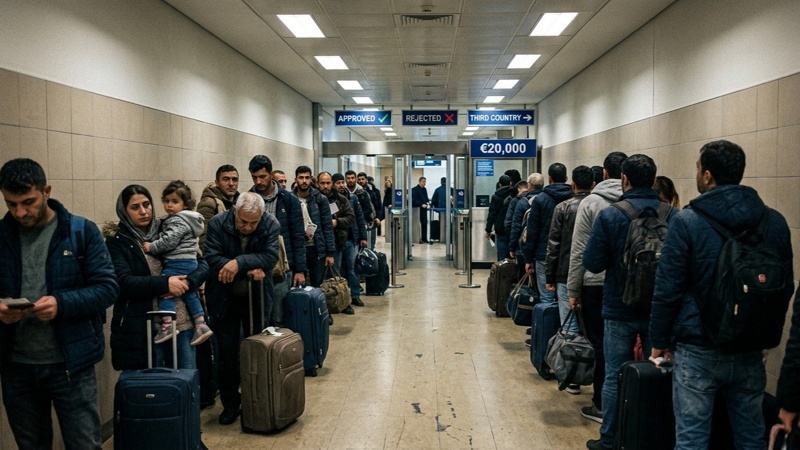
    The main changes in the new pact compared to previous practice relate to the abandonment of the rule where the country of first entry was responsible for processing the application for asylum. This created a huge burden mainly on four countries – Greece, Italy, Spain and Cyprus. Now all EU countries will have to determine their level of participation in accepting asylum applicants in accordance with certain parameters – GDP size and population size. They can either accept a certain number of refugees, or pay 20 thousand euros for refusing to accept a refugee, or provide support in practical actions, including their relocation, which is in fact deportation. That is, now you won’t be able to simply refuse.

    In addition, a list of so-called “safe countries” is introduced, including, for example, India, Egypt, Bangladesh and some others. People from these countries will undergo an expedited application process. The concept of a “safe third country” is also introduced: if an asylum seeker arrived in the EU through such a state, it is considered that he could apply there without going further to Europe. In this case, he may be returned to this country – for example, to Serbia or Georgia.

    The pact places significant emphasis on both strengthening controls at the EU’s external borders and deportation procedures. In particular, it is stipulated that potential asylum seekers may not be allowed into the territory of the union: their applications are processed in an expedited manner – within about seven days – with subsequent return in case of refusal. Previously, applicants often awaited a decision within the EU. Due to the length of the procedures, this led to their prolonged stay on the territory of the union, creating an additional burden on the receiving countries. However, the deportation of those who were refused often proved difficult, which effectively led to an indefinite stay of such persons in Europe.
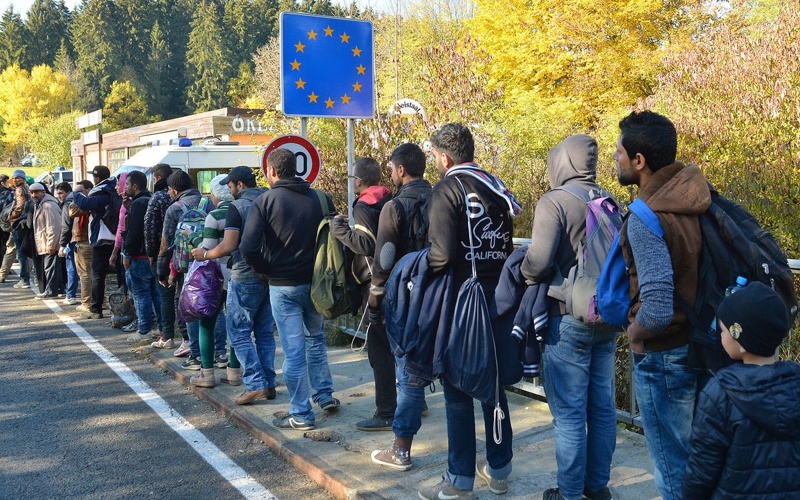
    migration
    Photo: point.md

    New placement practice

    The new pact also opens up the possibility of creating refugee centers in third countries, where they must await a decision from an EU country. Naturally, in this case, refusal to grant refugee status relieves the European Union of the need for deportation.

    This is not beneficial for potential refugees. Because the countries for their placement may be far from Europe, such as Rwanda in Africa, this is where the British authorities planned to send refugees. While waiting for a decision within Europe allows applicants to use its institutions, including the courts to challenge decisions, as well as liberal organizations to support and put pressure on the authorities of European countries.

    In general, the liberal part of society in Europe, of course, was very critical of some tightening of the rules for accepting refugees. But from an ideological point of view, the positions of liberals today have nevertheless become noticeably weaker. The critical attitude towards refugees in European societies also played a role in this. Although the humanitarian aspect in relation to them continues to occupy an important place in European ideology, and, consequently, in politics, it is significantly less than 10-15 years ago. Economics, identity and social aspects matter more. In this sense, the mass reception of refugees has its natural limitations.

    From human rights to flow control

    Since 1950, Europe’s refugee policy has been influenced by a major document, the European Convention on Human Rights. It arose from the 1948 Universal Declaration of Human Rights. In the post-war period, this was a very important document, given the catastrophic situation with population movements after the Second World War. The most important point in it was that the Convention guaranteed the rights and freedoms of every person who came under its jurisdiction.

    However, in recent decades, this was one of the reasons that many illegal migrants sought in every possible way to enter the territory of rich Europe. Because the existing norms guaranteed them all rights, including mainly social ones. Naturally, this also limited the possibilities for their deportation in cases where the applicants were denied the right to asylum.

    In fact, the new European Pact on Migration and Asylum makes policy adjustments on this complex issue. Therefore, such attention is paid to controlling external borders in order to prevent all applicants from entering the EU.

    In general, migration policy is a very complex structure. It is not limited only to the points mentioned above related to the growth of social pressure, identity challenges and the growing influence of the far right. Migration also affects economic policy.

    economy
    Photo: Pexels

    Migration as an economic resource

    When the economy grows, developed countries have a growing need for labor, which cannot be satisfied only through domestic resources, including due to the aging of the population. Therefore, the influx of migrants becomes an important task for ensuring economic growth. In addition, they fill the need for those jobs that local residents are reluctant to take. These are mostly low-wage jobs or the service sector.

    So, theoretically, migration is not only a challenge, but also an opportunity for the development of the economy of many countries. However, in the case of Europe, the problem was that its industrialized countries also had active social policies that made Europe extremely attractive not only because of jobs, but also because of high benefits and advanced healthcare. Especially for people from developing countries.

    Here the problem was not only a lack of jobs and periodic security difficulties, but also overcrowding. Therefore, illegal migration to Europe was often the only option for many in Asia and Africa. In European countries, they often created a burden on the social system and adapted very poorly to new conditions. This was largely due to the communal nature of their social organization. For many Europeans, the formation of communities of Asians and Africans in their societies was an important factor in changing the environment.

    So the EU’s desire to change its policy towards migration is an attempt to adapt to new conditions that have arisen as a result of mass migration in recent decades. Moreover, external conditions are worsening as the globalization crisis develops.

    Complex processes are taking place in global trade and the previous conditions for global economic growth no longer exist. Accordingly, there is no previous economic growth, there is a struggle for trade privileges, inflation and public debts are growing, and there is a high probability of competition for jobs.

    Therefore, individual countries or groups of countries, like the EU, do not want to risk their internal position. They are preparing not only to respond to current challenges, but also for the future. Because the crisis of globalization will inevitably affect developing countries, for whose population the developed countries of Europe remain one of the main points of attraction.

    Source link

    Related Posts

    Pashinyan assessed progress with Azerbaijan
    Kazakhstan

    Pashinyan assessed progress with Azerbaijan

    May 4, 2026
    Ecology is the basis of the nation’s health: Deputy Arman Kalykov
    Kazakhstan

    Ecology is the basis of the nation’s health: Deputy Arman Kalykov

    May 4, 2026
    Kazakhstanis more often choose delivery and trade than work in their specialty – expert
    Kazakhstan

    Kazakhstanis more often choose delivery and trade than work in their specialty – expert

    May 4, 2026
    Babis’s visit reflects the Czech Republic’s strategic pivot to Central Asia – expert
    Kazakhstan

    Babis’s visit reflects the Czech Republic’s strategic pivot to Central Asia – expert

    May 3, 2026
    UAE’s withdrawal from OPEC – a new era of energy sovereignty – expert
    Kazakhstan

    UAE’s withdrawal from OPEC – a new era of energy sovereignty – expert

    May 3, 2026
    Who is to blame for the fire in the Almaty hostel – The truth is in the details
    Kazakhstan

    Who is to blame for the fire in the Almaty hostel – The truth is in the details

    May 3, 2026
    Next Post
    Fringe Religious Leader, Hailed as ‘King’ by Followers, Found Dead in Tbilisi – Civil Georgia

    Fringe Religious Leader, Hailed as ‘King’ by Followers, Found Dead in Tbilisi – Civil Georgia

    POPULAR NEWS

    Justin Bieber fans flood Coachella festival for headlining show – Entertainment

    Justin Bieber fans flood Coachella festival for headlining show – Entertainment

    April 20, 2026

    Over 600 flee homes as Army, NPA clash in Negros Occidental

    April 21, 2026

    Ex-DPWH exec recalls P800-M ‘delivery’ to Zaldy Co 

    April 20, 2026

    Former PM Paluckas suspends party membership, to waive immunity over criminal probe

    April 24, 2026
    Pres. Ali challenges CARICOM to transform into health research powerhouse

    Pres. Ali challenges CARICOM to transform into health research powerhouse

    April 23, 2026

    EDITOR'S PICK

    McLaren breaks Mercedes’ dominance, Lawson finishes out of points in Miami sprint

    May 2, 2026

    Delcy’s Grenada visit question revives questions on T&T–Venezuela tensions

    April 13, 2026
    He felt dizzy from the pain, Pogačar expects a rematch at the Tour

    He felt dizzy from the pain, Pogačar expects a rematch at the Tour

    April 27, 2026

    A quarrel due to a confrontation ends with a young man being injured and 3 accused arrested in Sharqia

    April 27, 2026

    Recent Posts

    • Culture shock in Lithuania: an Instagram star was stunned by one of our laws
    • “Laudate Dominum” concert of the organ duo Vidos Pinkevičius and Aušra Motūzaitė-Pinkevičienė will take place | Culture
    • Lithuania’s top universities ranked – VU takes first place
    • Björklöven back after 25 years, captain calls it a childhood dream

      © 2026 Agentially - Navigating shifting sovereignties and global risk .

      Welcome Back!

      Login to your account below

      Forgotten Password?

      Retrieve your password

      Please enter your username or email address to reset your password.

      Log In
      No Result
      View All Result

        © 2026 Agentially - Navigating shifting sovereignties and global risk .

        This website uses cookies. By continuing to use this website you are giving consent to cookies being used. Visit our Privacy and Cookie Policy.