Some first-hand impressions of Germany, 35 years after reunification
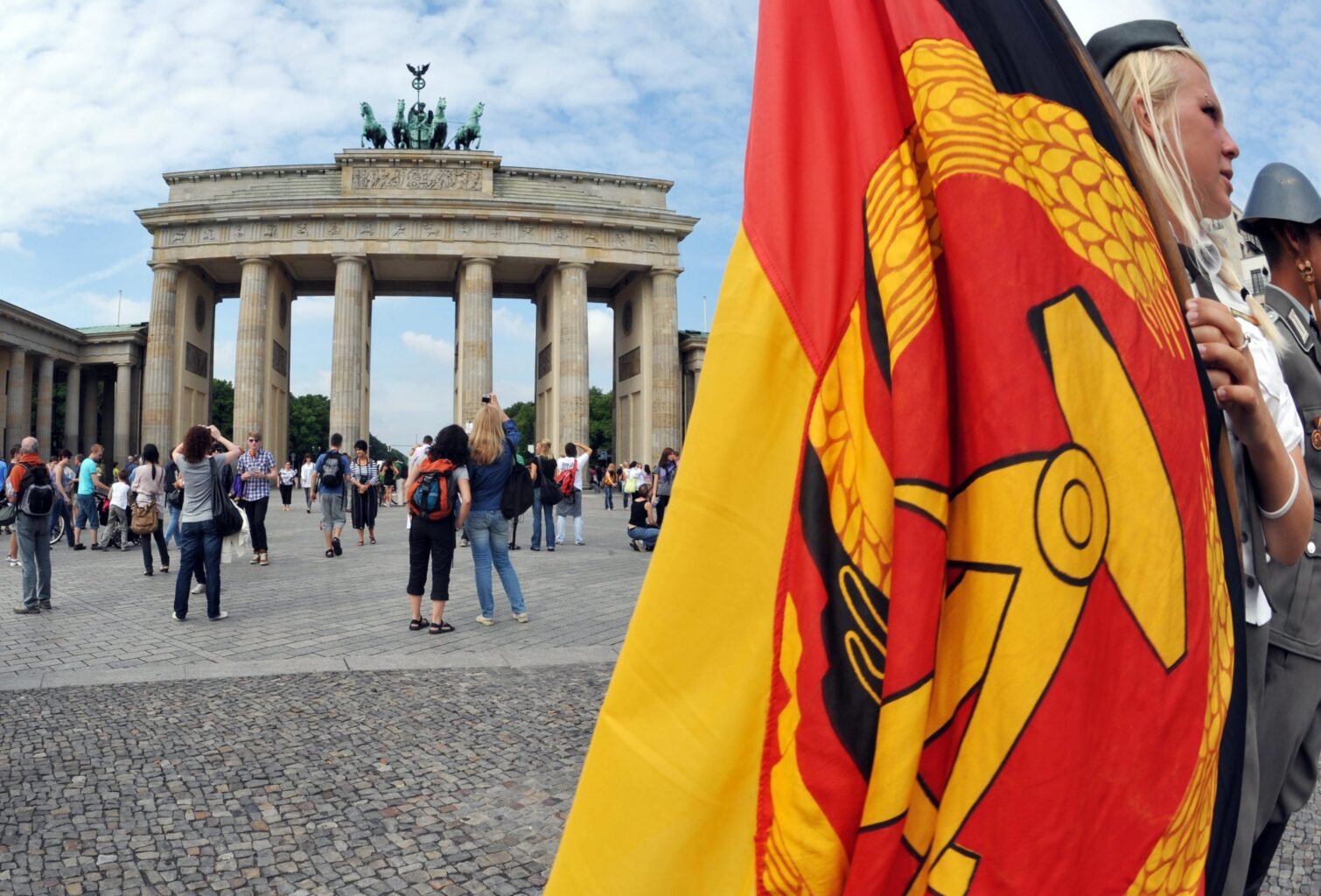
When East and West Germany formally reunited on October 3, 1990, many believed it was only a matter of time before all the differences created by four decades of division disappeared. Three and a half decades later, Germany is indeed one of the most successful European states, but at the same time it remains a country where the old dividing lines are still clearly visible.
The wall fell, but the border remained in minds, but also in politics and economics
The long-ago border between the German Democratic Republic (GDR) and the Federal Republic of Germany (FRG) is no longer demarcated and fenced with barbed wire and crossings, the so-called checkpoint guards. However, a “border” between these once different state entities can often be recognized in the election results, in the economic indicators, with the different views on the “war in Ukraine”, and even in the feeling of belonging to the common German state…
Contemporary Germany is an example that political unification can be quick, but social and psychological unification takes generations.
Ukraine revealed deep differences in Germany
One of the most obvious contemporary divisions has emerged over German policy towards Ukraine. Surveys show that residents of the eastern provinces are significantly more likely to oppose arms deliveries and military aid to Kiev than citizens in the western part of the country. According to polls, as many as 41 percent of respondents in the former East Germany believe that military aid should be reduced, while in the West that percentage is 24 percent. The reasons are not only political. During the time of the GDR, the official state ideology was strongly associated with the Soviet Union, and in the collective memory of many East Germans, the Soviet Red Army remains remembered as the force that defeated Nazism. Hence, even today, there is a different attitude towards Russia than in the western part of the country. That is why German analysts warn more and more frequently that the attitudes towards Ukraine are not only a foreign policy issue but also a mirror of the old German divisions.
Economic equality was never fully achieved
The biggest disappointment after the unification remains the economy. Although the federal state has invested hundreds of billions of euros in the development of the east, the differences are still significant today. According to the latest analyzes by the German Institute for Labor Market Research (IAB), employees in East Germany still earn on average about 14 percent less than their compatriots in the West. And the differences are not limited to salaries. A standout example is the gross domestic product (GDP) indicator in the eastern states, which remains significantly lower than the West German average, and the economic power of the eastern region remains weaker despite the huge investments made in the past three and a half decades. The fact that the biggest German companies still almost without exception have their headquarters in the western part of the country is particularly problematic. East Germany has modern infrastructure, but significantly fewer centers of economic power and corporate governance.
The political map still follows the old boundary
The most visible proof of the existence of “two Germanys” today is the political map.
Support for the sovereignist AfD party is dramatically higher in the eastern provinces than in the western ones. Analyzes show that in many places the old dividing line almost perfectly coincides with differences in electoral behavior.
This phenomenon cannot be explained by ideology alone. Many East Germans feel that their life experiences are not sufficiently understood by the political and media elites in Berlin and the western states. Hand on heart, the feeling of being “second-class citizens” has not completely disappeared even after 35 years. It is this feeling of insufficient representation and recognition that is fertile ground for political mistrust towards traditional parties.
Negative demographic trends as a result of the unification of the SRG and DDR
After 1990, millions of easterners moved to the western provinces in search of work and a better standard of living. The consequences are felt even today. A number of East German regions are facing an aging population, labor shortages and shrinking populations. Some cities have lost more than half of their population compared to the early 1990s.
Meanwhile, cities such as Leipzig and Dresden have succeeded in becoming successful centers of the new economy, but large rural areas continue to lag behind the west.
The differences between the Germans are noticeable in other aspects as well
Perhaps the most interesting aspect of the German story is the fact that the differences between East and West are not just about money. Research shows that people raised in the GDR still have different views on the state, social policy, security, international relations and the role of institutions. In the eastern provinces there has traditionally been greater support for state intervention in the economy and a stronger sense of skepticism towards elites. Paradoxically, although the younger generations have no personal experience of a divided Germany, they often inherit these differences through family memory, local culture and regional identity.
Unity without full integration
Let’s not get it wrong. Germany today is not a divided country. But it is also not a fully integrated society. According to recent polls, the majority of Germans believe that the differences between east and west are still significant, and among residents of the eastern states this feeling is even more pronounced. That is why the German experience represents an important lesson for Europe.
Historical divisions do not disappear by signing an agreement or by changing the political system. They continue to live on in economics, politics, collective memory and everyday life. Thirty-five years after the fall of the Berlin Wall, Germany remains a story of reunification. But it is also a reminder that reconciliation between two different historical experiences is a process that lasts much longer than one generation. And it is felt.
Author: Done Prentoski, associate of “New Macedonia” from Germany