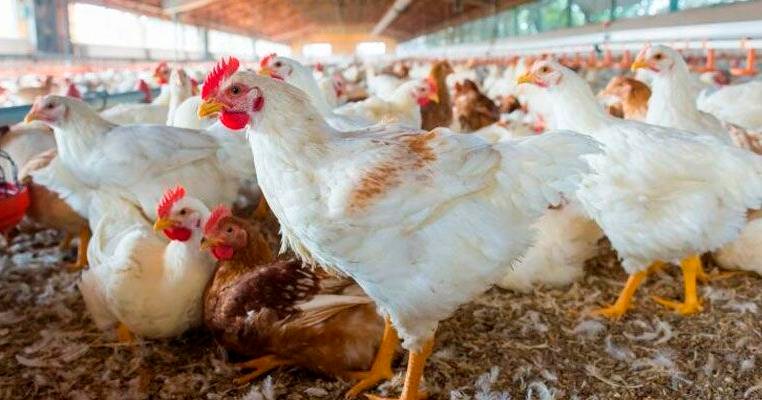
POULTRY depots across Trinidad and Tobago are experiencing a chicken shortage which may lead to customers getting less product and a price increase.
This was confirmed by president of the Broiler Growers Association, Sudesh Ramkissoon, in a telephone interview with the Express yesterday.
He said, ‘There is a shortage and the cost has gone up, which will take a toll on customers. I don’t have a reason for the shortage yet.’
One of the country’s largest poultry suppliers, Arawak and Company Ltd, also responded yesterday, saying it was facing foreign exchange challenges.
Ramkissoon said everyone will feel the pinch of this shortage and price increase and noted that the cost of chicken per pound increased from $8 to $8.50 and now $9.50.
‘There are also restrictions on the amounts of chicken the depot can purchase from suppliers, which will cause issues with the pricing and availability,’ he said.
Some local chicken suppliers in T&T are Nutrimix, Arawak and WGM.
Ramkissoon believes the poultry industry needs an intervention and asked, ‘When was the last time you’ve seen three (chicken) for $100?’
‘We need a solution for these price increases. We are entering the (July/August) vacation period and spike in tourism. There is an expected increase in demand and now we have a shortage before this time,’ he added.
He noted that the poultry depot has been declining since the early 2000s, saying the industry has become unattractive to young people, causing the number of farmers to shrink.
‘Farmers don’t benefit from the $9.50; these reasons cause the industry to be unattractive,’ said Ramkissoon.
The Express called a few depots to confirm the shortage and a representative at a poultry depot with several branches said the shortage started three weeks ago.
‘It started three weeks ago. Customers will be affected mostly by the size of processed birds and there may also be a slight price increase,’ he said.
He added, ‘Usually shortages last around six to eight weeks. Hopefully this one does not extend beyond that.’
Another depot owner in San Juan, who preferred not to be named, also said the shortage has been happening for the past two to three weeks.
When asked his methods of mitigating the challenges that will come with a shortage, in a telephone interview with the Express, the owner said, ‘Well, customers will have to get less.’
A Chaguanas poultry depot owner noted that the wholesale price of chicken from smaller suppliers skyrocketed from $7.50 to $9.50. She highlighted that she is operating at a loss given that she charges $9 per pound and is absorbing the cost through the $15 plucking fee. She added that the size of the chicken she gets from her suppliers is in the fourpound range whereas larger suppliers are able to offer six-pound chickens.
The owner also noted that a shortage of local eggs from suppliers may be next and said her order has been cut by almost 50% but the price remains unchanged.
A post from Central poultry depot, Dino’s Enterprises Co Ltd, stated, ‘Chicken shortage notice. There is currently a nationwide chicken shortage and price increase. Despite these challenges, Dino’s Enterprises is doing its best to keep prices affordable for our customers rather than passing on the full increase. We thank you for your patience, understanding, and continued support.’
However, when contacted for comment on the shortage, a representative of Dino’s Enterprises said they were unable to comment at the time.
Meanwhile, several Chaguanas mini mart workers said they are bracing for the price increase but the refrigerated chicken parts packs remain unaffected and they are hoping it stays as it has become a staple in many homes.
Forex issues
Reached for comment yesterday, director at wholesaler Arawak and Company Ltd Nazaar Ali pointed to foreign exchange issues.
‘Despite the ongoing foreign exchange challenges, we have continued to fulfil all regular orders by sourcing US currency at an exchange rate of TT$8.50,’ he stated via WhatsApp.
He added: ‘This has allowed business to continue as normal, but the additional cost is unsustainable and cannot be absorbed indefinitely.’
Earlier this year, the Tobago House of Assembly (THA) Division of Food Security announced a significant increase in the price of eggs sold at Government Farms from $7 per dozen to $15 per dozen.
A media release on February 19 from the THA stated that the reasons for the price hike are rising production costs and the need to align with current market conditions.
Attempts to get a comment from Ronnie Mohammed, president and group chief executive officer of Nutrimix, on the shortage were futile.