59% of pesticides used in coffee production are banned in the European Union (EU), according to field research carried out in Brazil, Vietnam, Kenya, Colombia and other large producers. Although the study does not focus on Nicaragua, the country is mentioned as a place where several of these chemicals are used to grow coffee.
The Report’Poison in your coffee‘, was produced by Coffee Watch, Inkota, Deutsche Umwelthilfe and the UK office of the Pesticide Action Network. The 78-page document documents that in Nicaragua they found cases with “high rates of acute symptoms of poisoning among coffee workers.”
The text cites “an exhaustive study” of the Center for International Cooperation in Agronomic Research for Development (CIRAD, for its acronym in French) with data collected in 2020 and 2021. One of its findings is that “the herbicides glyphosate and its breakdown product AMPA, as well as the insecticides imidaclopride, thiamethoxam, clothianidin and chlorpyrifos” were present in grains from several countries, including Nicaragua.
“Many samples exceed the MRL (maximum residue limit, for its acronym in English), established by the European Union. In Nicaragua and Brazil, fungicides epoxiconazole, cyproconazole and azoxystrobin were detected, “in concentrations sufficient to harm soil organisms,” he adds.
According to the Central BankIn 2025, coffee was consolidated as the third export product for Nicaragua with 918.4 million dollars, only surpassed by gold and beef.
Doubts and certifications
Two sources consulted by CONFIDENTIAL On condition of anonymity, they ruled out that there is a significant presence of these chemicals in Nicaraguan coffee growing, as well as workers poisoned by their use.
“Europeans always want to be politically correct, and they become to a certain extent extreme in their assessments regarding food safety,” said a Matagalpino producer. “There is a moment when we have to say: ‘either we eat, or we starve’, because we will not be able to survive if we put so many rules on food production,” he added.
Both he and a professional from the agricultural sector trusted that the existence of various certifications to which many Nicaraguan coffee growers are affiliated will allow them to demonstrate that the coffee exported by the country is suitable for human consumption, without further ado.
“The decision to obtain certifications for their coffee puts greater pressure on producers to comply with the ban on these types of chemicals. More so if they are trying to sell in the European market, which is more restrictive in that regard,” explained the professional. For his part, the producer explained that “it helps to have certifications like the Rainforest Alliance, or Cup Café,” because that makes it easier to comply with market restrictions.”
Pesticides in coffee exported to the European Union
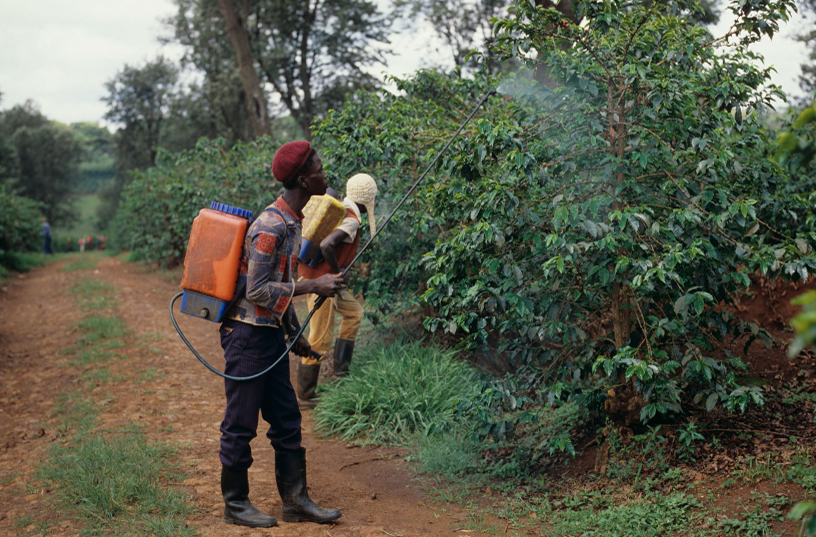
The report ‘Poison in your coffee’which according to its authors synthesizes scientific literature, government data and field research, also revealed that farmers rarely use adequate protective equipment.
“Behind almost every cup of coffee is a farm worker who had no choice but to handle chemicals that rich countries decided were too dangerous for their own fields,” the report’s lead author, Silke Bollmohr, said in a statement.
The study documents 159 active ingredients of pesticides used in coffee production in the countries analyzed, of which 60% are classified as highly dangerous and 59% are prohibited in the European Union.
These include extremely dangerous substances according to the World Health Organization (WHO), as well as products that are carcinogenic or probably carcinogenic, toxic to reproduction, endocrine disruptors and neurotoxic.
The organizations also maintain that one in five cups of coffee could be contaminated by pesticide residues, while in the case of traces of glyphosate, known as AMPA, residues were detected in 72% of the samples analyzed.
They denounce double standards
The report denounced a regulatory “double standard,” pointing out that pesticides banned in the European Union and other rich countries continue to be exported to coffee-producing states, where regulation is weaker, and then legally import coffee grown with those products.
Among the examples cited, Brazil used 19.8 million liters of pesticides on coffee in 2015, more per hectare than on corn or soybeans; Vietnam has seen pesticide use increase three to five times in 25 years; and in Kenya, coffee represents 27% of the national use of pesticides, despite occupying around 0.5% of the agricultural area.
In Brazil there are 164 registered products with glyphosate authorized for use in coffee cultivation, the report added. The document also includes a study with green beans from farms in Brazil, Mexico, Nicaragua and Vietnam in which glyphosate, AMPA and several insecticides were detected.
The authors warn that agricultural workers and rural communities bear the greatest burden from pesticide mixing, spraying, water contamination and drift, with repeated exposures that can cause acute poisonings, respiratory problems, neurological symptoms, reproductive harm and increased risk of cancer.
In the Dominican Republic, 87% of coffee farmers in a study did not wear masks or gloves when spraying pesticides, while in Colombia, 81.3% of surface water samples from coffee-growing regions contained pesticide residues, according to data collected.
The intensive use of pesticides in coffee contaminates rivers and groundwater, degrades soil health and contributes to the loss of biodiversity, with impacts on bees, fish, beneficial insects and soil organisms, the analysis recalled.
“The coffee industry is biting the hand that feeds it, which in this case is the pollinators,” warned Sheila Willis, from the British office of the Pesticide Action Network.
The organizations responsible for the report maintain that there are alternatives based on agroecological practices, shade trees, biological pest control, technical assistance and financial support for farmers.
*With information from the EFE Agency.