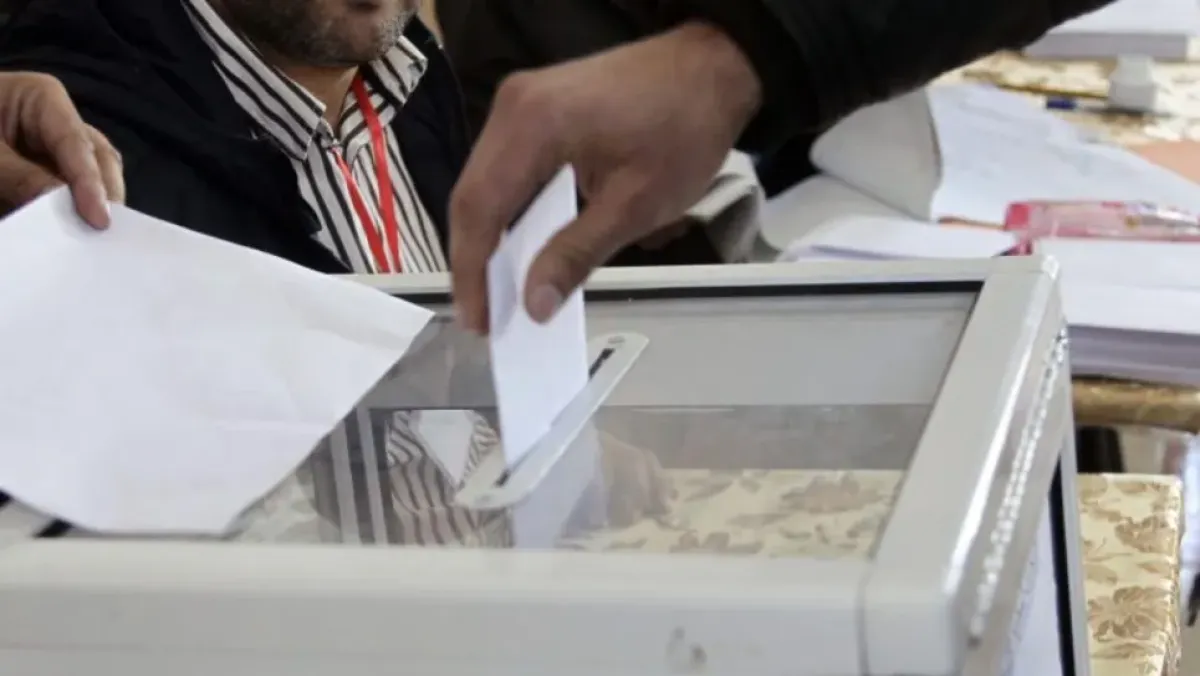
Young people under the age of forty constitute more than half of the candidates for the legislative elections scheduled for next July 2, which on paper gives them ample opportunity to exceed the current number of young representatives, estimated at 140 when they are elected in June 2021.
Based on the statistics announced by the Independent National Election Authority, 5,304 candidates under the age of 40 are running in the competition, which represents 54 percent of the total number of 9,854 candidates competing for 407 parliamentary seats, a percentage that makes this bloc an influential number in the equation for forming the map of the next National People’s Assembly.
However, the overwhelming numerical presence does not necessarily mean guaranteeing a larger share of seats, as this group faces several field challenges related to the nature of the electoral system. Adopting an open list links victory to the candidate’s ability to garner direct personal votes and be at the top of the rankings, not just by having his name on it. The large number of young candidates may turn into a curse due to the fierce competition among the Sunni group itself, in addition to the weak interest of an important sector of young voters in voting, which makes many of them captive or at the mercy of the votes of the older age groups, which often tend to prefer those with long experience in political or social work.
The strong entry of young people into the electoral arena poses another challenge related to financial capabilities, especially for candidates under the banner of parties, where differences are evident compared to independents, at a time when the state is responsible for financing the campaigns of free youth under 40 years old, within the limits of 30 million centimes.
The obstacles do not stop at the financial aspect, but extend to the factor of political experience, especially for those coming from outside the traditional formations or belonging to organizations that do not have a grassroots formation, which puts them before real difficulties in managing campaigns, communicating with voters, and organizing mass activities.
Double challenges
Despite the growing social and professional presence of women, female candidates face a more complex path that does not end with passing the entrance exam and obtaining voter support, but rather extends to the battle to persuade voters to vote directly for them, especially after the abolition of the quota system. This review led to a reduction in the female presence in national and local elected bodies, as the share of women in 2021 fell to only 32 female representatives, that is, at the level of female representation that it was about twenty years ago, after women recorded their highest percentage of attendance in the 2012 elections with 146 female representatives (approximately 32 percent of the seats) and 120 female representatives in the 2017 elections out of 462 seats. The challenges here are not limited to legal aspects, but rather extend to some social perceptions that still view women in the public sphere in a lower light than men when measuring eligibility for positions of decision-making and responsibility, despite the significant improvement in women’s level of education and professional presence.
Despite these coercions, the political formations chose to continue betting on the feminist element and granting it advanced positions to lead the lists. For example, the Labor Party relied on women, as they represented half of its candidates in some major cities, with them topping five full electoral lists. The Movement for Society for Peace is also betting on women by nominating 109 women, seeking to exceed its previous quota of only four elected women in the outgoing Council.