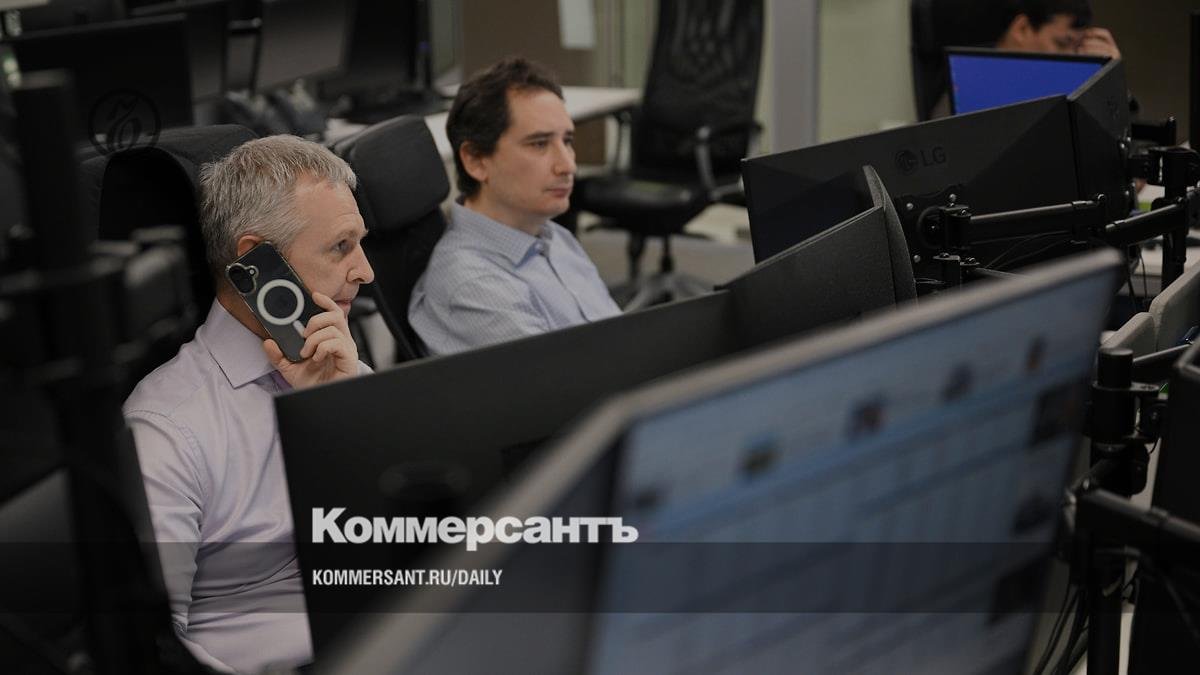
In the last full working week of June, the Moscow Exchange index showed a record decline in eight months, losing almost 6%. The drop could have been more significant if the Central Bank had not punished a large broker for violating presidential decrees on working with blocked Russian shares owned by non-residents.
The Moscow Exchange index almost ended the last full week of June 2026 at a three-year low. During trading, it reached 2203.25 points, the minimum value since February 2023. However, investors were replaced after the Bank of Russia announced the cancellation of the depositary license of Alor+, one of the largest Russian brokers (according to Kommersant, at the end of 2025 it ranked 7th in terms of revenue from specialized services). The regulator’s claims related to the fulfillment of the requirements of decrees of the President of the Russian Federation affecting work with foreign creditors and investors, as well as repeated failure to comply with the regulator’s instructions during the year. Alor+ stated that “temporary restrictions may affect the service of retail clients,” whose assets will be transferred to “service in another depository.” Work with institutional clients “is preserved in full, since they are serviced through a specialized depository.”
As a rule, such administrative decisions have little impact on the stock market.
However, not this time – quotes soared, and the IMOEX index within an hour added 5% and reached 2323 points. The volume of transactions exceeded 50 billion rubles.
According to the manager of a large equity fund, “there have long been rumors that blocked Russian securities held by foreign investors are leaking into the market, putting pressure on quotes.” In particular, according to the Central Bank, non-residents acted as net sellers of shares on the secondary market in April-May (a total of 11.8 billion rubles). Non-bank financial organizations, systemically important banks, and trust managers also showed comparable sales volumes in these months.
Under such conditions, the brokers through whom such transactions were carried out could open short positions en masse. As the portfolio manager of another large management company explains, the rebound that occurred “is a short squeeze (mass closure of short positions.— “Kommersant”) which started across the blue chip spectrum.”
Such positions could “not be closed for a long time, since the securities fell in price almost without rebounds,” notes Kommersant’s interlocutor. Now some of these positions could be knocked out by a decision of the Bank of Russia.
As the manager of a large stock fund notes, administrative steps against a number of professional participants “give hope that they have begun to restore order in the market, which means that such sales will decrease,” he notes.
Nevertheless, the final result of the week turned out to be the worst since October 2025 – the index lost almost 6%, stopping at 2285.61 points.
The weakness of the Russian stock market was determined not only by the actions of non-residents. As investment banker Ilya Sushkov points out, inflation is not slowing down steadily enough, which means that the rate cut cycle will be slower than expected back in the spring. In addition, GDP growth forecasts for 2026 look more like stagnation than a recovery story, the expert notes. In addition to this, the high budget deficit increases fears of “new tax decisions, pressure on dividend flows of state-owned companies and an increase in the supply of OFZ, which additionally competes with the stock market for ruble liquidity,” notes Mr. Sushkov.
According to Natalya Malykh, head of the equity analysis department at Finam Financial Group, geopolitics played a dominant role in the market decline in recent days, when “the G7 countries confirmed their commitment to strengthening support for Ukraine and plans to increase economic and military pressure on Russia.” Another factor was the “hawkish” results of the Central Bank meeting on June 19, when the key rate was reduced by only 25 basis points and the regulator also tightened its forecasts due to pro-inflationary factors in Russia.
Portfolio manager at Alfa Capital Management Company Nikita Zevakin believes that investors’ actions are predominantly emotional in nature, incorporating a number of the most negative scenarios into prices.
At the same time, “sales are ahead of real changes in the macro picture, which is typical for corrections driven by sentiment rather than revisions in estimates,” he notes.
Overall, support factors remain extremely weak. “This is an oversold market, low multipliers, possible reinvestment of dividends in July, as well as a weakening of the ruble, which is not enough for a sustainable reversal,” points out Ilya Sushkov. Natalya Malykh does not rule out that next week the index may drop to 2100–2150 points.