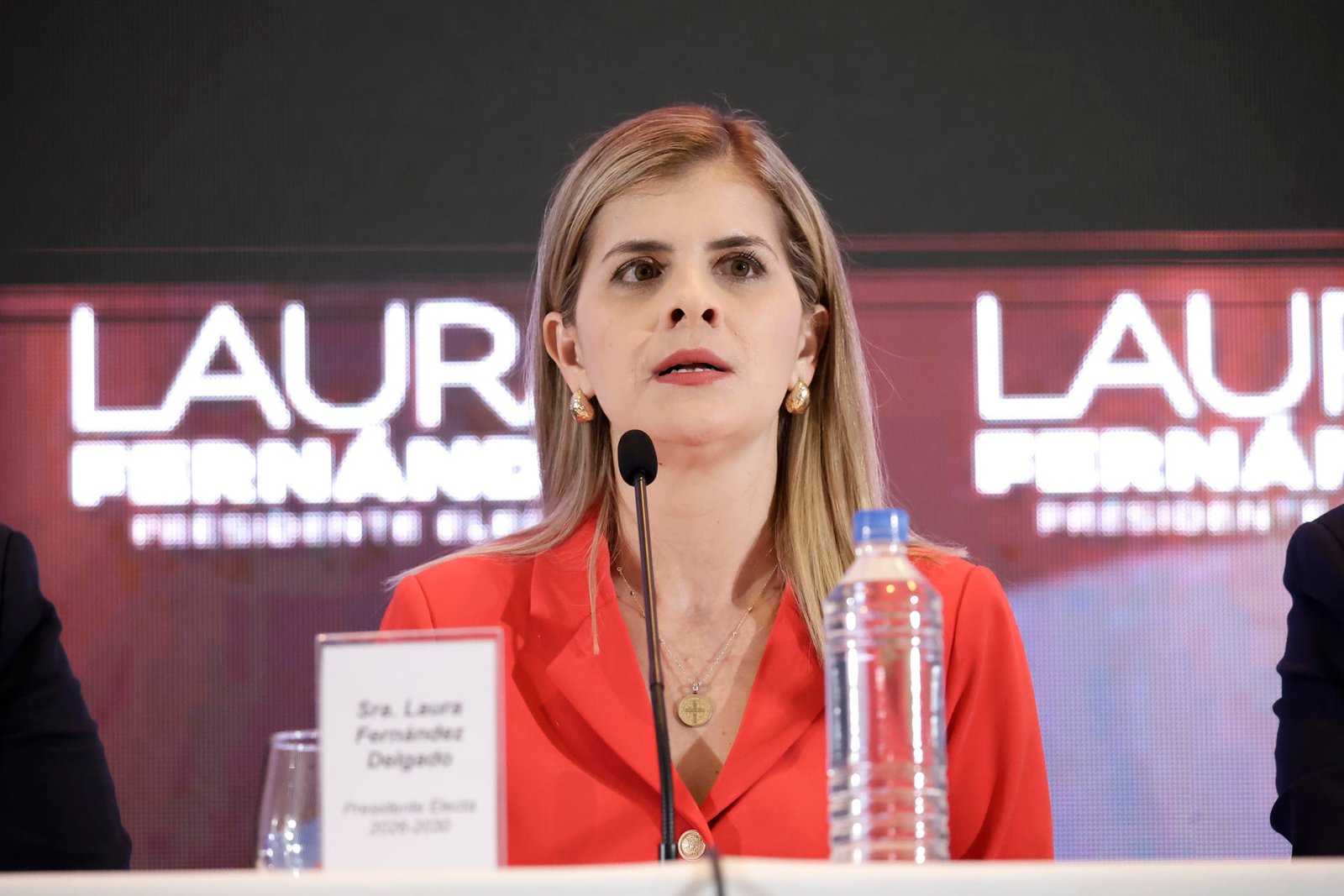
Cantinflas, a great popular philosopher, said that “one thing is one thing and another thing is another thing“. It would be appropriate for the President of the Republic, Mrs. Laura Fernández, to remember it. Or, if she prefers not to do so, to abide by that other saying that recommends “Do not confuse gymnastics with magnesia”.
Regarding his regrettable statements about Costa Rica’s relations with Nicaraguathe President has argued that Costa Rica’s modest position in the face of the prevailing dictatorship is due to two main reasons: not to jeopardize commercial ties with that country and to be good neighbors, because it is desirable that “everyone be in their home and God in everyone’s.” He has based all of this on a grotesque corollary: it is not up to his administration to harass a government “chosen” by the Nicaraguan people.
Paying attention to Cantinflas, let us clarify that no one has said that Costa Rica should go to war with Nicaragua, suspend relations with the dictatorship that governs it or assume as its own actions that are the exclusive responsibility of the Nicaraguan opposition, which, by the way, has insisted that the exit from the disastrous Ortega-Murillo regime must be political and peaceful.
Although over two centuries or so Costa Rica has sometimes had to intervene, even militarily, in its northern neighbor to safeguard our national security, such is not the case today. Insisting on this is what in good ethics is called “foolishness” and distances the debate from the core issues under discussion.
What are those core themes? Well, those that allude to three aspects: the historical principles and values that underpin our foreign policy; the opprobrious dictatorial nature of the Ortega-Murillo regime and its threats against the internal security of our country; and the certainty that a firm position on the aforementioned issues does not put at risk the economic and commercial ties that, out of mutual necessity and convenience and regardless of major or minor discrepancies in the bilateral agenda, must be attended to with diplomatic wisdom and diligence by the States that share a common border.
Costa Rica’s contemporary foreign policy is based on universal principles and values, such as the defense of human rights, the promotion of demilitarization and disarmament, and the protection of the environment.
This inevitably entails denouncing and acting decisively against those agents, state or not, who actively and deliberately conspire against such objectives, because our internal security depends on the preeminence of International Law. The dictatorship in Nicaragua is the best example of this danger: it kills, rapes, tortures, expels, expropriates, denationalizes and brutally represses its people, the Catholic Church and other faiths, private companies, non-governmental organizations and anyone who opposes it.
But it also takes advantage of our neighborhood to extend its tentacles for purposes of harassment, intimidation and death against the Nicaraguans who live among us. To say that this regime was “chosen” by that suffering people is an unusual barbarity and an immense and unnecessary nonsense.
It seems serious to me that the president has not corrected her mistake and insists on her original theses. They are wrong.
I say this with all due respect, and not to bother, as she maintains, but to assert a foreign policy heritage that I consider precious and irrevocable.
*This article was originally published in Extra Diary.