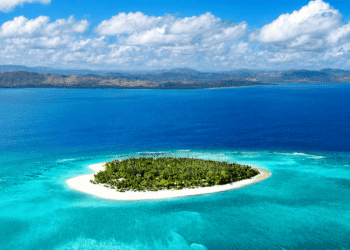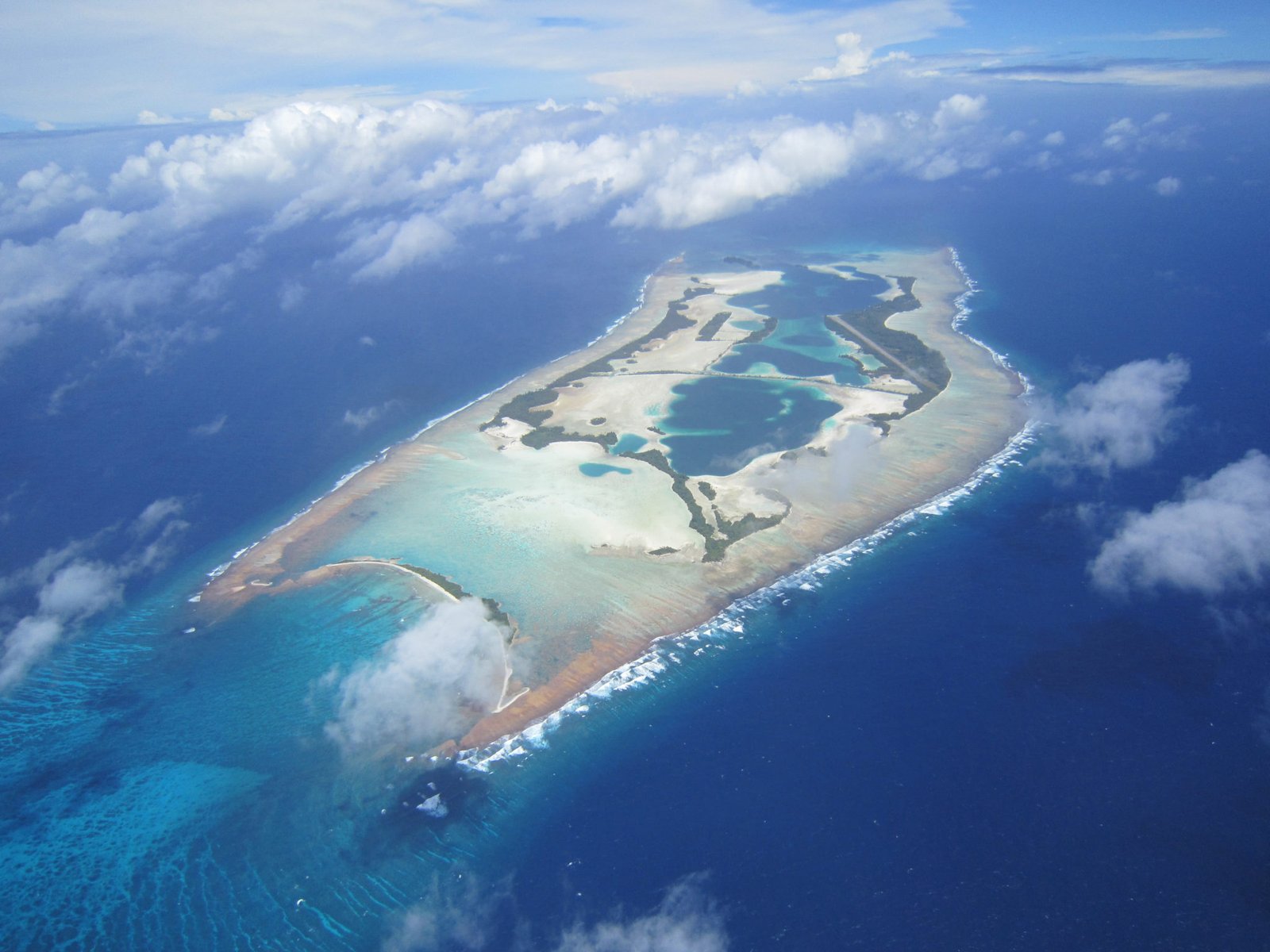
With a total land area of just 4.6 square miles, the atoll of Palmyra, located 1,000 miles south of Hawaiʻi, is so small that it’s not even a dot on many maps of the Pacific.
And yet Palmyra’s vibrant ecosystem reaches hundreds of miles in every direction, constantly expanding on the wings of far-flying seabirds; on the fins of roaming sharks, tuna, and marine mammals; and on the ocean currents that circulate from Palmyra across the Pacific.
In the same way, Palmyra’s impact on conservation extends far beyond its reefs. Scientific research and conservation programs developed at Palmyra help protect natural resources here in Hawaiʻi and across the globe.

Ideas showcases stories, opinion and analysis about Hawaiʻi, from the state’s sharpest thinkers, to stretch our collective thinking about a problem or an issue. Email news@civilbeat.org to submit an idea or an essay.
This June, for World Ocean Month, we want to celebrate Palmyra and raise awareness about the importance of protecting this special place. During a time when Pacific reefs and atolls are under increasing pressure, it is crucial that we preserve Palmyra, both as a natural wonder and as a center for conservation science.
Its history is also important: with its abundance and location, Palmyra was likely a rest area, a resource gathering place, or a sacred space for Indigenous peoples who have travelled around the Pacific since 400 A.D.
What makes Palmyra so special? Many experts will tell you it’s one of the healthiest, most flourishing atolls in the world. It’s also a remarkable story of nature’s resilience and the power of conservation: after being dredged and deforested during World War II, the islet and its abundant biodiversity are now thriving again — thanks in part to restoration efforts by The Nature Conservancy and many partners.
Just as vital as Palmyra’s intact land and seascape is the insight it offers into how resilient ecosystems work and how we can better protect them. Research done at Palmyra has been used to drive conservation efforts worldwide. And programs developed at Palmyra are now being successfully implemented in Hawaiʻi and beyond, protecting ecosystems across the Pacific. This is more important than ever with the anticipated effects of this year’s super El Niño which may cause warmer ocean waters and increased storms.

A great example of the value that Palmyra can provide is the “digital reef” that was first developed at the atoll. Using data gathered over years and decades, scientists built a detailed computer model of the atoll’s complex reef ecosystem, including ocean currents, temperatures, corals, and more.
By using this model to simulate the impacts of climate change, they could pinpoint areas of the reef that would be more resilient to rising temperatures, predict which conservation efforts would be most effective, and even identify specific heat-resistant corals that could be propagated to make other reefs stronger.
These powerful technologies are now being used to accelerate conservation at Olowalu, Maui, protecting an ancient Hawaiian reef that we now know — thanks to modeling — plays a critical role in spawning corals that seed other reefs throughout Maui Nui. Similar programs are protecting reefs in Belize, Indonesia, Palau, the Marshall Islands.
But this is just one example of Palmyra’s impact.
Palmyra with its rich biodiversity is a jewel of the Pacific.
From a program developed on Palmyra to prevent drifting Fish Aggregating Devices (FADs – used by industrial fishing fleets to lure fish) from damaging fragile coral, to new technology that combines machine learning and drone imaging to gather detailed data about the health of coral reefs, to innovative approaches to restore native forests and abundant seabird populations, programs developed at Palmyra are critical to the future of conservation in Hawai’i and beyond.
There’s no doubt that Palmyra with its rich biodiversity is a jewel of the Pacific. But it’s also a critical piece of the puzzle in preserving our ecosystem here in Hawaiʻi and preparing for a warmer world.
We need to protect Palmyra for future generations. By investing in conservation and research, and safeguarding it against a new era of threats, we can ensure that this special place continues to be a resource to the world for years to come.