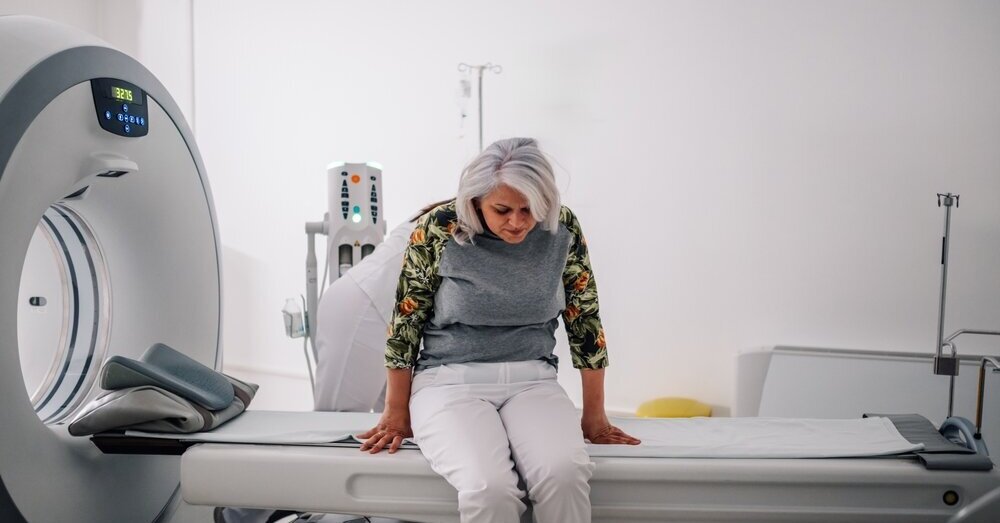
“I read the response and I was just hysterical. It said ‘from the ceiling.’ How can a CT scan not notice that such an organ has been missing for a long time?” – asks a mature woman.
Two doctors examined before the study
According to Kristina, it all started with an ultrasound of the abdominal organs at the Affidea Lietuva clinic. At first, as the woman says, the doctor who examined her noticed possible changes, but recommended contacting another specialist who works specifically with health problems in this area.
The second specialist performed the ultrasound on the woman again. According to Kristina, he also had suspicions about the condition of one of her internal organs, but an ultrasound examination alone was not enough to make an accurate diagnosis.
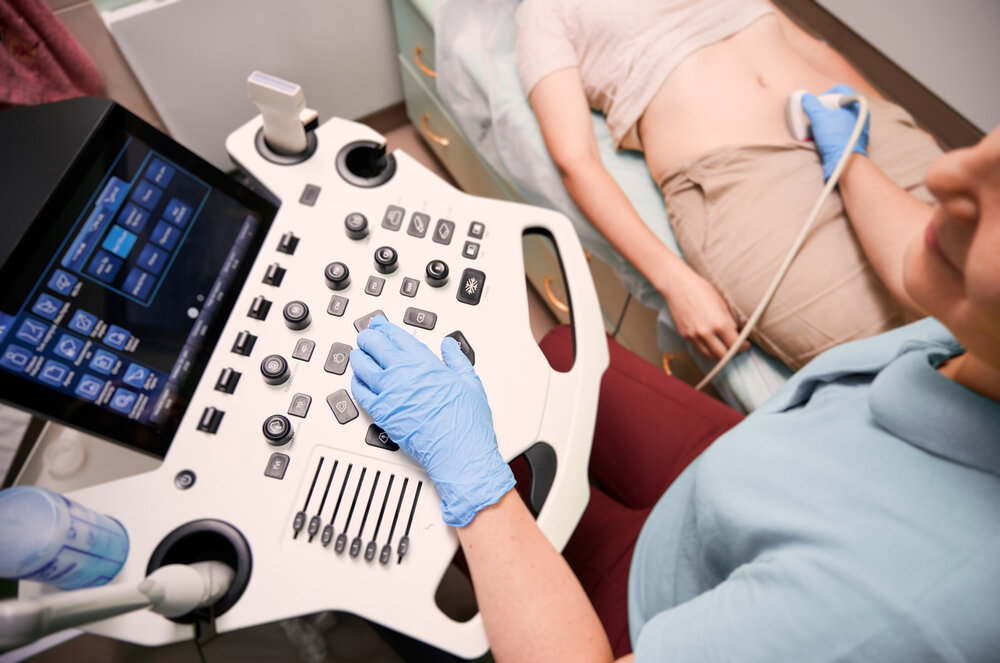
Shutterstock photo/Abdominal ultrasound
The specialist recommended performing a computed tomography with a contrast material, which should have helped to assess in more detail the possible changes observed during the echoscopy.
Kristina admits that she did not want to take the contrast material because she has other health problems. Still, she agreed to the test, hoping to finally learn what the two doctors who examined her had seen.
When I opened the research answer and started reading, I was just hysterical.
The woman says that she has no complaints about the procedure itself and the staff’s communication: “The service was very good. The staff kindly explained everything, told about the examination and the contrast material,” she recalls.
However, Kristina says she was stunned when she received the study description sent by e-mail.
“When I opened the answer and started reading, I was just hysterical. Imagine, I had my uterus removed ten years ago, and the test report says about its condition, what its walls are, etc. How can a CT scan not see that this organ has been gone for a long time? How can the rest of the test report be trusted at all?” – the woman thinks.
Other conclusions were also questioned
The woman had doubts not only about the record about the removed uterus. According to her, the examination report indicated that the walls of another internal organ were normal, although two doctors who had previously performed an ultrasound on her had noticed possible problems.
When I read about the uterus, which I don’t have, I wondered if the whole description was not prepared according to some kind of template?
Kristina does not want to publicly name which organ she is talking about, but emphasizes that it was precisely because of these doubts that she was prescribed a CT scan.
“Both echoscopists said that they saw something, but they couldn’t say exactly what it was. It was explained to me that a CT scan with contrast should show it more accurately. And when I did the examination, the answer said that everything is fine. When I read about the uterus, which I don’t have, I wondered if the entire description wasn’t prepared according to some kind of template,” the woman from Vilnius shares her doubts.
She emphasizes that she cannot evaluate the test images herself or determine whether the medical conclusions in the description are correct. However, the apparent discrepancy regarding the removed organ called into question the credibility of the entire study.
He recalled a similar experience before the operation
This situation also reminded Kristina of the events she experienced about ten years ago in another medical institution. Then, even before the hysterectomy, she also underwent a radiological examination.
According to the woman, the description of the study did not indicate any major changes, but during the operation the doctor discovered a problem that the study did not show.
“After the operation, the doctor told me that if she had started the operation just a few centimeters in a different place, she might not have noticed the problem. And the examination description stated that everything was fine,” remembers Kristina.
That is why the current case caused even more anxiety for the woman. She fears that a potentially inaccurate description of the test could mislead her doctor and affect further decisions about her treatment.
Contacted the clinic
Having noticed the discrepancies, Kristina contacted the Affidea clinic and asked that her study and its description be reviewed again.
According to the patient, she was promised to clarify the information, but has not yet received a final answer.
“I’m not just talking about wasted time or money. I had a contrast injection, a test ordered by doctors, and the results were supposed to help clarify my medical condition. If the answer is wrong, how can the doctor treating me rely on it?” – asks Kristina.
15 minutes approached Affidea Lietuva and asked for an explanation of how CT scan descriptions are prepared, who is responsible for their evaluation, and what actions are taken when a patient reports potentially inaccurate data. We will supplement the article after receiving the clinic’s response.