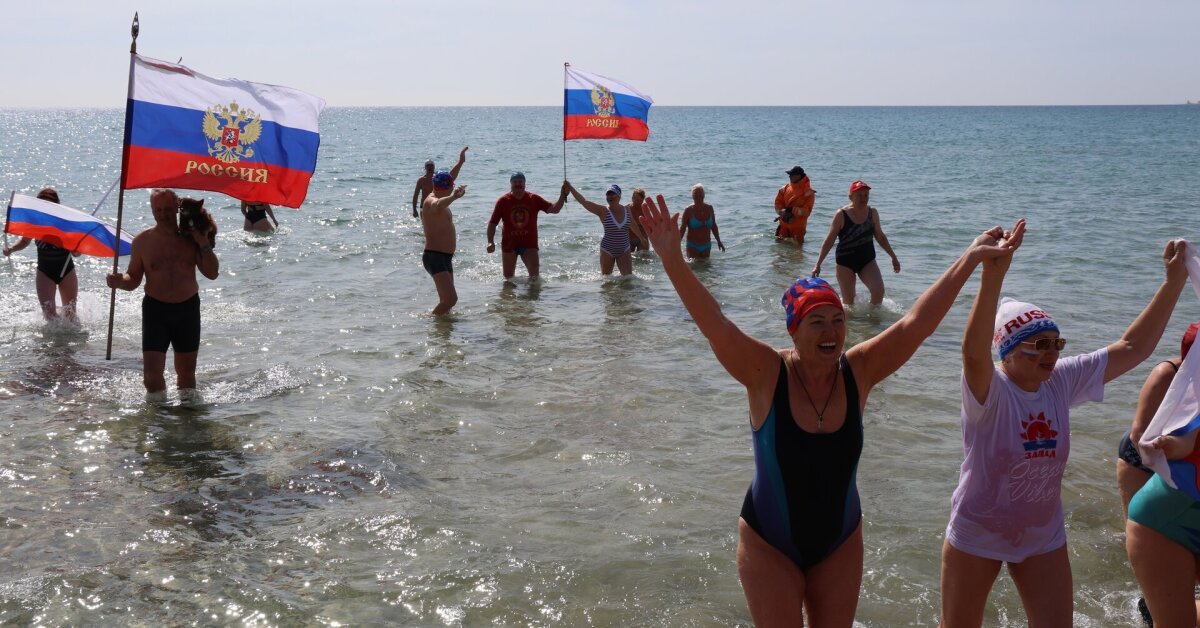
“Ukrainians in the occupied territories, forgive me for the constant tension, closed bridges and roads, darkness, lack of peace and stress,” to some residents of occupied Crimea applied Robert Brovdis, commander of the Unmanned Systems Forces of the Armed Forces of Ukraine.
In recent weeks, Ukraine has intensively attacked the logistics, military supply and energy infrastructure of Crimea, and Ukrainian Deputy Prime Minister and Minister of Digital Transformation Mychail Fedorov stated seeking to turn the peninsula into an isolated territory.
So far, the Ukrainians are succeeding in this task. How Crimea is increasingly turning into an island is written in a report submitted by the Russian opposition publication “Vazhnye istorii” in the analysis.

Crimean Bridge / Sergei Malgavko / ZUMAPRESS.com
Transportation: Travel to Crimea has become longer and more difficult
Currently, there are two main ways to get to Crimea – by car or by train. However, in both cases, travelers face additional restrictions and long waiting hours.
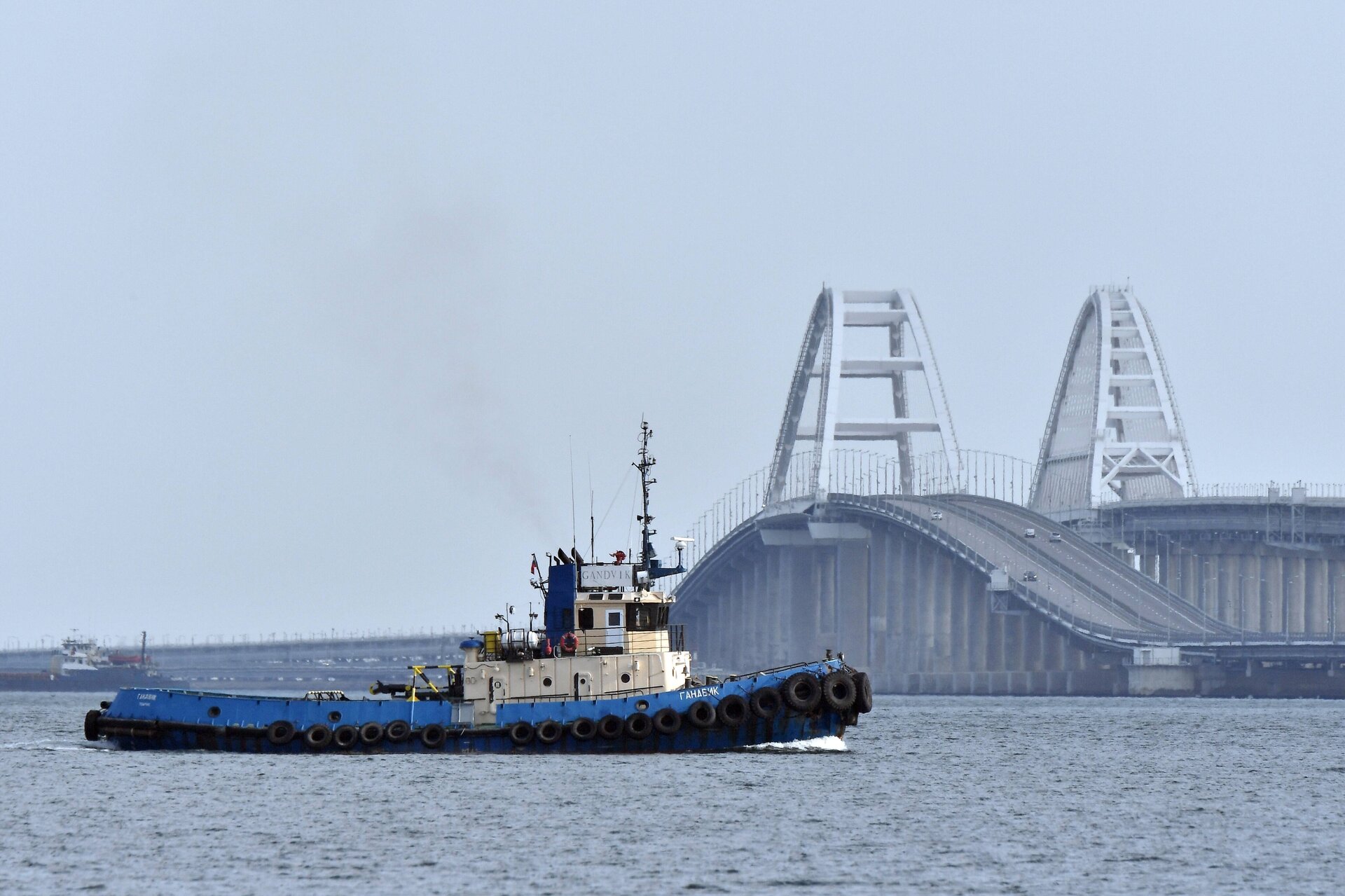
Traveling by car. Opened in 2018, the vehicular part of the Kerch Bridge (often called the Crimean Bridge) became the main route from Russia to Crimea.
After the explosion of the bridge in October 2022, the Russian authorities banned trucks from crossing it. Currently cannot use the bridge cargo transport with a mass exceeding 1.5 tons.
All drivers must pass a check before entering the bridge. From November 2025, it will be the same electric cars are no longer allowed and hybrid cars because, authorities say, their batteries look similar to explosives in X-ray systems.
In August 2025, the Russian Federal Security Service (FSB) announced that it had prevented a terrorist attack – its organizers had allegedly hidden 130 kilograms of explosives in the battery compartment of an electric car and planned to detonate the vehicle on a bridge.
Although the Kerch Bridge is considered one of Russia’s most important infrastructure facilities and is heavily guarded, Ukraine has repeatedly demonstrated its ability to strike strategically important targets in Crimea.
Representatives of Ukraine’s unmanned systems forces recently hinted at possible operations, saying: “We don’t want to suggest anything, but tonight we saw the Crimean bridge very closely from different angles.”
Additional inconveniences are caused by security measures. Russian authorities regularly stop traffic on the bridge after receiving reports of drone threats. Such restrictions sometimes last for hours – for example, on May 17-18, traffic was stopped for more than ten hours.

Crimean bridge / AFP
Even when the bridge is operational, vehicle flows remain high. In recent days, queues of 700-800 cars stretched from the Crimean side to checkpoints, where drivers had to wait up to three hours. When driving in the opposite direction, there were queues of up to 300 cars, and the waiting time was about an hour.
After the explosion of the Kerch bridge, trucks were recommended to use the so-called land corridor – highway R-280, which leads along the coast of the Sea of Azov through the Russian-occupied territories of Donetsk, Zaporizhia and Kherson regions.
This route is important not only for cargo transportation. Crimean occupation authorities dataabout 15 percent in 2025. tourists – more than a million people – came to the peninsula precisely through other Ukrainian territories occupied by Russia.
In the spring of this year, the Ukrainian armed forces significantly intensified drone strikes on Russian territory, targeting targets 30-200 kilometers from the front line. One of the main points of such attacks became the R-280 highway.
Two weeks ago The Ukrainian side reportedthat the total traffic flow on this road decreased by almost half – from 11 thousand up to 6.5 thousand vehicles per day. According to him, the number of trucks decreased by as much as 71 percent. – from 3.8 thousand up to 1.1 thousand per day. For comparison, the Russian authorities announced last year that the load of the R-280 bus reaches up to 20 thousand. vehicles per day.
Ukrainian forces are attacking not only the land corridor to Crimea, but also the main bridges connecting the peninsula with the occupied territories of Ukraine. The Csonhar Bridge over the Syvash Bay and the bridge over the North Crimea Canal at Perekop are regularly hit.
On June 19, OSINT the CyberBoroshno project announcedthat currently only passenger cars are allowed on the Chonghar Bridge, and freight transport is diverted by a pontoon ferry. At that time, the Perekop Bridge was believed to have suffered critical damage, so a temporary embankment-type crossing was installed next to it.
Ukrainian forces are also attacking other bridges that can be used to reach Crimea. One of them is two bridges connecting Henicheska with the Arabat Spit, where the construction of pontoon bridges has also begun. Others are bridges across the North Crimean Channel to the west of the peninsula. After moving through them, you can reach Armyansk, and from there – Crimea itself.
Alternative traffic is also stuck
Trains to Crimea run through the Kerch Bridge railway section. From Kerch, Simferopol, Sevastopol, the resort cities of Feodosia and Yevpatoria, as well as Armyansk and Dzhankoy in the north of the peninsula can be reached by rail.
In June, the Ukrainian armed forces also struck the railway infrastructure.
A suburban train, a locomotive pulling the Moscow-Simferopol route, as well as a bridge and a traction substation were attacked. The occupying authorities of Crimea were forced to limit the traffic of trains and electric trains inside the peninsula. From June 20, trains from Russia run only as far as Kerch, and passengers are transported further by buses.
Before the opening of the Kerch Bridge, the ferry route was one of the main connections between Russia and Crimea. After the explosion of the bridge in October 2022, the transfer began to operate again – first for freight transport, and later for passenger cars.
In 2024, seven ferries operated on the route, including car and rail ferries.
Ukrainian forces began to carry out strikes two years ago. Both railway ferries were then damaged, and one of them ran aground.
IMAGO/Scanpix/Crimea Bridge
On June 21, Ukrainian forces attacked the port of Caucasus. General Staff of the Armed Forces of Ukraine reported about damage to port infrastructure and two car ferries. Russian side confirmed a blow to one freight car ferry. Same day ferry service was stopped.
From February 2022, Simferopol airport does not serve passenger flights. Its activity has been suspended.
Gasoline crisis
Disruptions to fuel supply began back in May, when Ukrainian forces began attacking fuel tankers on the land corridor to Crimea and oil bases on the peninsula itself.
At first, the government restricted the free sale of gasoline, with one person being allowed to buy no more than 20 liters of fuel, and in some places, fuel was sold only by coupons. They were primarily intended for official transport.
Later, in Sevastopol, a gasoline distribution system based on QR codes was introduced to residents. They were only available through the Russian messaging app Max. City manager Mikhail Razvozhaev regularly announced the time when it was necessary to enter the car number and the desired type of fuel into a special chatbot. After receiving the QR code, it was possible to purchase 20 liters of fuel until 21:00 the next day, after which the code was no longer valid.
On June 22, gasoline sales were completely stopped in Crimea and Sevastopol – both by QR codes and coupons. Local authorities have warned that there is no reason to expect trade to resume in the near future.

Unsplash photo/Gas station
Electricity and water: disconnections and restrictions
Ukrainian forces are attacking Crimea’s energy infrastructure – power substations, the only Hlebovsk gas storage facility on the peninsula, and gas compressor stations.
Despite the construction of an energy bridge from Russia’s Krasnodar region in 2016, Crimea continues to be a region lacking in electricity.
Electricity production in Crimea depends on gas, which is used to fuel local thermal and cogeneration plants. A Crimean war expert explained to the Krym.Realii publication that the Hlebovsk gas storage works as a reserve – it supplies gas to the system during periods of gas shortage.
The shocks to this facility and the gas compressor stations disrupted the electricity production chain, which is why some power plants are not operating at full capacity and are producing less electricity.
After the June 21 Ukrainian strikes in Sevastopol, scheduled power cuts began, and later the restrictions were extended to other districts of Crimea. In some places, the electricity supply is limited according to the schedule – three hours without electricity, three hours with electricity. Residents are also encouraged to use less air conditioners and other energy-consuming appliances.
On the morning of June 24, after new attacks, all of Sevastopol and parts of other Crimean districts, including Yevpatoria, remained without electricity. Due to power outages on June 21-23, water supply was also disrupted in some areas as pumping stations were not working.
No serious disruptions to gas supply were reported, but local media reported a shortage of liquefied gas and rising prices.

123RF.com photo/Elektra
Food products: restrictions and rising prices
At the beginning of June, supermarkets began to limit the sale of some food products, and some products disappeared from the shelves. At the same time, prices began to rise.
At the beginning of June, residents rushed to stock up, as restrictions appeared in the trading places – one customer was allowed to purchase no more than three kilograms of sugar, buckwheat, rice and other grains.
According to the Crimean authorities, between 6.9 and 7.4 million people visited the peninsula in 2025. tourists. Two years ago, the local Ministry of Tourism announced that 30-35 percent Crimea’s income is directly or indirectly related to the tourism sector. Officially, it employs about 40,000 people. people, and together with related activities – up to 300 thousand.
However, this year the tourism sector is facing difficulties. From May 24 to June 6, new reservations in Crimea were 31 percent. less than in the same period last year, and in Sevastopol – 40 percent. less. At that time, 79% of the cases were canceled in Crimea. reservations, in Sevastopol – 71 percent.

Zumapress/Scanpix/Vacationers in occupied Yalta, Crimea
Representatives of the tourism business say that about 80% of the trips are canceled in June. of previously booked stays, and about half in July and August. According to them, for every two new reservations, there are ten cancellations.
Local residents and businessmen acknowledge that the deteriorating security situation is deterring holidaymakers and increasingly affecting the region’s economy.
On June 22, the Crimean authorities announced that they were stopping the admission of children to local recreation camps. The scheduled removal of children from the international children’s camp “Artek” has also started.