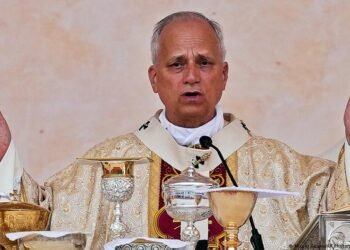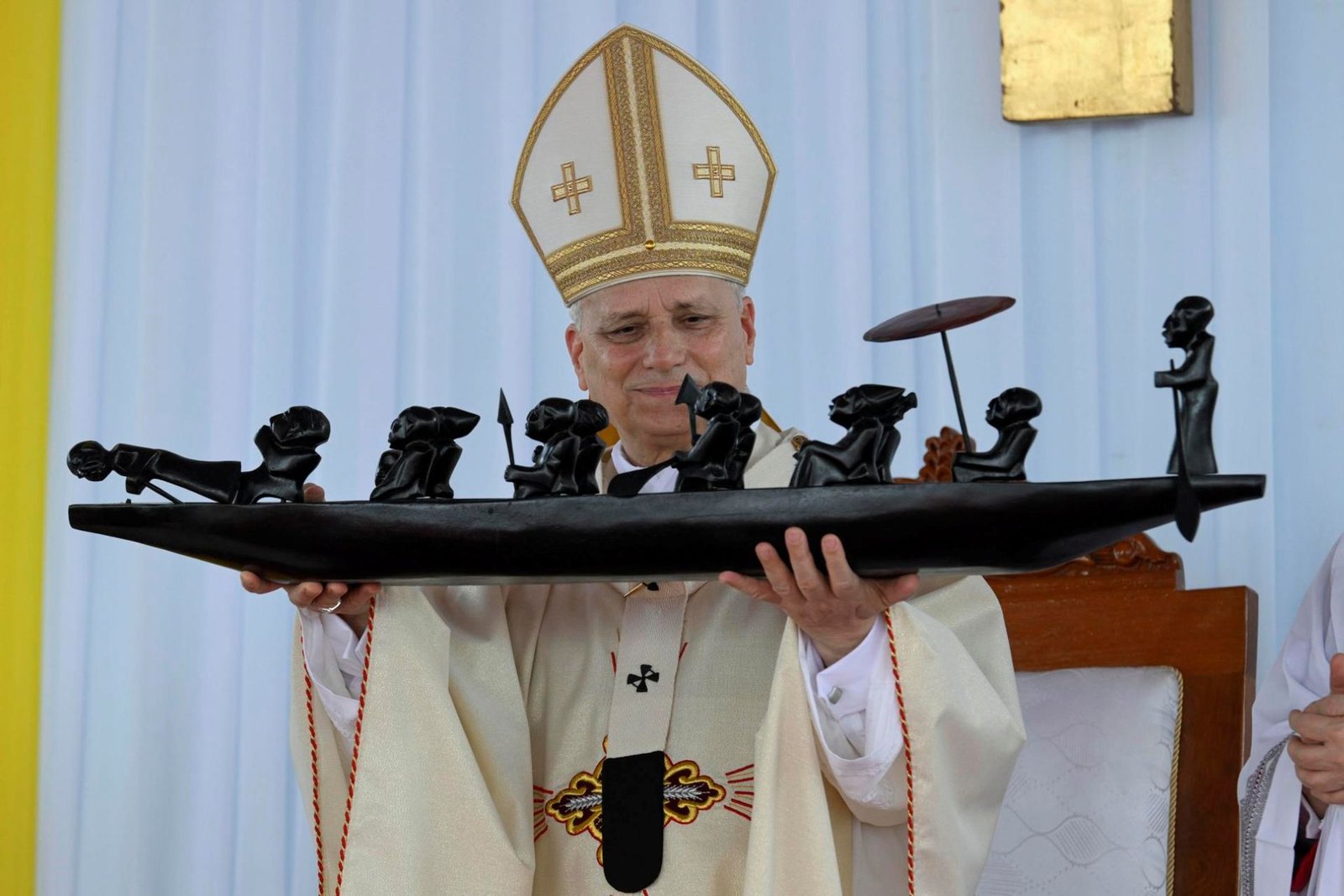
The last two popes have been religious leaders necessarily confronted with a politician like Donald Trump. Francisco was an Argentine Jesuit, who came to the archbishopric of Buenos Aires in the years of democratic transition, after the last military dictatorship, and strongly identified with the fight against poverty. The American Robert F. Prevost, Leo XIV, is a pontiff who trained as an Augustinian missionary in various cities and towns in Peru, between the end of the 20th century and the beginning of the 21st century.
As we have pointed out here, the last two hierarchs of the Catholic Church can be considered Latin American popes. A politician like Trump, who combines an aggressive managerial approach with punitive and warlike diplomacy, both in the Middle East and in Latin America and the Caribbean, had to clash with the two popes. Since the election of Francis, in 2013, until the nascent pontificate of Leo XIV, the world vision of the Church is placed at the antipodes of Trump’s project.
Tensions began with Francisco since 2016, as soon as Trump arrived at the White House for the first time. The Pope, who had maintained an excellent relationship with Barack Obama, due to an affinity in the approach to Cuba, and who would later be very close to Joe Biden, among other things, due to the president’s Catholicism, reacted against Trump’s xenophobia and anti-immigrant policies. According to Francis, the separation of families on the other side of the border with Mexico and the hunt for migrants in the United States “were not truly Christian.”
When Trump promised the destruction of Persian civilization, through a devastating military intervention in Iran, Leo XIV responded that the threat was “unacceptable” and that the task of a leader like the president of the United States was to seek world peace. The Pope said that, under Trump, American policy was being conducted with an “illusion of omnipotence,” extremely dangerous, in the midst of the global chaos of the 21st century.
Trump responded to Leo XIV with a long barrage of expletives on his Truth Social network. He said that the Pope was “weak on crime and terrible in foreign policy,” that what was “unacceptable” was that Iran possesses nuclear bombs — which it does not possess. Although the Pope did not directly refer to the situation in Venezuela, Trump defended his policy towards the South American country and the Greater Caribbean, and suggested that the pontiff was siding with the tyrannies of the planet.
Trump’s reply was directed squarely at one of Leo XIV’s questions, not essentially referring to the war between Israel and the United States against Iran. To what Trump responded was to the precise observation of the Pope that some Western democracies, such as the United States, were incubating “tyrannies of majorities.” The vice president, JD Vance, a converted Catholic, joined the complaint, pointing out that “the disciples of Christ should never side with those who wield the sword and throw bombs,” referring, not to Israel, the United States or Russia, of course, but exclusively to Iran.
In his tension, Trump made one of the biggest mistakes against a Pope of the Catholic Church, which is to challenge the apostolic religion with a secular religion. The president promoted images of himself anointed by Christwhich must have bothered the Holy See more. Of all of Trump’s reactions, the most extreme, however, the one that hurts the Vatican the most, is the one that suggests that the Pope was elected to satisfy Trump, because he is an American.
Once again, the effect of this tantrum is counterproductive to Donald Trump’s own leadership. His allies in Europe, such as the Italian Prime Minister, Giorgia Meloni, turn their backs on him, and the Latin American clergy, who could view his policy towards Venezuela, Nicaragua or Cuba with sympathy, prefers to remain on the side of their religious leader.
*This article was originally published in La Razón de México.