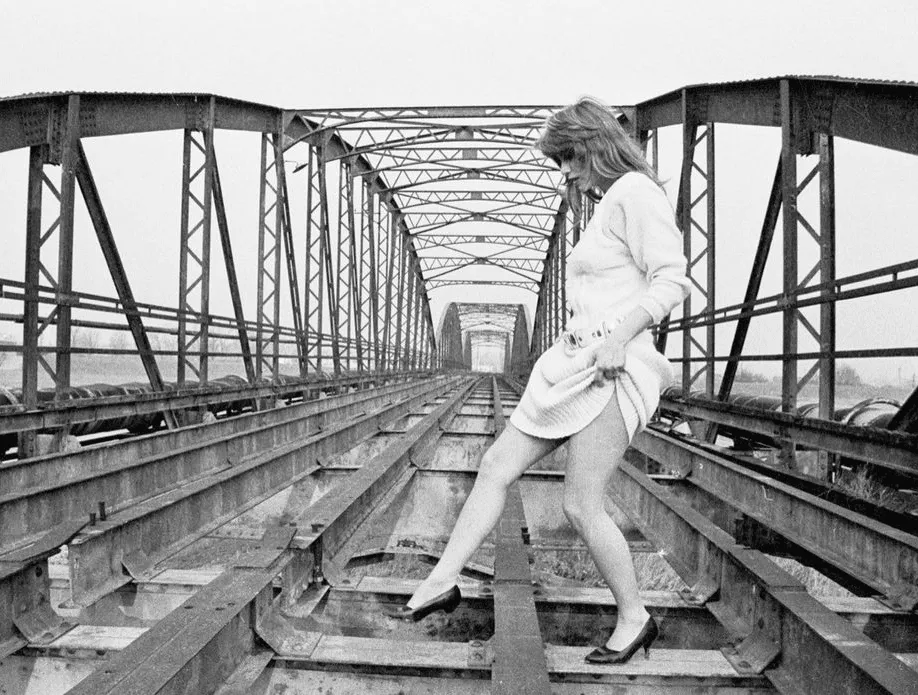
“You know what they say – the old live on memories, the young live on hope,” says traveling photojournalist and ecologist Romeo Ibrišević, who this time traveled to Zagreb’s past instead of latitudes and longitudes. Sorting through his archive of photos, he came across shots that struck a chord with him.
– I remembered that interesting story about how once upon a time there was a bridge on the Sava in Zagreb that led to Jakuševac. To me, it was like that, battered and dilapidated, an interesting location and a photographic backdrop for early works. Numerous famous and unknown faces posed there, such as Blue Grass of Oblivion (pioneers of country music in Yugoslavia), Romeo said.
Rafts used to cross from one bank of the Sava to the other were once a common sight, and the main crossing was at the end of today’s Sava road. A wooden bridge first stood there, and in 1892 it was replaced by an iron one – with a section for cars and pedestrians.
It took decades to build the steel structure of the bridge on the existing pillars in Sava, when Milivoj Frković designed the first connected structure. The old one ended up in Jakuševac, where it diligently served vehicles and pedestrians for the next 40 years.
The new and the old Red Bridge in the extension of Držićeva Street connected Zagreb with Turopolje. After the Youth Bridge was built, the Red Bridge became exclusively pedestrian, it says Full Suitcase.
Over time, its boards rotted, so it became unsafe to cross, and it rang in 1990, when a flood carried the structure into the river. Nobody cared about the bridge, at least not enough to rebuild it.