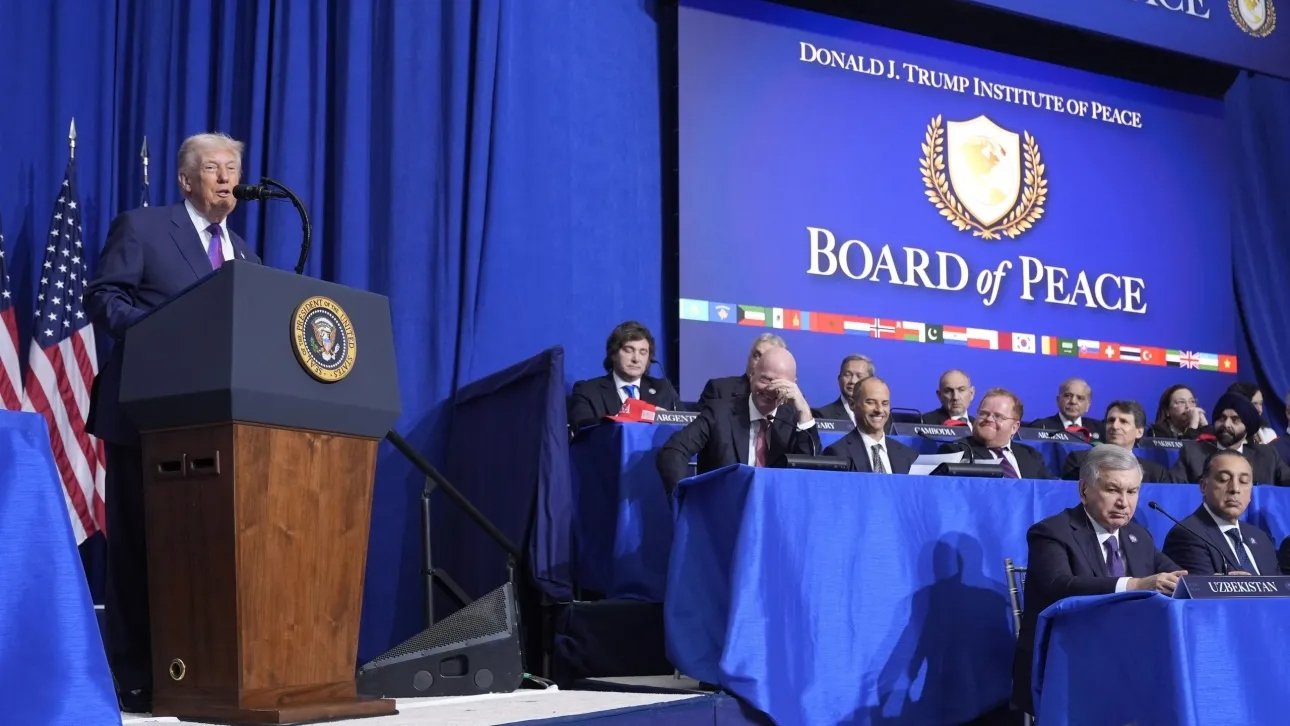
In Cyprus, it is expected to meet on June 30 Peace Council, in an attempt to bring back to the fore an ambitious but fragile plan for the post-war Gauze. The information, reported by Politico, brings the Nicosia at the center of a difficult diplomatic equation, while the humanitarian crisis in Gaza worsens day by day.
According to Politico informationthe meeting will last two or three days and aims to adjust the strategy of the Peace Council. In reality, however, this is more than just a readjustment.
It is a political reset, as the war with Iran has shifted attention in recent months, leaving Gaza caught in a precarious spot between destruction, uncertainty and conflicting diplomatic ambitions.
A plan that has not yet convinced
The Peace Council was created by Washington to oversee the reconstruction and future governance of the Gaza Strip. However, since the first meeting in February, progress has been limited. The problems are not minor. They concern financing, practical implementation, security and, above all, the international and legal legitimacy of the venture itself.
The idea that Hamas would be replaced by a committee of Palestinian technocrats may sound workable on paper, but in practice it raises difficult questions. Who will give political legitimacy to this scheme? How will it be accepted by the Palestinians themselves? Who will guarantee the safety? And how to avoid the image of an administration imposed from outside, without a real popular base?
These are the questions weighing on the meeting in Cyprus. Without convincing answers, the Peace Council risks remaining an American initiative with high expectations that never worked.
Mladenov and Washington’s message
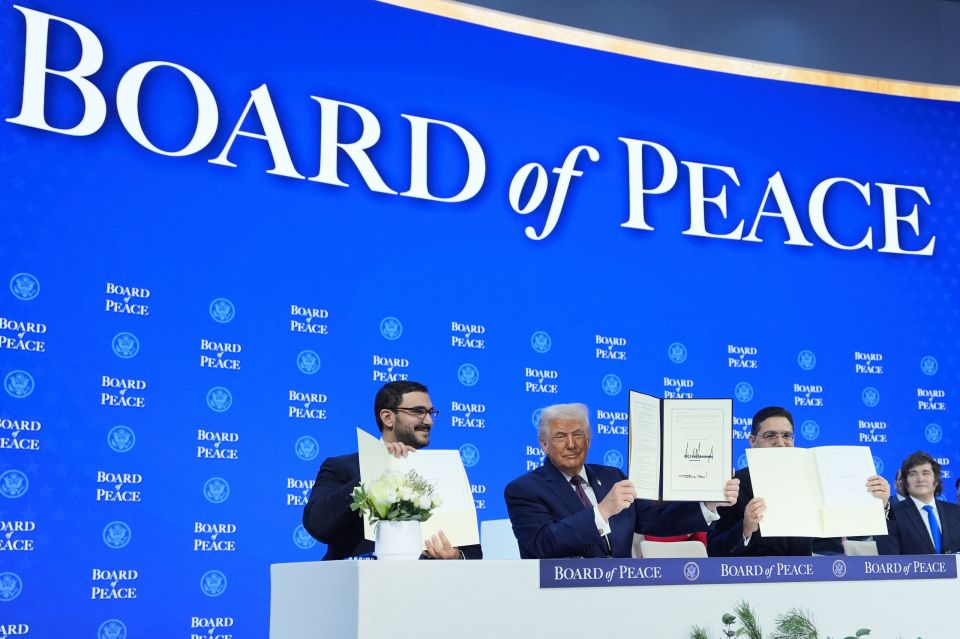
The meeting is expected to be attended by representatives of the National Committee for the Administration of Gaza, the committee of Palestinian technocrats intended to assume a role in the administration of Gaza, as well as the office of Nikolai Mladenov. The former Bulgarian diplomat has been appointed by Trump as the high representative for Gaza, a sign that Washington is trying to give institutional weight to the venture.
This choice is not accidental. Mladenov has a deep knowledge of the region and its balances. But even the presence of an experienced diplomat is not enough to fill the key gap: the plan needs political acceptance, international support and a clear implementation framework.
How and why Cyprus was chosen
The choice of Cyprus is of particular importance. The country is located geographically next to the Middle East, is a member state of the European Union and has already attempted to upgrade its role in the humanitarian efforts for Gaza. Nicosia offers a safe, European and at the same time regionally close space for consultations.
However, the Cypriot government seems to be proceeding with caution. According to a European official, Cyprus is not a co-organizer and the meeting is not held at a political level. This clarification is necessary.
In other words, Cyprus is hosting the debate because the organizers chose it but it is not its responsibility. This balance also reflects the broader European attitude: interest in a role in post-war Gaza, but wary of an American plan that has yet to prove it can stand politically and legally.
The Republic of Cyprus is not a co-organizer, the government clarifies
Asked about this after the meeting of the Council of Ministers at the Presidential Palace, government spokesman Constantinos Letymiotis said that the Peace Council was established to implement the Gaza reconstruction plan, based on UN resolution 2803, which the Republic of Cyprus not only welcomed, but supported from the very beginning. He recalled that the President of the Republic had participated in the first conference for the announcement of the plan and had submitted a proposal of 8 specific points, based on the plan of President Trump, for the faster reconstruction of the Gaza area.
“The Council for Gaza, for Peace, therefore, decided to hold this conference in our country. The Republic of Cyprus is neither a co-organizer nor, certainly, an organizer of this event,” he said.
The Spokesperson said that it is of particular importance to him that the administrative arm of the Council has chosen Cyprus, “a country that has demonstrated in practice how beneficial it is, how many initiatives it has undertaken and how effective these initiatives are in terms of humanitarian support to the civilian population in Gaza”.
Responding to a question about the level of participation, Mr. Letympiotis said that some officials will be in Cyprus, who have requested to have meetings with the Foreign Minister, Konstantinos Kobos. He reiterated that it is positive that Cyprus was chosen for this meeting and pointed out that the Republic of Cyprus has stated many times that, despite the developments in the region, attention should never be diverted from the Gaza reconstruction plan.
In this plan, he added, the Republic of Cyprus can actively participate when the reconstruction of Gaza begins, through the proposal of the 8 points of the President of the Republic.
The dramatic situation in Gaza
The big problem is that all this is being discussed while the situation in Gaza remains dramatic. Reports of new civilian deaths, including children and journalists, show that everyday life in the Gaza Strip continues to be defined by violence, insecurity and the absence of a stable political horizon.
Hamas’s attack on Israel on October 7, 2023, which left an estimated 1,200 dead and 251 hostages, prompted a massive Israeli military operation. The ensuing war has claimed the lives of tens of thousands of Palestinians, displaced most of Gaza’s population, and devastated vast areas.
The truce reached in October 2025, brokered by Trump, led to the release of the last 20 Israeli hostages. But he did not answer the most difficult question: what comes next. And this “after” is now the field in which not only the Peace Council will be judged, but also the credibility of international initiatives on Gaza.
The question, therefore, is not only what will be decided in Cyprus. It is whether the international community can offer the Gaza Strip more than temporary solutions.