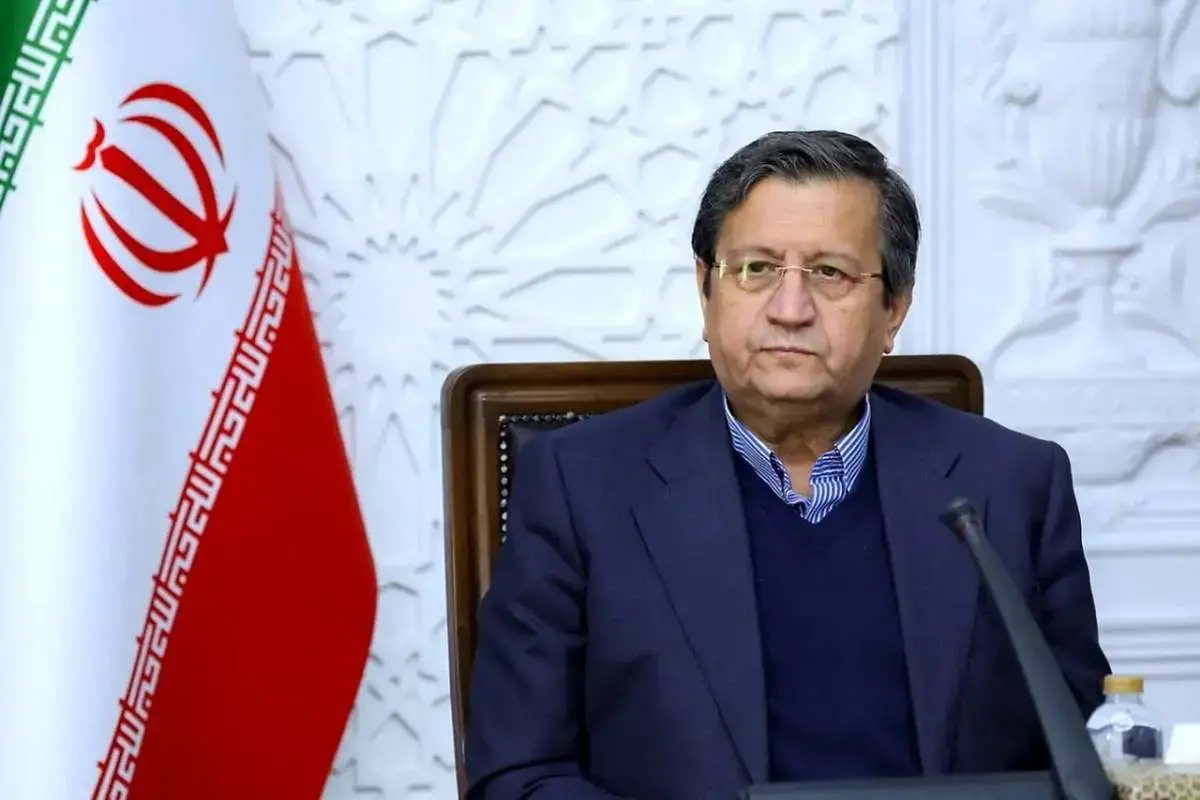
to report Online economy According to Tasnim, Abdul Naser Hemmati; Regarding the economic agreements made under the Iran-US MOU, the Governor General of the Central Bank explained: During the negotiations that were held with the US government and the governments of Qatar and Pakistan also acted as mediators, two important decisions regarding the economic part of the MOU were made in Switzerland. The first decision was related to the release of Iran’s blocked sources. According to the memorandum, it was decided that these resources will be released gradually and during the negotiations, of which 12 billion dollars will be released in the first stage and the rest will be released in the next stages.
Emphasizing that what is necessary for us now is the possibility of using these resources, he said: According to the agreement signed between Iran and the United States in 1402, we have established the same framework based on which the freed resources can be spent on the import of basic goods and medicine.
Hemti added: We spend between 10 and 12 billion dollars annually, and in a more general calculation, nearly 15 billion dollars, to import basic goods. Therefore, by allocating these resources to basic goods, other foreign exchange resources that we previously considered for this purpose are freed and we can allocate them for other needs or storage. For this reason, we evaluated the agreement as a positive agreement.
Referring to the speculations raised regarding the limitation of allocating these resources to the import of essential goods and medicine from the United States, he explained: There is no such requirement in the two notes that were signed during the negotiations, and there is no question of forced purchase from the United States. At the same time, we do not see any obstacle to buy from America; Provided that the price and quality of basic goods such as corn, wheat or other items we need are suitable. Until now, the Ministry of Agricultural Jihad has been buying these goods from large American and European trading companies, so there is no obstacle in this field.
Hemmati announced the beginning of the import of basic goods using these resources in the near future and said: God willing, in the coming days, the first purchase shipment will be made and our colleagues, in cooperation with the Ministry of Jihad, Agriculture and the Ministry of Health, are planning to provide the necessary goods from this route.
Emphasizing that the ownership of these resources is in the hands of the Central Bank, he explained: Regarding the ownership of these resources, I must explain that earlier, the Central Bank purchased these resources from the government and paid the Riyal equivalent to the government. Therefore, these resources are considered among the reserves of the central bank. When the central bank spends from these reserves to buy basic goods, it sells those goods domestically at the exchange rate in Rials, and in this way, it collects part of the liquidity in the society. Thus, this process helps the central bank to collect the liquidity available in the society and reduce the acceleration of liquidity growth.
Referring to the agreements made during the negotiations with the United States regarding the exemption from sanctions on the sale of Iranian oil, the Governor of the Central Bank stated: One of the clauses of the memorandum was that during the 60-day period of the negotiations, we can export oil and other derivatives, including petrochemical products, without the pressure of sanctions. Based on this, it is possible to deliver the cargo in any port, transport it by any type of ship and deposit funds to any account announced and coordinated by the Iranian Oil Company, and we can use those resources. It is even mentioned in this understanding that it is possible to settle with dollars; Although the American side insisted on conducting all transactions in dollars, we announced that we would use dollars if needed and if there was no such need, we would not insist much. In fact, the issue of using the US dollar is at the discretion of the Islamic Republic of Iran and depends on where those resources are used.
In the end, he emphasized that during these 60 days, our oil, petrochemicals and other oil derivatives and products are exempted, he said: Oil exports continue and millions of barrels of oil have been exported in the past few days, but the advantage of this agreement is the elimination of financial transfer costs and complications caused by sanctions. Of course, this does not mean abandoning the network that we have created before to neutralize sanctions pressure; Rather, those paths are still in force and we must gradually move forward and test to measure the process of removing sanctions in the future and adjust sales planning and financial transfers resulting from oil exports based on that.