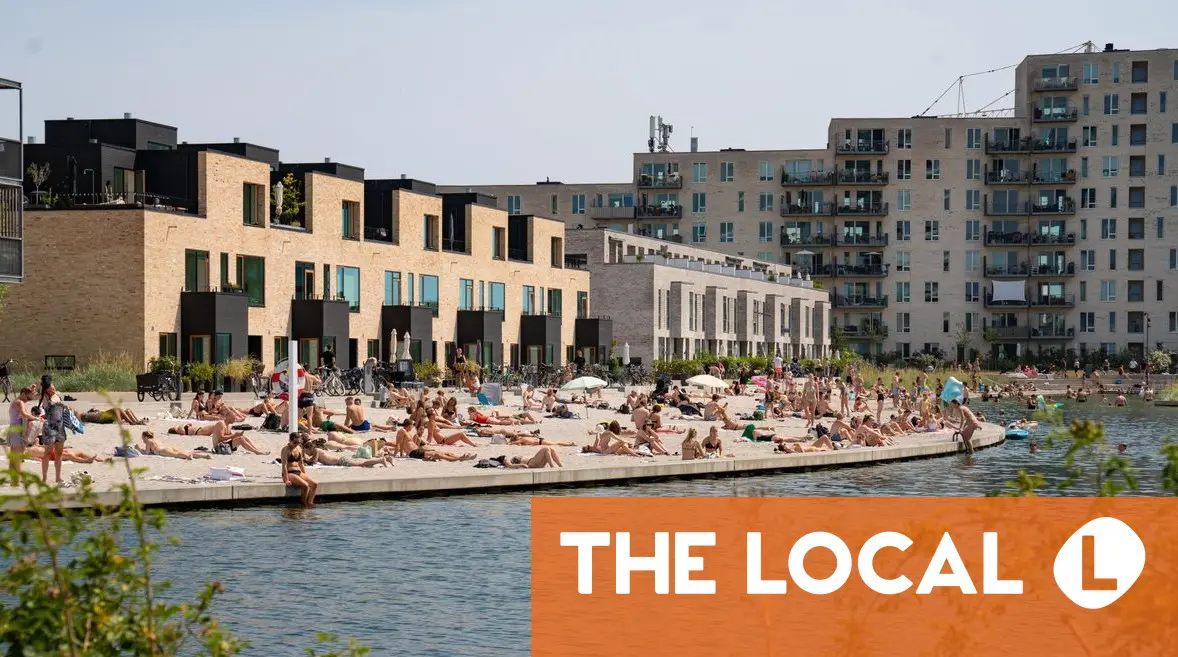
Copenhagen has become busier and more international, with a greater variety of food available and vibrant new areas, at the same time as house prices and the cost of living have shot up, foreigners living in the city have told The Local.
The seventeen respondents, at least eight of whom have been living in Copenhagen for more than ten years, said the city had changed significantly since they arrived, in many ways for the better.
“It has improved. I feel the city is expanding,” said Eline, who is originally from France and has been living in Copenhagen for more than a decade. “What used to be quieter neighborhoods around the city center – like Norrebro, Carlsberg or Valby – are now becoming as busy as the city centre. I also think there are more people in the streets. It’s busier.”
Philip from Costa Rica, who has been in the city for 13 years, agreed that Copenhagen had become “more connected and larger”.
“I still remember when biking to Papirøen felt like going far from the city, now it is very much in the centre,” he said. “Another example is Fisketorvet, which felt like it was at the very edge of the city. Now it feels like it is very much in the centre.”
As well as becoming bigger and livelier, there were also “more events and festivals during summer”, said another respondent, who did not give their name.
More international
As well as becoming bigger and more bustling, the city has become more international, many reported, with more English spoken.
“There are fare more English speakers than 13 years ago … especially those who make minimal efforts to integrate,” grumbled Matthew, one of the respondents.
He said this had led to expat bubbles, with hockey clubs in some areas dominated by foreign children, making it hard for them to learn Danish.
Philip, however, saw the development more positively.
“It is more enjoyable now than before. The city is prettier and more international. I think a lot of European and Latin American immigrants have given the city a very nice vibe,” he said.
The international attitude has also affected restaurants and nightlife, he argued: “The service level has improved as more internationals have come to the service sector.”
Greater variety of food
The influx of international people has also had an impact on the food available in Danish supermarkets, while Danish tastes have widened to include vegetarian staples.
“The supermarkets used to have very little international food on offer, now it feels like it is easier to get more international foods,” Philip said.
Helen from the UK, who has been living in the city for about 16 years, said that she was glad it had become easier to be vegetarian.
“Vegetarian food is now widely available. It used to be difficult to find chickpeas or tofu, for example,” she said.
House prices have exploded
On the negative side, almost all respondents complained that the cost of living had increased, with house prices in particular shooting up.
“The housing market has become less affordable, and social benefits are less generous, and so are the conditions for those working in schools, kindergartens, and hospitals,” said a Portuguese man in his 30s, who has been living in Copenhagen for ten years.
“Things have changed for the worse – everything is considerably more expensive (rent, food, energy, services) and poorer value for money,” complained another respondent who wanted to remain anonymous. “My taxes have gone up while my salary has fallen, and everything is becoming less affordable by the day.”
Philip agreed that house prices had increased, but said that it was not new for foreigners to complain about this.
“House prices have completely exploded, but people always complained about how expensive they were anyway.”
More xenophobic and less welcoming
Although most respondents said Copenhagen had become more international, others said the attitude towards foreigners had changed for the worse.
“The most discouraging part is the change in the attitude towards foreigners,” said the Portuguese man. “More and more I feel we are just a source of income for the tax agency, with all the expectations to assimilate (not only integrate) and full disregard for who we are as people.”
“I feel sad about it and I’m not sure I want to stay here long term. The only thing keeping me are my children who actually enjoy a good predictable life.”
Recommendations
The most common recommendation for new arrivals in the city was the obvious one: learn Danish.
“Learn from the first month… no excuses,” said Matthew. “Ensure your kids are not in mostly English speaking clubs with Anglo-Bubble-coaches (ice hockey clubs like KSF). Befriend your neighbors – make the effort, don’t wait for it.”
“Learn Danish, or at least try. It opens up a whole new perspective and understanding of the local culture,” said Snigdha.
It was important, she added, to understand that Danes’ disregard for social niceties was not a sign of hostility or disrespect.
“The locals are not rude or do not intend to be rude by their indifference. It took me a while to understand this,” she said. “It is a part of their culture and it makes a lot of sense now after two years. In fact I find it refreshing – no small talk, no unnecessary politeness or smiling at passers-by.”
One respondent recommended moving to Copenhagen as a student, rather than as a working professional. “It is easier to make friends that way and then life becomes much easier.”