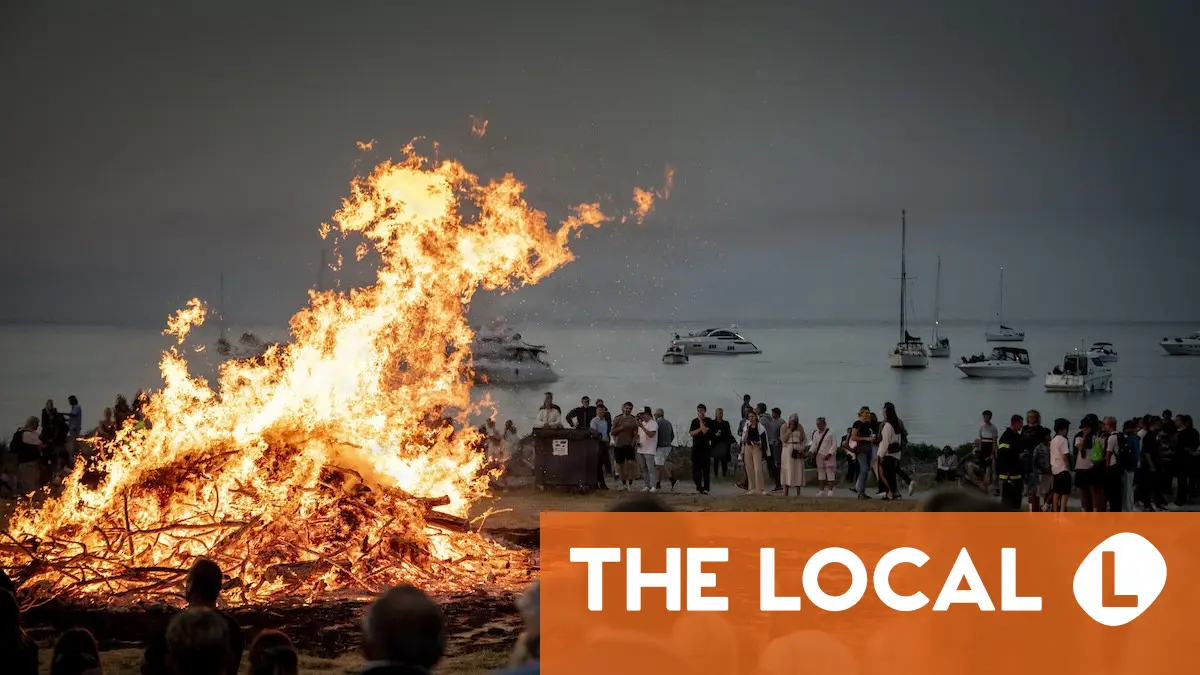
Denmark’s rescue services have warned that the fire risk in several areas of Denmark is rated as “high” or even “very high”, as Sankthan’s bonfires are set to be lit across the country on Tuesday night.
Even though no region of Denmark is currently covered by a fire ban, that does not mean that there is no risk of fires spreading.
According to the rescue services’ own Fire Risk Index, or fire danger index, the fire risk is currently “very high” in some areas around Aarhus and Djursland, in the center of Funen and across large parts of Zealand.
The area currently most at risk is a swathe of western Zealand between Holbæk and Slagelse, and then a strip of south west Zealand around Næstved.
“Keep the distance rules and make sure that the bonfire burns in a controlled manner,” advised Bjarne Nigaard, chief of the secretariat for the Danish Emergency Management Organization (Danske Beredskaber). “By that we mean, do not use lighter fluid or gasoline to light the bonfire, and make sure that you have water ready in case something goes wrong.”

Graphic: The fire danger index
Nigaard said it was not an unusual situation for the fire risk to be high at this time of year, with the fire service responding to twice as many calls on Sankhans as would be the case on a normal night.
The emergency services are particularly busy from midnight onwards, as this is often when the fires tend to get out of control.
According to the weather forecast, Sankthans promises to be windy this year, increasing the risk of fires spreading, leading rescue services in Copenhagen to issue a special warning.
“Right now there is a warning of both rain and wind. If there is no rain, the strong wind will lead to an increased risk of fire spreading when embers and heat are carried by the wind,” they wrote on X.
“With the possibility of strong winds on Sankthans, it is extra important to comply with the distance requirements for the bonfire.”
They posted a graphic showing that the fire should be at least 200 meters from the nearest forest, wooden or thatched buildings, hay bales or arable fields, and at least 30km from brick buildings.
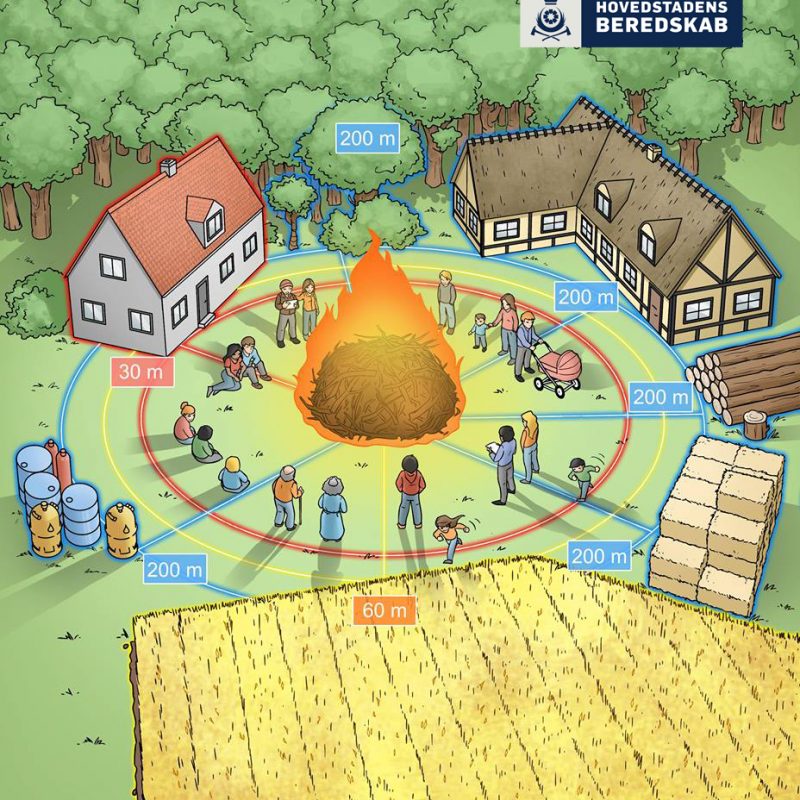
Graphic: Copenhagen Rescue Services
.