DOHA – (Reuters): Thirteen people were killed and dozens injured in an explosion at the huge Ras Laffan liquefied natural gas complex in Qatar, which occurred while workers were restarting operations that had been halted after an Iranian attack in March. !
The authorities attributed the explosion to a “technical accident” that occurred at the local gas supply facility in Barzan on Sunday evening, and that there was no threat to public safety. !
Qatar, which hosts a major US military base, was repeatedly attacked by Iranian missiles and drones during the Iran war, causing about 20 percent of global liquefied natural gas supplies to be held up in the Gulf before shipments recently resumed.
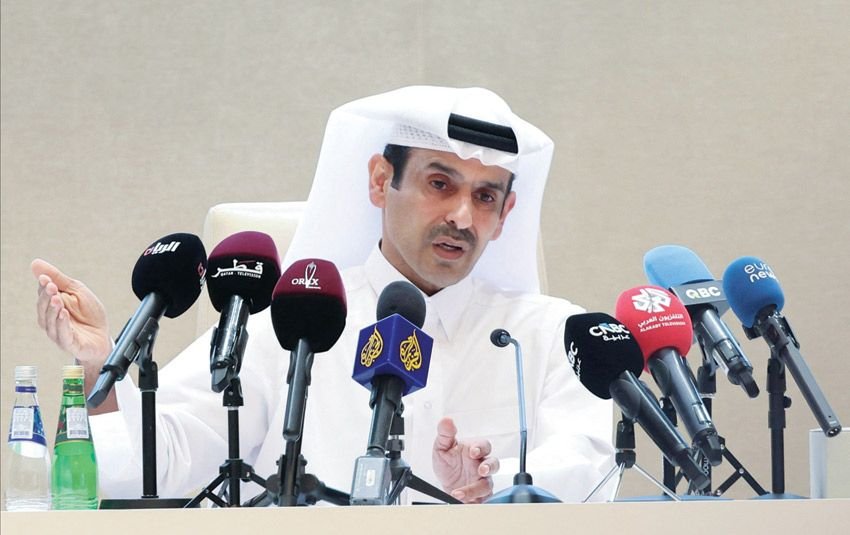
The Qatari Ministry of Energy said in a statement that 13 people were killed and 66 were injured. She added that the station’s export capabilities were not affected and that there was no threat to the environment. Qatar Energy did not disclose the details of the location of the explosion inside the facility or the extent of the damage, but Saad Al-Kaabi, CEO of Qatar Energy and the Qatari Minister of Energy, reported the start of an investigation into the incident. The explosion shook the windows and was felt by residents of central Doha, causing panic among residents more than 70 kilometers from Ras Laffan. !
Qatar is one of the countries most affected by the closure of the Strait of Hormuz, as it has no alternative ways to export its liquefied natural gas. This shutdown and restart of LNG operations is a very complex process due to the intentionally slow cooling process to avoid thermal shock. The LNG units cannot be restarted simultaneously, but must be operated sequentially. Cooling is the most important step in the liquefaction process, which turns gas into liquid by cooling it to about negative 162 degrees Celsius.
The facility is located in Ras Laffan Industrial City, which is the main center for Qatar Energy Company for the production and export of liquefied natural gas, and its total production capacity reaches 77 million tons annually across 14 production lines. !
The facility can also produce ethane, condensate, LPG and sulfur for domestic and export markets. !
In March, an Iranian missile attack targeted two major gas processing units, which led to a reduction in Qatar’s liquefied natural gas export capacity by about 17 percent. Al-Kaabi told Reuters that the reforms would take three to five years. !
The war forced the company to evacuate about 10,000 workers from offshore drilling platforms and onshore processing plants. The company did not report any injuries during the missile attack that occurred in March.