Montenegro has a real opportunity to become the next member of the European Union, but success will depend on the ability of institutions to implement reforms, preserve political dialogue, strengthen the rule of law and preserve the civil character of society. European integration is no longer a matter of technical fulfillment of obligations, but a test of the political maturity of the state and society, was assessed in the special show “Open Doors”, which was realized by the Center for Civic Education (CGO) and broadcast by TVE on the occasion of the 14th anniversary of the start of negotiations between Montenegro and the European Union.
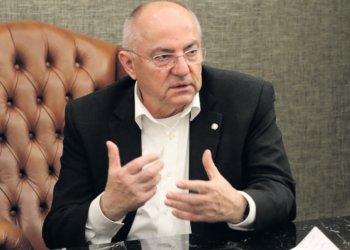
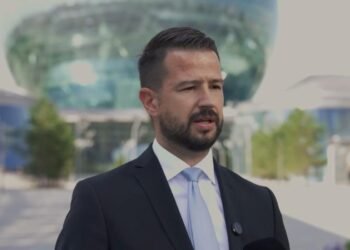
In the program of the author Zvezdana Kovač, Director of Strategy and Communications at CGO, the European Union Ambassador to Montenegro Johan Satler, Minister of Foreign Affairs of Montenegro, Ervin Ibrahimović, former rapporteur of the European Parliament for Montenegro, Tonino Picula, President of the Montenegrin Pan-European Union, Ph.D. Vice President of DPS, Dr. Ivan Vuković.
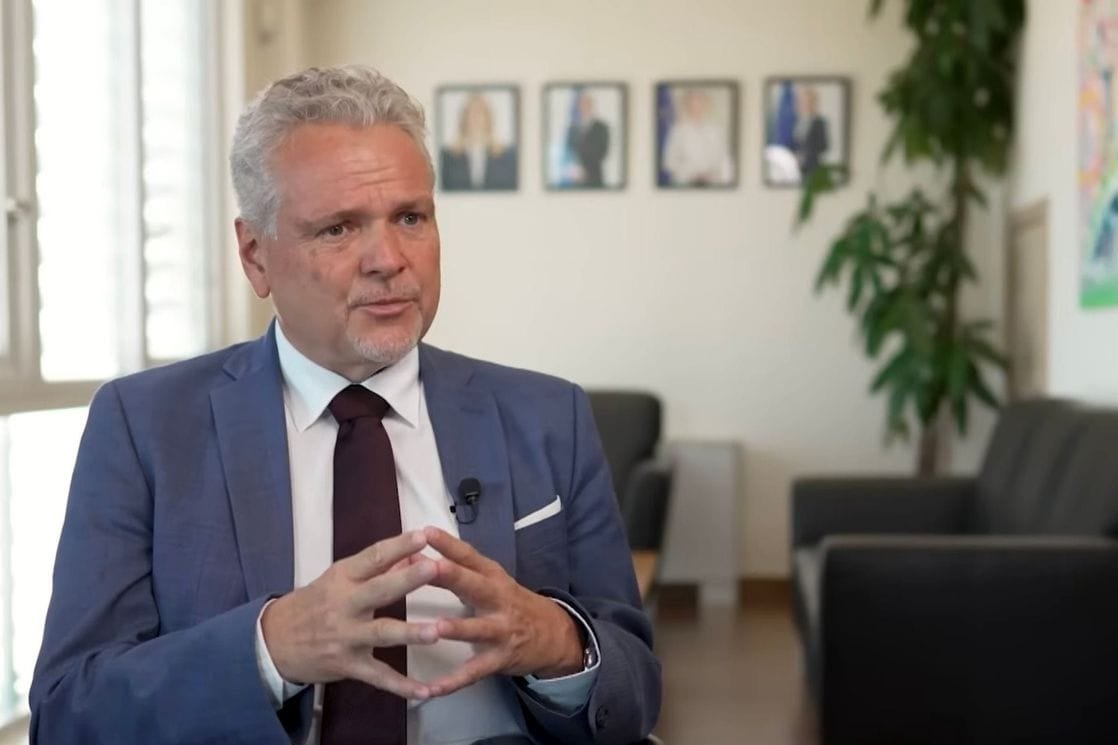
Speaking about the scope of the negotiation process, Ambassador Satler assessed that Montenegro is a fundamentally different country today than it was in 2012.
“The process of accession has a transformative effect. We have seen this in all previous waves of enlargement, and now we see it in the case of Montenegro. You have better institutions, more rights for citizens and stronger protection mechanisms. However, the work is not finished. The focus must remain on the rule of law, the fight against organized crime and corruption, as well as other key reforms,” said Satler.
MEP Tonino Picula pointed out that Montenegro has a historic opportunity to become a member of the European Union by 2028.
“It would be an important geopolitical step forward not only for the country itself, but also a strong incentive for other countries in the process of accession. However, the enlargement process is based on the principle of merit and requires constant political dialogue and sincere engagement of all political actors,” he stated.
Minister Ibrahimović is of the opinion that the goal is ambitious, but achievable.
“The ball is now in our court. Our institutions need to show maturity, responsibility and readiness to do what is expected of them. We want to close the negotiation chapters by the end of 2026, and to be a full member of the European Union in 2028,” said Ibrahimović.
Although the process has gained new momentum in recent years, Dr. Gordana Đurović warns that the key challenges remain the same.
“Political messages are clear and the European goal seems within reach. However, our institutions are not yet sufficiently autonomous, stable and resistant to political influences. The rule of law remains the most difficult issue to answer, and we have further degraded the quality of political dialogue,” she warned.
Daliborka Uljarević pointed out the risk of European progress remaining only formal.
“We have the Montenegrin paradox: on the one hand, European progress, and on the other, democratic regression. These processes should not be separated. Today, we are more in the technical phase or the phase of simulating reforms than we have changes that really improve the quality of life of citizens and bring legal certainty and democratic standards,” she explained.
Pižurica emphasized that he would not agree that the civic concept in Montenegro is endangered.
“We even have relevant research by CEDEM that the ethnic distance in Montenegro is at the lowest level since that measurement has been done – currently 21.1%, compared to 35.7% in 2018. I believe that these are data that clearly tell us that this ethnic gap is shrinking just as Montenegro is rapidly moving towards the EU,” said Miloš Pižurica when asked about the threat to the country’s civic character.
However, Uljarević pointed out worrying trends in society through different data. “CGE research shows that almost 60% of Montenegrin citizens today have a problem with a partner of another ethnic or religious affiliation,” she said, warning that this is not only a social problem, but also a security threat. “We are witnessing an intense ideologically and politically motivated revisionism that does not only aim to change certain facts from history, but to influence the change of the fabric of Montenegrin society. And this already represents a security threat,” emphasized Uljarević.
Ivan Vuković believes that the more Montenegro progresses towards the European Union, the more the pressure to slow down or stop that progress will grow.
“That’s why the final phase of the process will be the most politically sensitive,” warned Vuković, speaking about external influences and regional relations in the context of European integration.
Picula reminded that the European Parliament warns of the dangers of foreign malignant influence, misinformation and hybrid threats that can endanger democratic processes and the European path of the state.
When it comes to the need to preserve a broad political and social consensus around European integration, it was emphasized that the end of the negotiations cannot be successful if the European agenda remains the project of only one government or political majority, but must include the opposition, civil society, the academic community and other social actors.
Ambassador Satler reminded that cooperation and the ability to reach compromises were among the most important reasons why Montenegro achieved significant progress in the last two years.
He called on the Assembly and political parties to get together and finish this work as soon as possible, so that before the summer break the constitutional changes necessary to close certain negotiation chapters would be adopted.
“The fact that political parties and individuals in the previous period were ready to put the broader social interest before narrow party calculations is encouraging. I am counting on that in this final phase of the negotiations. I am convinced that we will succeed in preserving this spirit of joint action and that we will pass the end of the European road together,” he said.
Pižurica is of the opinion that European integration is a rare area on which there is still a high degree of agreement in Montenegro.
“Regardless of political differences, the European path remains the most important common denominator of Montenegrin society. This is precisely why it is important that the process be open, transparent and inclusive, so that all relevant social actors contribute to the achievement of the state’s strategic goal,” he said.
Vuković pointed out that since the change of government in 2020, the opposition has supported all key decisions that brought Montenegro closer to the EU, including the reforms necessary to obtain the IBAR and the closing of certain negotiation chapters. At the same time, he emphasized that the adoption of the Law on Internal Affairs and the Law on the National Security Agency, as well as the manner in which it was done, seriously undermined trust.
“The opposition can no longer be reduced to a voting machine that will automatically support the government’s moves when qualified majorities are needed,” he said, expressing the expectation that through continued dialogue it will be possible to restore a minimum of political trust and preserve the European consensus as a common national interest.
The interlocutors were almost unanimous that Montenegro should remain focused on full membership, commenting on the ideas of gradual or conditional membership. Gordana Đurović emphasizes that any compromise would have regional consequences. “Montenegro deserves full membership. We are a new generation of accession agreements and we are testing how Serbia, Bosnia and Herzegovina, North Macedonia and others will need to react tomorrow. If we accept something, it will be a sign that the region should also accept it. All these models and modalities do not apply to Montenegro,” Đurović was decisive.
At the summit in Tivat, the president of the European Commission, Ursula von der Leyen, said that 2028 is within reach, Ambassador Satler reminded. “There is a real chance that Montenegro will successfully pass this final stage and become the next member of the EU. Of course, a lot depends on what President Von der Leyen also emphasized – the homework is not finished yet. For each negotiation chapter that you want to close, you need the consent of all 27 member states. And when the technical part of the work is finished, the political phase of ratification follows – in some countries a simple majority in the parliament, in others qualified. That is why it is extremely important to work with all member states, especially those in which there are larger political challenges,” he added.
A possible failure in this momentum of European integration of Montenegro would have serious consequences for reform dynamics and social optimism, the interlocutors assessed.
“It would be a missed opportunity to improve in every aspect – from the rule of law to the quality of life of citizens. The European Union is not only a political goal, but an opportunity to build a more stable and functional society,” concluded Uljarević.