Two sexual abuse scandals have unleashed a real storm in the United States Congress, where there is already talk of a kind of #MeToo which once again puts under scrutiny not only those involved (among them a congressman of Colombian origin), but also an entire political culture marked by silencerumors and lack of accountability.
READ ALSO
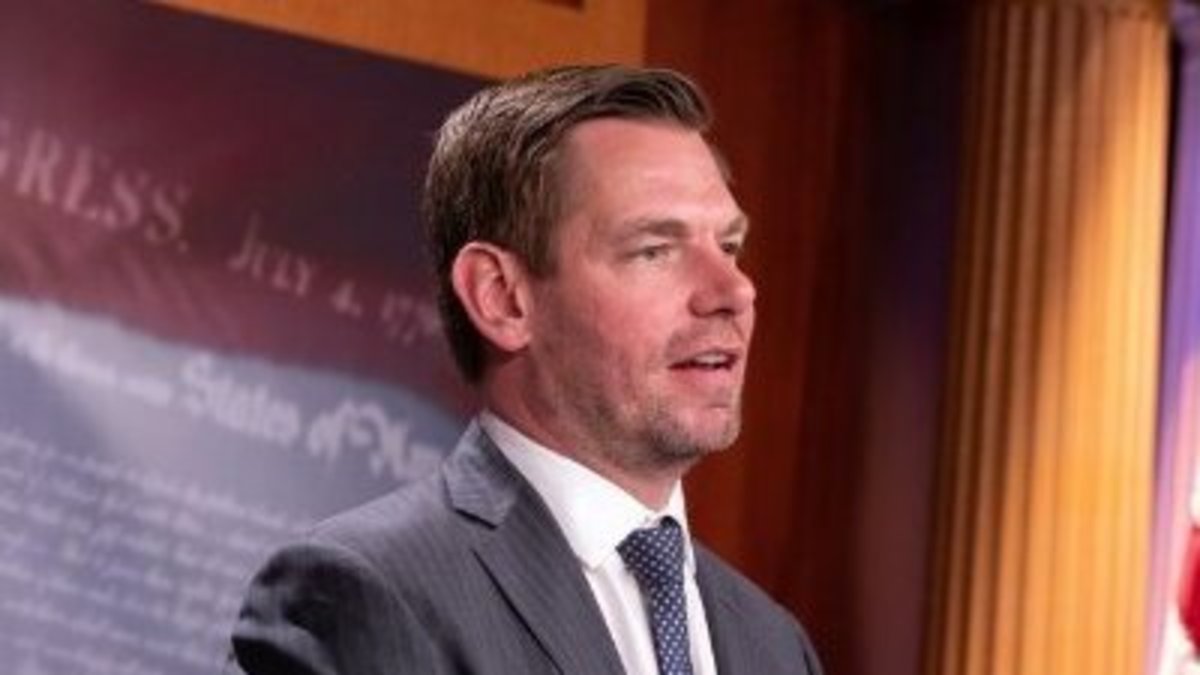
The shakeup is bipartisan. On the one hand, Democrat Eric Swalwell, congressman from California, faces multiple accusations of sexual assault, including that of a woman who claims he raped her in a hotel room after a political meeting, which led him to suspend his campaign for governor and inform his colleagues that he plans to resign from his seat. in the House of Representatives.
On the other hand, Texas Republican Tony Gonzales admitted to having had a relationship with an advisor, in violation of the internal rules of Congress, and faces other allegations of inappropriate conduct, amid which he announced that he will not seek re-election.
Texas Republican Congressman Tony Gonzales. Photo:X: @RepTonyGonzales
But the Swalwell case, due to its severity and political reach, is the one that has had the most repercussions.
The accusations against him are not limited to a single episode.
In addition to the alleged abuse in a hotel, several women They report behaviors that they describe as those of a “predator,” including persistent advances, explicit messages and unwanted physical contact in professional contexts.
In some cases, the complainants maintain that these were unequal power relations, in which Swalwell would have taken advantage of his political position.
The former congressman has categorically denied all accusations, but the accumulation of testimonies and their consistency over time ended up isolating him politically.
READ ALSO
The scandal hits a congressman of Colombian origin
The scandal, however, is not limited to him. It has also splashed the senator for Arizona, Rubén Gallego, one of the emerging figures of the Democratic Party and of Colombian origin, who acknowledged having heard rumors for years about his colleague’s behavior without having acted.
Gallego, who was close to Swalwell for more than a decade, including serving as head of the failed 2020 presidential campaign, publicly admitted that his judgment was clouded by the friendship.
“We had all heard rumors in Washington about Eric Swalwell for many years. But no one thought that the accusations were of the nature that finally came to light,” said the senator during a press conference he called to refer to the issue.
Democrat Eric Swalwell, congressman from California. Photo:X: @RepSwalwell
The senator went further to acknowledge that he never confronted Swalwell because he did not want to believe those comments.
His testimony is key because it illustrates the background of the scandal.
According to Gallego himself, There is a tendency in Washington to treat such rumors as normal, almost as part of the political game.
“Many people in Washington treat these things as routine. “We should have found a way to deal with it,” said the Colombian.
“We had all heard rumors in Washington about Eric Swalwell for many years. But no one thought the allegations were of the nature that finally came to light.
Ruben GallegoDemocratic Senator
The son of Colombian and Mexican immigrants, Gallego grew up in Chicago in modest conditions before enlisting in the Marine Corps and serving in the war in Iraq.
Upon his return, he began a meteoric political career that took him to the Arizona House of Representatives for a decade and, more recently, the Senate. His rise has been closely followed by the Latin community and, in particular, by Colombia, where his personal story is often highlighted as an example of integration and success in the United States.
READ ALSO
This background explains why his voice has special relevance today. Not only because of his closeness to Swalwell, but also because His reflection points to a structural problem that transcends individual cases.
In parallel, the Gonzales case reinforces the idea that the problem does not distinguish between parties.
The Republican congressman acknowledged having had a relationship with an advisor, prohibited by the rules adopted after #MeToo in 2018, and also faces complaints for having sent explicit sexual messages and for having engaged in inappropriate behavior with other women linked to his team or his political environment.
The case gained greater notoriety after it was learned that the advisor with whom he had the relationship later died, which added political and media pressure. although a direct link between the two events has not been established.
For now, Gonzales has not resigned his seat, but he did announce that he will not seek re-election, amid growing calls for him to face deeper investigations.
The senator of Colombian origin Rubén Gallego. Photo:X: @RubenGallego
The complaints indicate a systematic pattern of abuses silenced by powerful people
The coincidence of both cases, in a matter of days, generated a political earthquake in the Capitol. Legislators from both parties have recognized that Congress is going through a turning point.
The representative Alexandria Ocasio-Cortez described it as a “reset point”warning that structures still persist that silence victims and allow these behaviors to continue.
Women do not report because they believe they are alone. They blame themselves and the aggressor becomes emboldened to continue.
Jackie SpeierFormer congressman
The accusations have also reopened a debate that seemed settled after the 2018 reforms, when Congress toughened the rules on harassment and forced legislators to personally assume the costs of possible legal agreements.
However, recent events suggest that those changes were not enough.
In this context, voices like that of former congresswoman Jackie Speier, who precisely led these reforms, have been especially critical.
READ ALSO

“Rather than turning a blind eye, House members should quickly investigate and take action against this illegal conduct. Women do not report because they believe they are alone. They blame themselves and the aggressor becomes emboldened to continue,” Speier said on social media.
Various testimonies indicate that, in the case of Swalwell, rumors about his behavior had circulated for years among legislative advisors and journalists, but never translated into formal complaints or investigations. Something similar would have happened in other congressional offices.
This dynamic is precisely what is at the center of the debate today. As Gallego himself suggested, what happened points to a culture of implicit tolerance that allows questionable behavior to remain in the shadows until it erupts publicly.
The consequences, in any case, are already beginning to be felt. In the House of Representatives, initiatives are being discussed to force complaints of harassment against legislators to be made public and to increase transparency in disciplinary processes.
Exterior view of the Capitol, seat of the US Congress in Washington. Photo: EFE
Information has even been requested about previous agreements financed with taxpayers’ money, a practice that for years allowed these cases to be handled discreetly.
At the same time, leaders of both parties had avoided commenting on the behavior of their colleagues until the accusations became unsustainable, which has also generated criticism.
That caution reflects an ongoing tension between respect for due process and public pressure to act on serious allegations.
In that context, the words of Gallego, who acknowledged having heard comments about his colleague’s behavior for years without confronting him, They take on special relevance in a Capitol that now, after a kind of mea culpa, is once again examining its most internal fibers.
SERGIO GÓMEZ MASERI – EL TIEMPO Correspondent – Washington