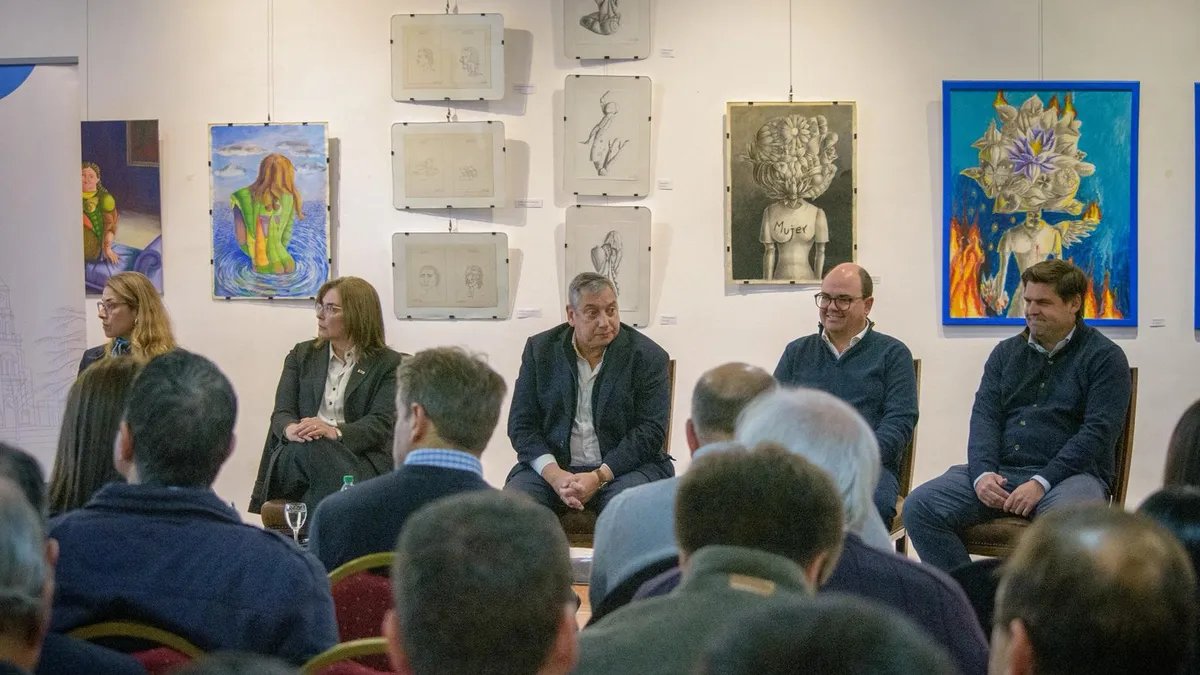
This Thursday, June 18, the Florida Museum of Visual Arts (MAVEA) became the epicenter of the debate on the modernization of the State in Uruguay. Under the title “AI for public management: local governments that innovate and companies that impact”, a day of high-level technical and political exchange was held aimed at analyzing the integration of emerging technologies in territorial administrations.



The meeting was organized jointly by the Florida Mayor’s Office, the Local Innovation Network (RIL) and the United States Embassy in Uruguay, through its Ambassador Scholars Program. This activity was developed within the framework of the Cities for Responsible Artificial Intelligence Program (CIIAR Uruguay), an initiative executed by RIL that has the strategic impetus of IDB Lab. The central objective of the day was to promote a space for open dialogue and public-private coordination to explore concrete technological solutions that tangibly improve the quality of life of citizens and optimize management processes.

The agenda was structured into two complementary discussion tables. The first panel, called “Local Governments that Innovate”, consisted of a political discussion space focused on technological adoption strategies in the territory, the common challenges faced by different administrations and the strategic role of data in public decision-making. This block included the participation of mayors Carlos Enciso (Florida), Diego Irazabal (Flores) and Felipe Algorta (Durazno), along with the general secretary of the Canelones Municipality, Sandra Saffores. The panel was moderated by the executive director of RIL Uruguay, Victoria Gadea.
More news
After a space for exchange and networking aimed at authorities and representatives of the technological ecosystem, the second panel began, titled “Companies that Impact: Opportunities for Innovation in the Public Sector.” This panel, moderated by the coordinator of the CIIAR Uruguay Program, Andrés Riva, focused on analyzing the current technological offer of the private sector and evaluating real cases of implementation in the State. Likewise, the lessons learned from various innovation experiences were discussed and the main entry barriers that hinder collaboration between companies and state spheres were identified. The business panel was made up of Carolina Esteves (director of Neuratek), Pablo Richeri (CTO of IUGO) and Favio Viera (director of AG Consultores, a local Florida firm).
The event, which lasted from 10:00 a.m. to 12:00 p.m., represented a milestone in consolidating a technological roadmap in the country, addressing not only the operational opportunities of AI, but also the ethical and regulatory challenges that local governments must assume to guarantee responsible and safe use of these tools for the benefit of the community.