The government of Yamandu Orsi defined that the unification of social transfers and the increase in benefits for the poorest children will be a flagship of the Accountability. The bill, which the Minister of Economy, Gabriel Oddonemust be presented to Parliament before the end of Tuesday, June 30, will contain for this purpose some Additional US$35 million to finance the strengthening of these allocations in the course of 2027.
Where is this increase going to be distributed? The intention of the Executive Branch is that starting next year three age cohorts will be contemplated: those born in 2025, in 2026 and those who will be born in 2027. That is, the children from 0 to 2 years old.
Minister Oddone has said that they will establish a progressive implementation until 2035which implies adding cohorts each year until all minors are included within the new increment system. The process would then extend over two government periods, but the current administration is betting that in future accounts or Budget laws there will be room to accelerate it.
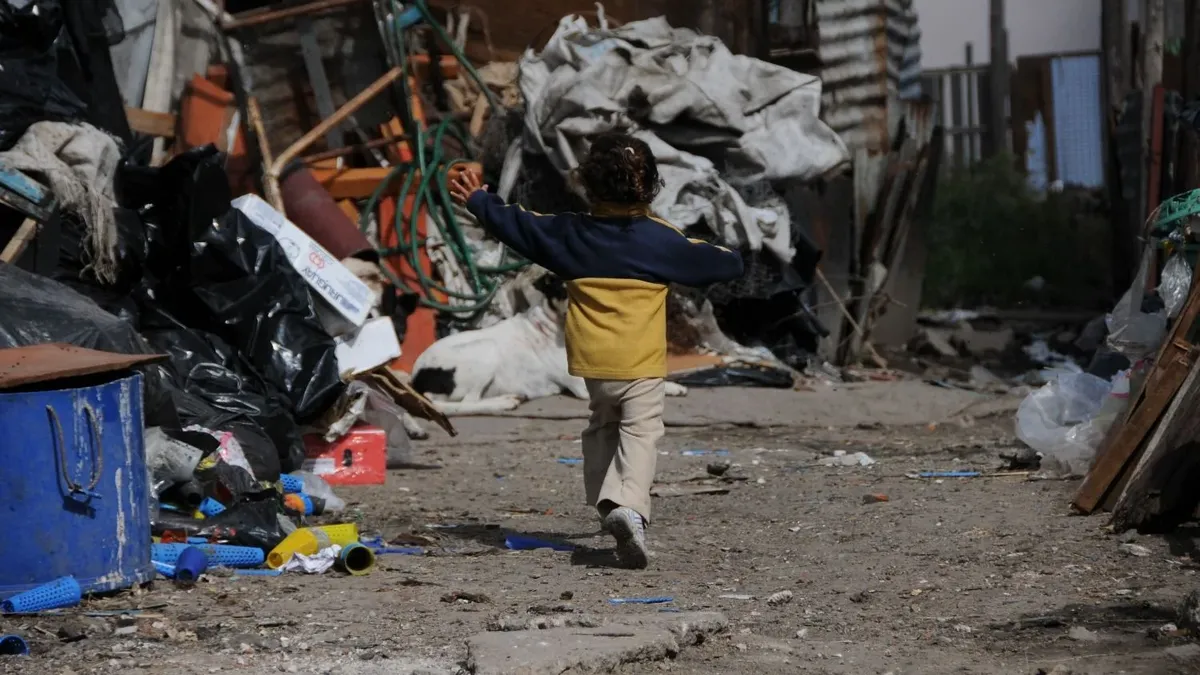
What will the increases in transfers be like? Based on what a basic food basket costs today in Montevideo, the economic team focused on the first five deciles of households with dependent minors that have the lowest income. This is a universe of about 240 thousand homes in which they live the 430 thousand poorest children and adolescents in the countryas he was able to reconstruct The Observer from political sources and the economic team.
The calculation is an approximate. It happens that, after the drop in births and population changes, the data from the last census are not identical to the Continuous Household Survey and the government commissioned the National Institute of Statistics to adjust the figure.
Below is a demonstration made by the economist Matías Brum, from the ORT University Uruguay, based on the latest Continuous Household Survey:

Most of them – not all – are already beneficiaries of family allowances (Afam-Pe), of the Uruguay Social Card (TUS) simple or double, or other transfers for childhood such as Parenting Bonus or Welcome Baby.
Here is an example again, always as an approximation:
As part of the Social Dialogue agreements, Accountability will unify all these items, under the premise that their dispersion is difficult for people to understand, inefficient for management and that it is even generating access difficulties for those who are in a position to collect them.
By way of illustration, the director of Transfers of the Ministry of Social Development, Juan Martín Fernández, said weeks ago in an interview with The Observer: “The TUS is given with a visit, there is an associated card, there are certain restrictions on purchases; but with the family allowance (…) it can be taken by sworn declaration, it is paid in cash and there are no restrictions on purchases. Why have two benefits that are aimed at the same population with different systems?”
The Social Dialogue document itself objected to the “fragmentation” of the system with “at least five important transfer programs with different rules.” The diagnosis in turn noted the “insufficiency” of average benefits for minors that “barely reach $3,000 in the first quintile” and the “stigma” that comes with “the association between households that receive transfers and poor households,” which ends up “limiting the request for the benefit.”
Sources familiar with the drafting of the bill stated that the main objective will be to “hit the target audience” and “improve the targeting” of the allocations, with which they estimate that in 2027 the change – which will only reach those children from 0 to 2 years old – can move child poverty around two points, although the numbers are still subject to variations within the Executive Branch.
Without specifying deadlines, the director of the Office of Planning and Budget (OPP), Rodrigo Arim, had declared weeks ago to Aire Rico that the reform “probably reduces poverty in early childhood by six or seven points”which today is at 33%. The leader clarified that this “does not solve all the problems,” but that it “gives a minimum floor” to “have these boys and girls within the public policy system.”
The highest step
A concrete example reconstructed by The Observer from sources familiar with the bill: today a household with a child under four years of age in the highest level of vulnerability charges $3,870 from the TUS Double plus $3,339 from the Parenting Bonus, which is equivalent to $7,209the largest amount possible for a nucleus that lives in those conditions.
With Accountability, and in the event that the child is within the cohorts addressed by the bill for 2027, that home would charge $9,999the highest step.
Depending on the level of vulnerability, the value of the child benefit will vary. The lowest step – family allowance without TUS – will be $2,222according to these calculations.
The Executive’s bill will also seek to equate those who currently charge the Simple TUS with the amounts of the Double TUS, so the jump in those cases will be greater, the sources pointed out. They are also betting on a more substantial increase for those who are today beneficiaries of Afam-Pe.
The Social Dialogue document – governing these modifications that will be introduced in the Accountability – concluded among its agreed recommendations that an additional reinforcement for pregnant women and children between 0 and 3 years of age of an additional 50% to the reference amount of each stratum must be established.
But, along the same lines, he stated that beyond the improvements in the targeting of transfers, “the notion of vulnerability must continue to be linked to deprivations that refer to different structural dimensions of the home” and “not to transitory and more volatile aspects such as income level.”
No complementary message
Meanwhile, MPP deputies are trying to get the government to grant greater fiscal space to increase spending. This management was a key aspect of the meeting held on Wednesday in the Executive Tower with the Secretary of the Presidency, Alejandro Sánchez, and the Emepepista legislators Sebastián Valdomir, Joaquín Garlo, Julieta Sierra and Joaquín Sequeira.
President Orsi convened the Council of Ministers next Friday to finish ironing out the details of the project. In a restrictive context and with lower than expected growth, Minister Oddone and the economic team have remained firm that there will be no increases beyond the perimeter established last year with the Budget Law, so spending increases must be financed through reallocations in the State.
The MPP deputies are trying to get the government to include a gesture that further motivates the ruling party before going out to seek opposition votes in that chamber, in a scenario in which it is not possible for the Executive Branch to send a complementary message to modify spending, which implies that it will not be possible to move the fiscal space once the bill goes down to Parliament.