On the BBC panel show, Would I Lie to You? Bob Mortimer tells tantalising stories from the half-light between fact and fantasy. Bob is Johnny Pilkington. This is the story. Truth or lie?
In his first season as a coach, Pilkington told the Mullagh players he had organised a challenge match for eight o’clock on a bank holiday Sunday morning, even though they had a county league match the following day. He assured the other members of the management team that it was a gut-check, to test the players’ commitment. It sounded berserk but nobody questioned him.
On Sunday morning everybody turned up except Pilkington. It was April 1st: Fools Day. There was no match. “They got the joke all right,” he says. “Sure, each and every one of them was laughing.”
The story didn’t need to be true for people to believe it, that was the thing. Throughout his life in hurling Pilkington’s image was a mesh of yarns. Denials were rare and only issued in extreme cases of reputational blackguarding.
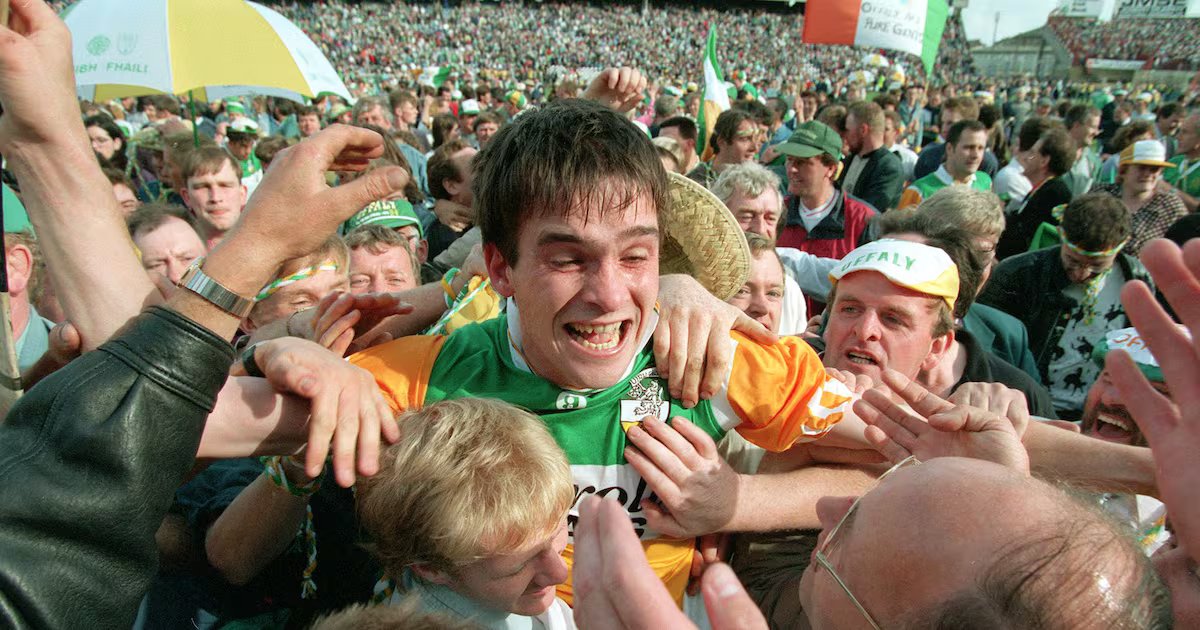
Like when it was rumoured wildly that he drank three pints on the morning of the 1995 All-Ireland final, when he was the Offaly captain. Categorically, that wasn’t true. Other drinking stories, though, would emerge from personal testimonies, in case you heard them second hand. He had no inclination to cover his tracks.
When he played on the Offaly team of the 1990s the caricature of them as party animals competed for attention with a more mundane reality. Pilkington was the face of that conflict. He was part of a beautiful team that were hurling’s last punks. They didn’t conform to the fitness fads and the exaggerated training ground suffering that gripped hurling for a while in the 1990s, but they stood toe-to-toe with the teams who subscribed to that voodoo.
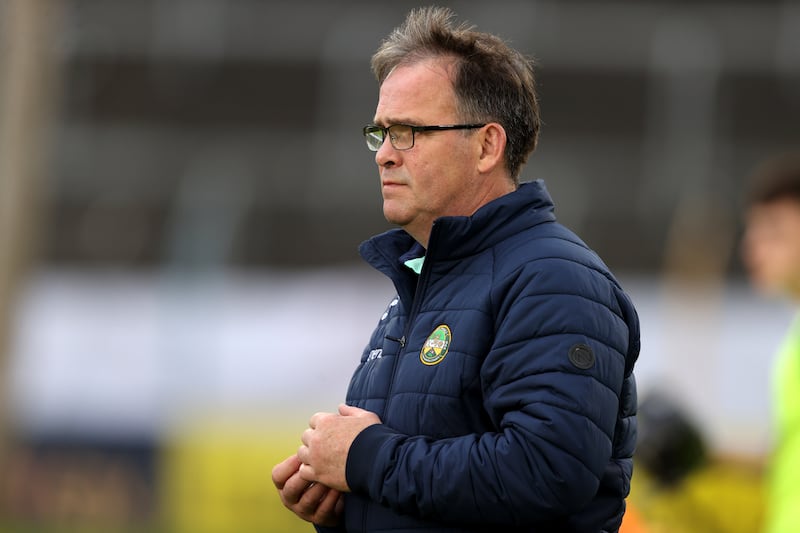
It is 25 years since Pilkington played his last match for Offaly. By then, the magic had died. Out of the blue they beat Cork in the 2000 All-Ireland semi-final, but that was their last dance. What followed was 20 years of tortured decline and cold estrangement from what had gone before.
“Do people still remember what we did? It’s probably not forgotten enough,” he says. “The next group that came in were being compared to us, and they were getting heavily criticised because they weren’t doing what we did. I was probably the biggest culprit and I’m the biggest culprit to be criticising them now as well. It’s unfair, you know. But people still have respect for what we did, big time, and it’s kind of crazy because it is more than 20 years back.”
As Offaly fell into a vortex of losing and circular blame-laying Pilkington’s generation joined the relief mission, one by one. Joe Dooley, Brian Whelahan and Kevin Martin managed the senior team in turn; Pilkington’s brother Declan managed the under-21s; Johnny Dooley, Joe Errity and Pilkington himself managed the minors.
Nothing much changed, though. Everybody was treading quicksand. In Pilkington’s term as minor manager they lost to Westmeath in the 2009 Leinster championship, the night before Shane Lowry won the Irish Open.
“Listen, whatever about what other people thought, I was devastated. That was the worst ever. I mean, that was a new low. That was a horrible, horrible thing given the effort we had put in and the whole lot.”

Offaly, though, stumbled from one catastrophic defeat to the next, mistakenly identifying each one as ground zero. In 2005 Kilkenny beat them by 31 points in the senior championship; nine years later Kilkenny beat them by 26 points; two years after that Westmeath beat them by 14 points; Laois beat them for the first time in 43 years.
In 2019 Offaly were relegated to the third tier of the championship and in their first season in the Christy Ring Cup they didn’t even reach the final. Every unfathomable depth was new.
Towards the end of 2021 Pilkington was asked to get involved with the Offaly minors again. Leo O’Connor from Limerick was the manager. He says he knew nothing about the players, or the fragments he knew didn’t amount to knowledge. He was open to first impressions.
They played Tipperary in a challenge match in November of that year, the kind of pre-season game that should be consumed quickly and forgotten, like a packet of crisps. The taste, lingered, though. He was struck by their tackling and their class and by traces of cockiness.
In the late 1980s Pilkington was part of a golden wave of young players who won three All-Ireland minor titles in four years; more than 30 years later, here were their descendants.
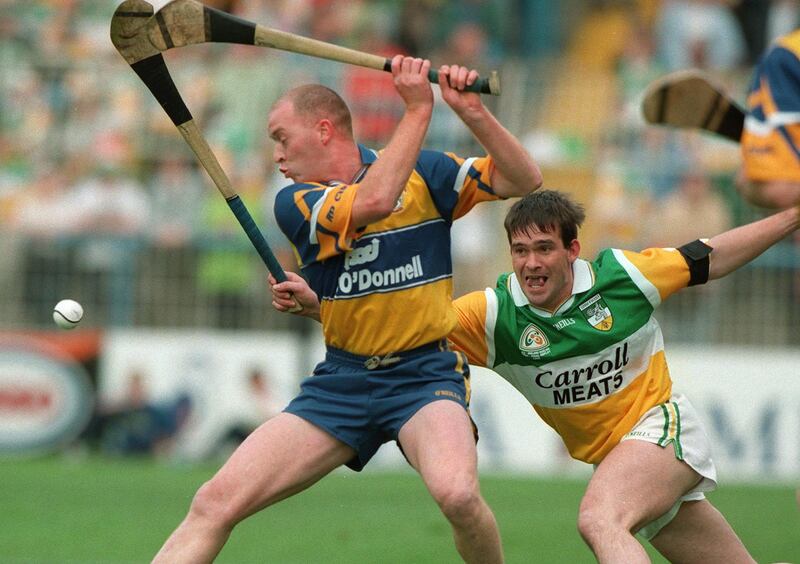
“In what ways were they like us? In everything. Their skill level, the way they work, the way they close down, their intelligence. Their attitude is a hell of a lot better than ours. We had a few wild lads. Put them on a field and they have the same confidence. There isn’t that fear.
“And what I like about them as well is that you’d be talking to them and I’d be questioning them and they’ll argue with me. As Brian Clough once said, after half an hour we both come to the conclusion that I was right, but, you know, just because I said something they weren’t thinking that I couldn’t be wrong.”
That group of players reached three All-Ireland finals in as many years: a minor final followed by two under-20 finals. Two of those finals were lost but nothing could disturb the bullish sense of renewal. Massive crowds followed them, many of them young people who had never seen an Offaly hurling team win a match that mattered.
About 15 of that group are on the Offaly senior panel this year. It has been said repeatedly that it will take more than one generation of talented youngsters to restore Offaly to the game’s elite, but Pilkington rejects that notion.
“What we have now is an X-factor. We have players who are well able to compete at Liam MacCarthy Cup level. You have a nice mix of the older lads and the young lads. We have players with exceptional pace.

“All right, over the last couple of years the performances [of the seniors] were sometimes a little bit lacklustre. The fight wasn’t in them. The work rate and that energy that’s required at Liam MacCarthy level wasn’t instilled in them. That’s kind of hard hitting at the present management. They’ll say it’s step by step, but I don’t really accept that.
“I think there’s so much more potential in this team to play at a very high level. People will turn around and say we got good results against Dublin and Kilkenny [two draws] this year but the question there is how much of that was down to the opposition more so than our performance. I don’t think they’ve been playing as well as they can. I still think we’re hurling within ourselves.”
Pilkington stepped down from the under-20 management at the end of last year. Thirteen of the All-Ireland winning team from the previous season were still available to them, but many of them had senior commitments now and the elastic stretched until it snapped.
“The county board,” he says, “should have handled that an awful lot better”.
For the first time in nearly 20 years, Pilkington is not involved with any team this season. Over the years he coached clubs in Offaly, Laois, Galway, Tipperary and Westmeath and in the end it burned him out.
You wonder what he was like in a position of authority. Did he reach for the rules and norms that he baulked at once upon a time? Did he have sympathy for rogues? He tells a story from the year when he managed Kilcormac-Killoughey in Offaly. Two young lads arrived for an early morning training session and he could tell they had been drinking the night before, so he sent them home.

“But I knew damn well they’d go straight to the early house in Kilcormac. So I did the training session and I went to the early house. When I walked in the two of them nearly dropped, but I had a couple of pints with them, and I said we’ll do a session at six o’clock the following evening – just me and the two of them. It was half an hour of sprinting, from the end line out to the 21-yard line and back. They had to pick up a golf ball at both lines, so they had to touch the grass. There’s always a way to manage these things.
“People think I was hard to manage and in one way I probably was, but in other ways I was probably the easiest person to manage. I turned up, I put the effort in, I did what I had to do. The problem was the social side of things. There would have been a lot of incidents where two weeks out from a match you’d have gone on a bender or that. You know, wrong time, wrong place, wrong kind of drinking.”
It is easy to forget how good he was. In 13 seasons Pilkington made 41 championship appearances for Offaly and scored 6-57, which made him by a distance the most prolific centrefielder of the age. Throughout his playing career he smoked 30 cigarettes a day and if he felt like having a drink, he was vulnerable to temptation. You ask if he ever wondered what his career would have been like if he had changed his ways and half-way through the question he starts to answer.
“No, no, no, no,” he says. “You know, if you do that, you’re just a different person.”
He never changed. Apart from the fags. He gave them up.