From immediate support to the autonomy journey
The next phase of Direct Social Assistance is based on a clear principle: monetary transfer must be able to open broader support. It remains a response to the immediate needs of households. But it must also serve as an entry point towards productive integration, progressive social reintegration, improved employability, academic success and access to essential services, particularly health. This orientation marks the transition from a logic of compensation to a logic of trajectory. Beneficiary households are not treated as a uniform group. The system supported by the ANSS intends to take into account the diversity of family situations, obstacles to integration and the resources specific to each territory.
Four steps to personalize support
The support provided by the ANSS is organized around four stages.
• The first is socio-economic profiling of beneficiaries. It consists of establishing a multidimensional diagnosis of their situation, in order to identify the potential of the household, but also the obstacles which can limit its integration.
• The second step concerns territorial analysis. Beneficiary profiles are linked to economic opportunities, social offerings and resources available at the local level. This reading should make it possible to avoid standardized responses and to adapt public intervention to the realities of each area.
• Next comes the co-construction of the course. In coordination with the beneficiary, the social referent defines a coherent action plan, oriented towards a specific objective: employment, training, academic success, access to health or economic empowerment.
• Follow-up constitutes the last step. It is based on a protocol intended to guarantee continuity of support, including after integration.
Territorial representations, human presence of the system
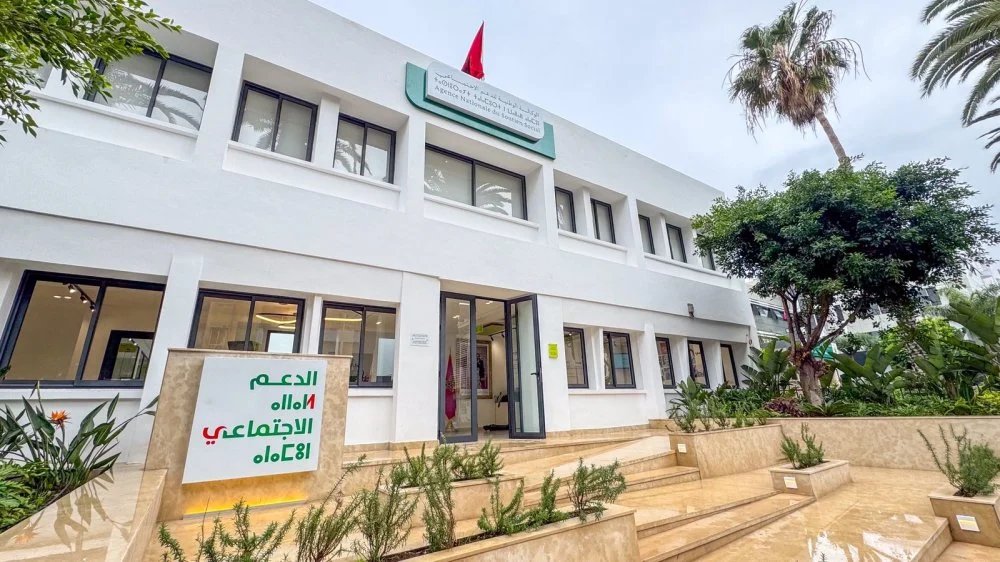
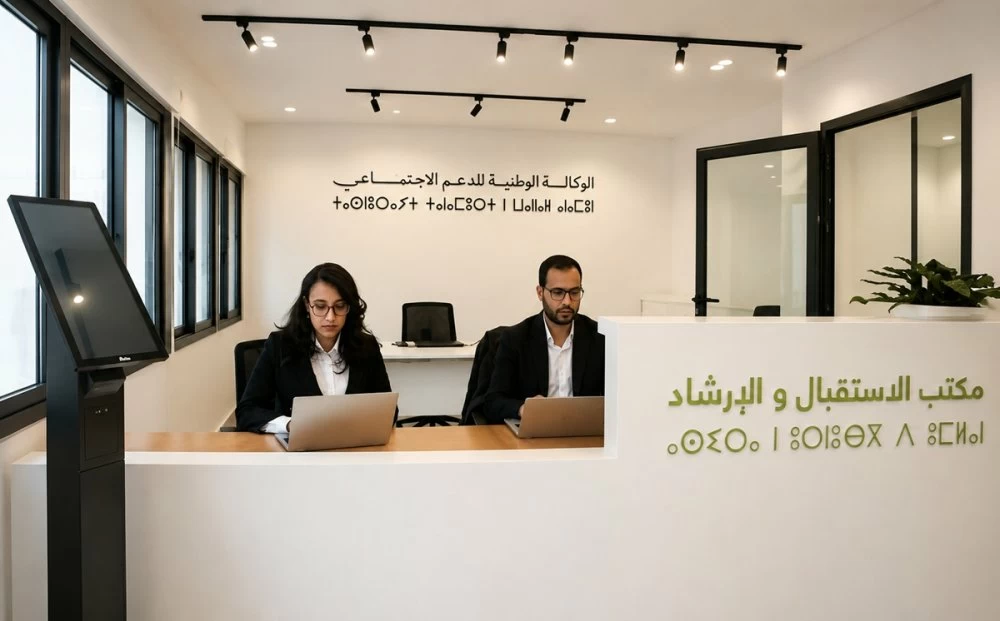
This support must be deployed at the level of the territorial representations of the ANSS. Their role is to translate social assistance into the field that is more humanized and better adapted to local realities. They must also make it possible to overcome the limits of exclusively digital management, by reintroducing a local presence among beneficiary households. Their roadmap consists of four functions.
• The second function concerns geographical proximity. The objective is to adapt the Agency’s interventions to local specificities, to promote available resources, to reduce inequalities in access to social services and to anchor the public service at the local level.
• The third relates to prevention. Territorial representations must deepen knowledge of the social situations of households, in order to protect them against sliding towards precariousness and to support beneficiaries who wish to embark on paths of economic empowerment.
• The fourth concerns the impact: identify the most effective ways to produce social dynamics, break the cycle of intergenerational poverty and measure changes in the situation of beneficiaries.
Institutional coordination around pathways
The support system is also based on partnership agreements intended to mobilize the institutions concerned. The ANSS cites in particular the departments of National Education, Health and Employment, local authorities, the National Initiative for Human Development, ANAPEC, OFPPT and National Assistance. Each actor intervenes according to their scope and area of expertise. This coordination must support different life trajectories: progressive social reintegration of families, improved employability, economic empowerment, academic success and access to health. The coherence of the system will depend on the capacity of those involved to act together, around concrete situations, without disruption in the beneficiaries’ journey.
El Jadida, first territorial laboratory
Territorial representations are intended to respond to the real needs of beneficiaries, to allow a more precise reading of local specificities and to integrate this data into intervention mechanisms. Their implementation is based on a structured analytical framework, built around a multi-criteria grid. This takes into account the coverage of the Direct Social Assistance system, the living conditions of the populations, territorial characteristics, health and education indicators, as well as the economic situation and employment.
Through this framework, the ANSS intends to deploy its action as close as possible to the territories, adapting it to local dynamics and the needs of the populations. This orientation joins the new generation of territorial development programs called by HM King Mohammed VI, fbased on the promotion of local specificities.
A GIS to adjust social action to local realities
The issue is decisive for the coherence of the system: the commitments requested from households can only produce their effects if the territorial offer really exists. The GIS must therefore help the ANSS to better measure vulnerabilities, to guide its interventions and to adjust social action to the concrete capacities of the territories. The project will enter in 2026 in an operational phase of implementation and conduct of tests. This stage will be undertaken as a priority at the level of the territorial representation of the province of El Jadida, confirming the role of this territory as the first laboratory of complementary support for monetary transfers.
Social assistance linked to territorial development
Through territorial representations, partnership agreements and the SIG, the ANSS seeks to make direct social aid a broader instrument of iinclusion and integrated territorial development. The system aims to bring social assistance closer to the realities experienced by households, but also to the economic, educational, health and institutional capacities of each territory. The success of this new phase will depend on several conditions: the quality of socio-economic profiling, the relevance of the proposed pathways, the continuity of monitoring, effective coordination between stakeholders and the capacity of local public services to respond to identified needs. It is on this scale that the transition from monetary support to autonomy will take place: no longer just helping today, but sustainably supporting households towards productive inclusion.