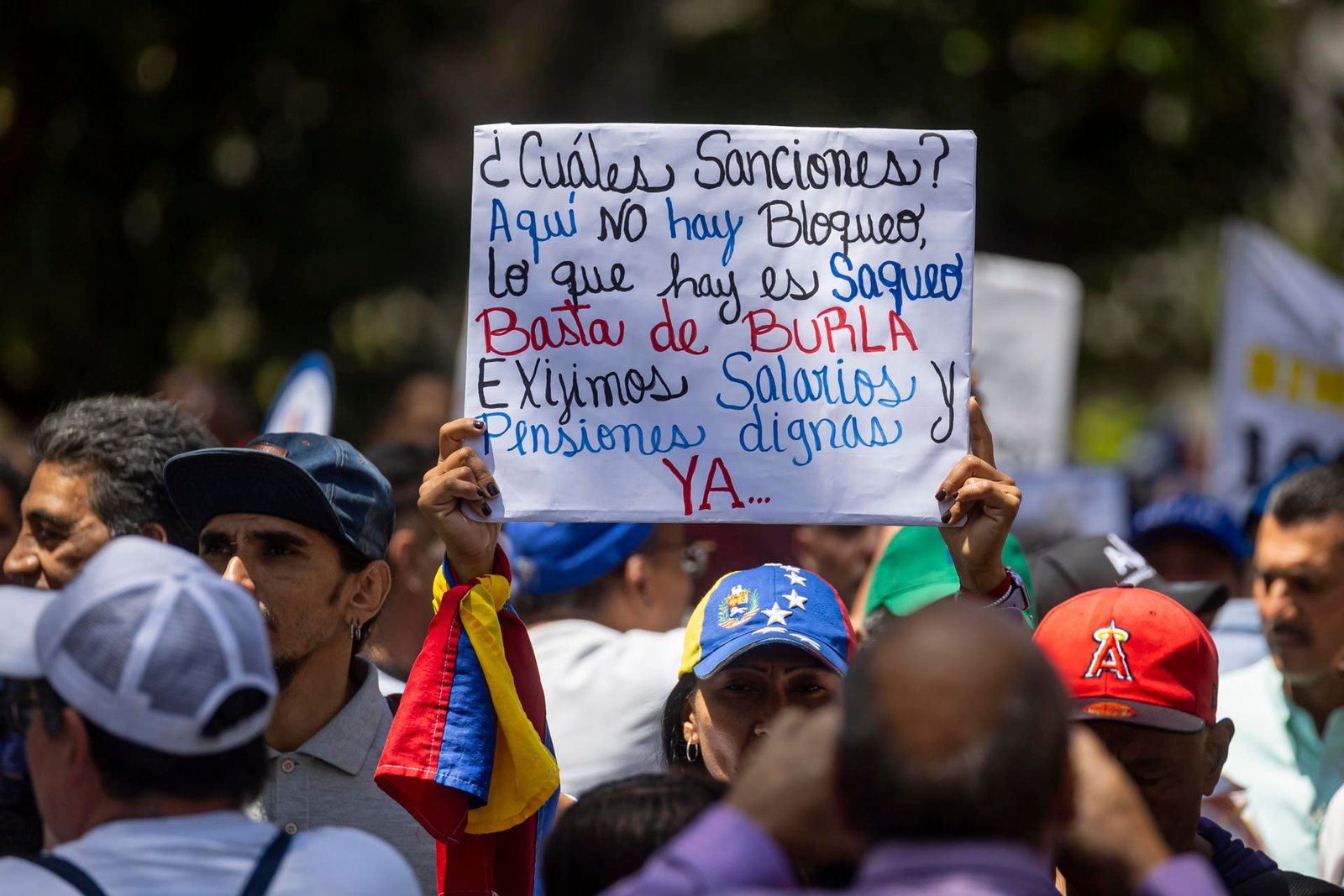
We have reached mid-June, more than five months since the leaders of the Cartel of the Suns, Nicolás Maduro Moros and Cilia Flores were captured and imprisoned by the United States authorities. Although there are many discourses about transition and changes in the country, the worst, crudest and most symptomatic of the realities of the narco-dictatorship remains intact and operating with all its capabilities: I am referring to the police, military and paramilitary organizations, dedicated to espionage, kidnapping, forced disappearance, torture, extortion and the persecution of political leaders, social leaders, union members, journalists or simple citizens who demand their rights.
The fact that in recent weeks there have been no kidnappings or disappearances known to the public, does not mean that the repressive entities and groups – all criminal entities, all lacking legitimacy and all responsible for very serious crimes against human dignity and Human Rights – are inactive, in a process of change, reorganizing or separating themselves from their illegal and illegitimate practices.
No. Let no one be fooled. They continue, these days, focused on tasks such as espionage, monitoring personalities, building false files and planning new kidnappings and disappearances. Not only have they recruited new members to their ranks, but the training programs remain unchanged. In the corridors of Sebin, the Dgcim, the Cicpc, in the special action groups of the Bolivarian National Police, in the various intelligence units of the FANB components, the order and slogan is “No one backs down here.”
I write this article, not only to warn whoever wants to pay attention to what I point out here, that the danger is alive. That the torturers have not been retired or assigned to other responsibilities. They remain in their positions. With their same assignments and expectations. But, above any other consideration, they continue in a state of impunity. They are not investigated: those who could order the investigations are part of the same criminal chains, the same chains of command. Active officials boast: “nothing is going to happen to us, because if one of us falls, we all fall.” A domino effect upwards and sideways.
The other concern that motivates this article, of a more structural order, is based on a perception: Venezuelan society, or rather, its leadership, does not seem to have understood or assumed the legal, institutional, political and social problems that the repressive machinery represents and its possible destiny in a democratic Venezuela.
There are thousands and thousands of officials—to which must be added thousands of prison guards and custodians—whose main and only job is the different variants of the violation of Human Rights. There are those who have specialized in corporal punishment. Others, in psychological punishments, aimed at breaking the spirit of political prisoners. There are, in abundance, those who are true experts in forms of extortion against mothers and fathers, wives and partners, children and other relatives of prisoners.
It turns out that the presence of these groups of torturers—which are surprisingly organized mafias spread throughout the country—is not limited to criminal institutions. They are also distributed, simultaneously, in different positions in ministries and state companies; They hold senior security positions in official entities; They direct groups of drivers and bodyguards of high officials and, a very important aspect, they maintain powerful businesses importing espionage equipment, personal protection and household items for families who can pay for their very expensive services, they work in companies as heads of their security units, they transport valuables and, as investigations by journalists from other Latin American countries have revealed, they direct small groups of hitmen to handle “special” cases.
The torturers are not only concentrated in Boleíta, El Helicoide, Plaza Venezuela, Lomas del Tamanaco, Parque Carabobo, San Bernardino and other neighborhoods in Caracas where clandestine detention and torture centers operate. On the contrary, they are dispersed in hundreds of offices, in dozens of cities in the country; They participate in thousands of money laundering operations, including lucrative businesses on the border with the ELN and the exFARC; They occupy key positions in ports and airports, in the Seniat, in police forces, in the ruling party’s media and in an extensive list of assignments, which include espionage or criminal and sabotage actions outside Venezuela.
It is very tempting to settle for thinking that, after the possible arrests of four or five torture chiefs, there will be progress in dismantling the culture and networks of torturers in Venezuela. These arrests, which should occur immediately, are only a first step. They must open the tap to a complex and systematic process, which, as far as I know, no one is thinking or planning. In the experiences of denazification and de-Stalinization there are lessons of what went well and what did not, from which the Venezuela of the democrats has a lot to learn.
*This article was originally published in The National.
The leadership of Venezuelan society does not seem to have understood the problem that the repressive machinery represents and its possible destiny in a democratic Venezuela.