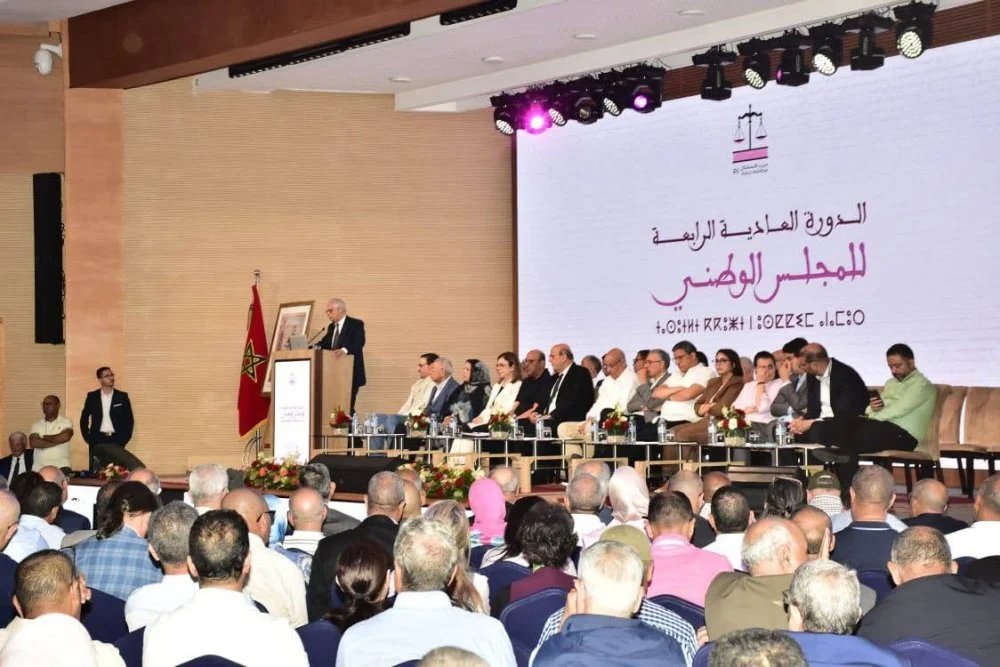
Believing that recent developments open the way to a definitive settlement of the dispute, the formation calls for strengthening national mobilization around the autonomy project under Moroccan sovereignty. It also pays tribute to the Royal Armed Forces, the Royal Gendarmerie, National Security, Auxiliary Forces, Civil Protection as well as the populations of the southern provinces for their contribution to the defense of territorial integrity.
On the institutional level, the national council finally welcomed the progress of the process of preparing the next legislative elections, referring to the consultations carried out in recent months, the reforms of the electoral legal framework and the operations to revise the electoral lists. Istiqlal affirms its desire to continue its contribution to this project so that the election helps strengthen political participation and the credibility of representative institutions. Through these five commitments, the party founded in 1944 seeks to articulate nationalist heritage, defense of the government’s record and preparation for future deadlines. A way of reminding us that, while being a pillar of the current majority, he also intends to present himself to voters with a distinct political offer, centered on social justice, the moralization of economic life and national sovereignty.
Interview with the member of the executive committee of the Istiqlal Party
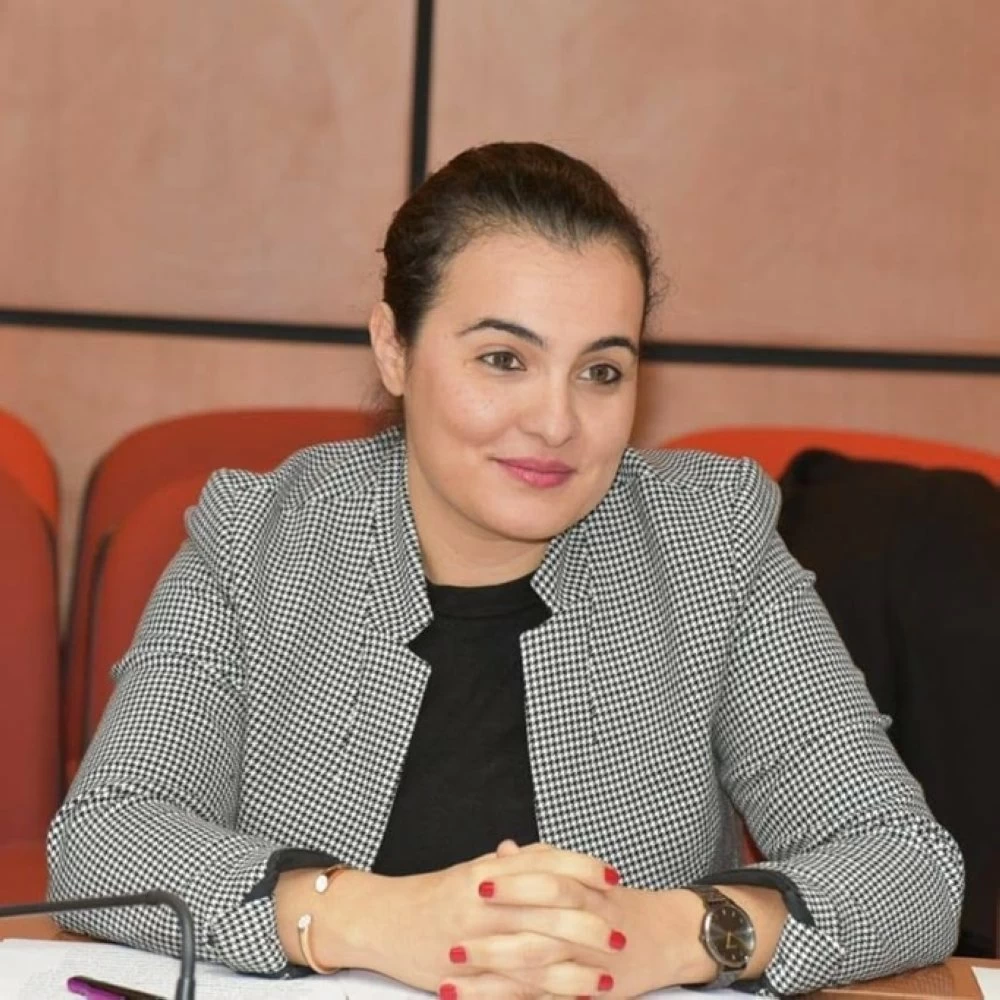
Le Matin: During its last national council, Istiqlal presented five major commitments with a view to the 2026 elections. What, in your opinion, is the main novelty of this roadmap compared to the 2021 program?
Imane Benrabia: Everything has changed because the context is no longer the same. In 2021, we were in “crisis management” mode in the face of Covid, drought and global inflation. It was necessary to protect Moroccans and consolidate the social base. Today, we are no longer content with managing: we are going on the offensive on value. The great novelty of our roadmap for 2026 is that we no longer only want to treat or help, but to strengthen Morocco’s sovereignty in terms of food, energy, water and technology. This is the whole meaning of the strategic sovereignty desired by His Majesty the King, may God help Him. We want the citizen to be the actor in this value creation, and not just the beneficiary of aid.
Istiqlal places the fight against corruption and conflicts of interest at the heart of its speech. Why is this theme becoming a campaign priority today when the party has been in government for almost five years?
We did not wait until 2026 to talk about public ethics: it is in the DNA of Istiqlal. Equity — التعادلية — and social justice for Moroccans is our lifelong fight. And let’s be honest: participating in government doesn’t mean turning a blind eye to market blockages. These five years on the ground have confirmed one thing to us: the State is making historic budgetary efforts for the social state, but too large a part of this value is lost along the way, captured by speculative behavior and intermediaries. Fighting corruption and conflicts of interest is not an electoral slogan, it is an economic emergency. As long as the distribution circuits are not cleaned up, state support will not reach the citizen’s pocket. This is a project that we can no longer postpone.
Nizar Baraka has regularly denounced speculation, rent-seeking and certain conflict of interest situations. Are these criticisms aimed at general dysfunctions or do they also constitute, implicitly, a criticism of the way in which the current majority has governed?
Mr. Nizar Baraka adopts the posture of a statesman. The dysfunctions linked to speculation or rents are deep and structural evils, which date back well before this government. But let’s be clear: loyalty is not silence. We work with our partners in a constructive manner, and this is precisely why we allow ourselves to name what others, in the majority, prefer to manage in silence. Recognizing that there are still obstacles to be overcome to free the economy is not to dissociate ourselves: it is to have the lucidity and courage that Moroccans expect. Not everyone, in the majority, has put the same energy into tackling these blockages.
Istiqlal takes responsibility for the social record of the Akhannouch government while presenting itself as an alternative for 2026. How can we convince voters that this is a project of rupture and not simple continuity under another leadership?
As part of the Royal Vision of the Social State, this government, and Istiqlal within it, has advanced social protection, social dialogue and major projects for the future. We accept it, and we have brought our own sensitivity to it, that of fairness. But yes, there will be a break, not with these achievements, with the method. Simple continuity under another direction will not be enough. We want to move from the establishment of social infrastructure to the direct impact in the daily lives and wallets of Moroccans. This requires another governance: more acceleration, real proximity, a renewal of local elites. This is precisely what has been missing so far, and this is where Istiqlal will make the difference.
In terms of purchasing power, Moroccans continue to face strong pressure on prices, despite the measures adopted in recent years. Do you consider that the government did not go far enough or that certain decisions should have been taken earlier?
Let’s say it frankly: yes, certain decisions could have been taken earlier and more firmly. Despite the billions of dirhams mobilized to subsidize gas, electricity, transport or to reduce taxation, the pressure on the middle class and vulnerable households remained heavy. Public money was committed, but it was too often absorbed by speculation, due to failure to be supervised in time. The State played its role as a financial shield; he must now play the role of uncompromising referee. We must act much more firmly against speculation, so that each dirham of support can finally be read on the receipt and the citizen can feel it in their basket. On this point, we do not intend to wait five more years.
The party highlights economic, technological and energy sovereignty. In a context of increased competition between the majority parties, is this theme also a way for Istiqlal to differentiate itself from the RNI as the elections approach?
Sovereignty, whether food, water, energy, industrial or technological… is not the property of any party: it is a national priority dictated by the vision of His Majesty the King. But each training approach it according to its sensitivity, and this is where the choices diverge. Where others take a primarily accounting and managerial reading of investment, Istiqlal places social and territorial equity in it. For us, economic sovereignty is only valuable if it reduces regional divides while building the country’s autonomy. Our difference is not one of circumstance: making growth a lever for social integration for all is our brand, not a campaign argument.
Basically, do the five commitments presented by Istiqlal outline Nizar Baraka’s candidacy for the Prime Minister’s office? Does the party consider that its role is no longer just to participate in coalitions but now to lead them?
Istiqlal is not a party that wakes up as the elections approach. It is the party of the Nation. Our vocation is to serve Morocco, both in government and in opposition. Our compass is not the electoral calculation, it is the interest of the country. So let’s say it bluntly: yes, a party of our stature is not intended to remain a simple adjunct in a coalition. He is intended to lead it. We rely on solid structures, activists present in each municipality in the Kingdom and real internal democracy. It is natural, healthy and democratic that we aspire to lead the Executive. This is the very meaning of pluralism.
Our five commitments are not promises on paper: they are a concrete social project to respond to the emergencies of Moroccans. And our Secretary General, Mr. Nizar Baraka, fully embodies this stature of a statesman, serene and rigorous, capable of leading these transformations. The Prime Minister’s Office is not an end in itself: it is the means to implement our vision, protect purchasing power, build true sovereignty and guarantee social justice. The final word will go to the voters. But Istiqlal is ready: we have the history, the experience, and the women and men to lead Morocco.