Of Matteo Frascadore
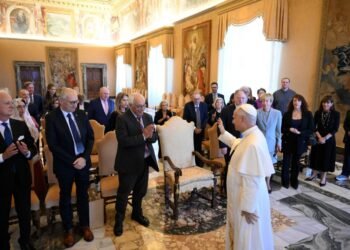
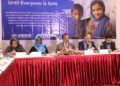
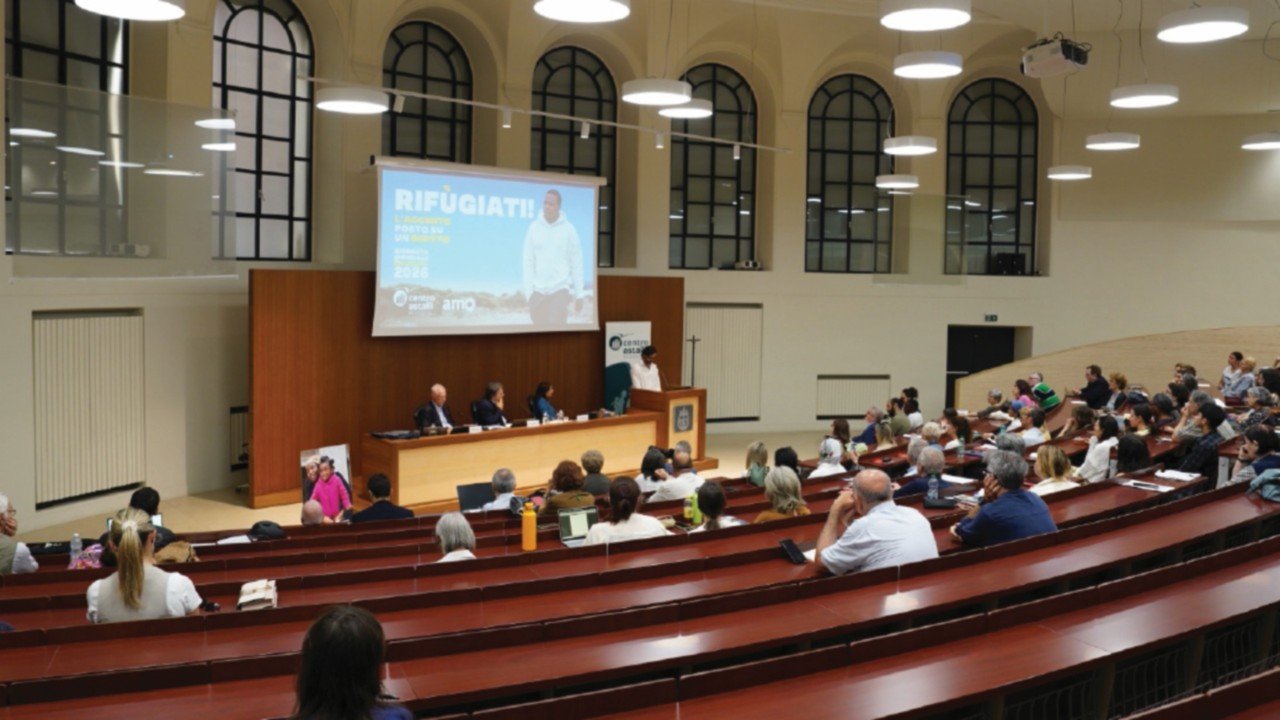
«Remigration is not factually possible on a large scale. And it doesn’t solve anything, among other things, now it’s nothing more than a new slogan.” This is what was stated by Bishop Paolo Bizzeti, former apostolic vicar of Anatolia and founder of AMO – FME (Friends of the Middle East – Friends of Middle East), speaking to the Vatican media on the sidelines of the event “Refugees! The emphasis placed on a right”, held on Monday 15 June in the main hall of the Pontifical Gregorian University, in view of World Refugee Day on 20 June.
The dialogue, moderated by the journalist and writer Marco Damilano, also saw the political scientist and columnist Nathalie Tocci intervene together with Bizzeti. The initiative, promoted by Centro Astalli, aims to promote a concrete cultural change and takes place in a period in which the right to asylum is going through a dark season characterized by a heated public debate. And the media weight acquired by the concept of remigration is concrete proof of this today. «An event like this raises attention on the issue of the right to asylum, which for many people is a problem. But that’s not the case. This is an issue that concerns all of us, our humanity and the quality of life on this planet”, states Monsignor Bizzeti, who in 2024 due to age restrictions finished his experience in Turkey, where he was very active in interreligious dialogue and led local Caritas initiatives. «A very rich experience, I learned a lot from these people. They are tragic stories, but also dignified. They believe in very profound values that we have forgotten here”, concludes Bizzeti commenting on the years spent as Apostolic Vicar.
According to the numbers released by the UNHCR Global Trends Report, 117.8 million people have been forced to flee around the world. After ten years it is the first time that this figure has decreased, although it is still high. Furthermore, in 2025 there were 14.7 million returns to their countries of origin, and most of these occurred under pressure, forcing those who flee into precarious conditions. From the meeting it emerges that a concrete point of dialogue can be listening, as “many of the asylum seekers come from war, they want to live in peace and this can help build a safer country”, Father Camillo Ripamonti, president of the Astalli Center, told the Vatican media. “There is a need for a concrete cultural change, to stop and reflect on their situation”, admits the president, who, introducing the event, underlined how important it is to be willing to look beyond fear.
A concrete problem linked to the story of immigration – it is underlined – is the use of terms that can arouse fear and discomfort among people, including “wave”, “emergency”, or “invasion”. Among these, «in recent times the word “remigration” has crept in. I believe that only by fully understanding its scope can we counter it by going in the opposite direction”, concludes Ripamonti, adding that no one wants peace more than refugees.
During the meeting Carlos spoke, offering a concrete testimony of escape, survival and rebirth. A former prosecutor in Colombia, Carlos has paid a very high price for his fight against corruption and the defense of justice: having survived a stabbing, an arson attack that destroyed his home, and several gunshots, he was forced to flee hastily to save his life and that of his family, after heavy threats also made against his son. Having arrived in Italy, in Milan, he experienced the harshness of the road and the desperation of having to sleep on cardboard for two weeks, until he met a man who he immediately recognized as an older brother. “How are you? He asked me. Two words for a question that almost no one really asks”, he admits. From that moment his life in Italy began. Despite the painful distance from his loved ones, which today he only sees through a screen, Carlos has transformed his drama into a civil and educational commitment. Collaborating with Centro Astalli, he brings his story to schools today, offering young people a living and concrete testimony of how justice is not an abstract concept, but a daily choice that requires courage, and of how sharing can defeat indifference.
From the meeting promoted by the Astalli Center a precise objective emerges: to make the refugee a subject of rights again and not a problem of public order. Central, in this perspective, is also the way in which a phenomenon is described which for many represents a journey of rebirth. Behind every word there are concrete lives, stories marked by suffering but also by dignity.