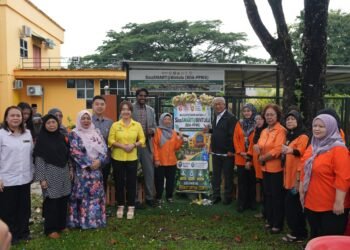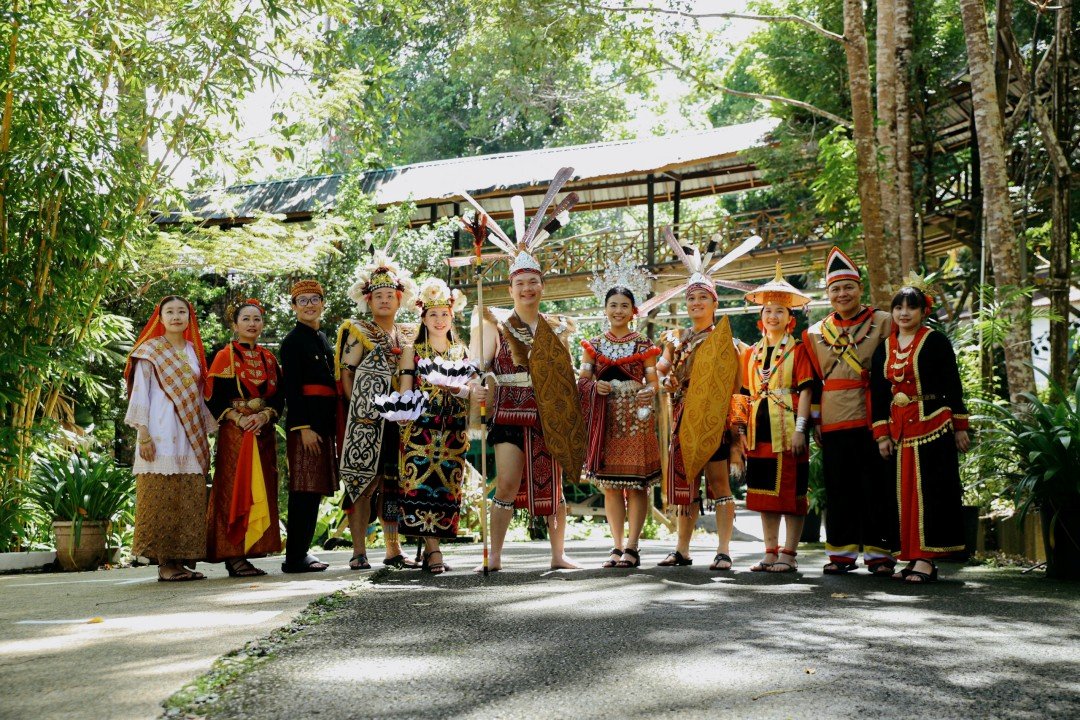

Chiew (centre) joins participants dressed in traditional attire during a photoshoot session.
MIRI (June 19): A traditional attire photoshoot featuring Sarawak’s diverse ethnic costumes could potentially be developed into a new experiential tourism product in Miri, said Deputy Tourism, Arts and Culture Minister Chiew Choon Man.
The initiative showcased during ‘Miri In-depth Experience Media Familiarisation Trip’, where media practitioners and social media influencers were given the opportunity to immerse themselves in Sarawak’s rich cultural heritage through a traditional attire photoshoot.
Held at the Borneo Rainforest Resort, the cultural attire session introduced participants to traditional costumes representing Sarawak’s major ethnic groups, including the Iban, Bidayuh, Malay, Melanau, Orang Ulu and Kedayan.
Chiew, who is Miri MP, said the concept has the potential to become a unique tourism product, allowing visitors to wear traditional ethnic attire and participate in professional photoshoots as a memorable keepsake of their visit.
“Miri is home to many ethnic groups in Sarawak, and this provides a special opportunity for visitors to experience and appreciate the traditional attire of different communities.
“We hope to develop this into a unique tourism product that offers both cultural appreciation and memorable experiences,” he said.
Participants were assisted by a team specialising in traditional Sarawakian costumes before taking part in individual photoshoots against the backdrop of the rainforest resort.
According to Chiew, the initiative could also generate economic opportunities for local entrepreneurs involved in preserving traditional attire and cultural arts, as well as photographers and tourism operators offering suitable locations for such activities.
“Cultural dress photoshoots have proven to be highly successful tourism products in countries such as China, Japan and South Korea. Many travellers, especially younger tourists, actively seek immersive cultural experiences.
“Similarly, allowing visitors to wear Sarawak’s traditional clothing offers a fun, interactive and meaningful way to engage with local culture while creating content that can further promote Sarawak and Miri through social media,” he said.
The activity received a strong response from participants, many of whom described it as a memorable experience that deepened appreciation of Sarawak’s multicultural heritage.
The familiarisation trip also included a visit to a traditional Iban longhouse, where participants were welcomed with cultural performances and served Sarawakian delicacies.
Chiew said Sarawak’s more than 4,500 longhouses represent living museums that offer visitors an authentic glimpse into the traditional lifestyles of local communities.
“We want to develop unique local experiences that can only be found in Sarawak. Besides enhancing tourism offerings, these experiences provide educational value and help visitors better understand our culture and heritage.
“We will continue to improve promotion through storytelling and information-sharing while raising the standards of local experience-based tourism products,” he added.