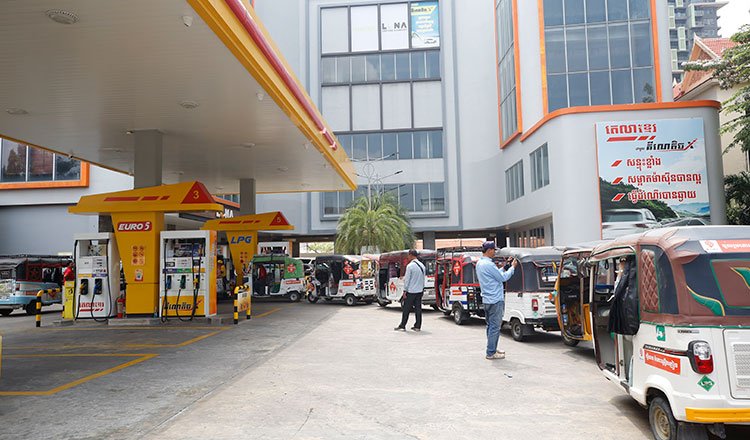
When tensions in the Gulf sent shock waves through global energy markets, Cambodia felt the tremors almost immediately. What began as a geopolitical conflict thousands of kilometres away soon became a domestic economic strain, exposing the vulnerability of the country to forces beyond its borders.
For many Cambodians, the crisis was not measured in barrels of oil or fluctuations in Brent crude futures. It was measured in longer commutes, thinner wages, rising food prices, and the daily calculations families make to stay afloat.
Cambodia entered the crisis already carrying structural weaknesses in its energy system. Despite rapid economic growth and significant expansion of the national grid over the past decade, the country still depends heavily on imported fuel — especially petroleum products used for transport and diesel-based backup generation. Its electricity mix remains an uneasy patchwork of hydropower, coal, imported power, and emergency diesel capacity.
That arrangement works tolerably well in calm periods. But it becomes fragile when global markets tighten.
The Gulf crisis acted less like a singular disruption than a stress test. Oil prices climbed. Shipping costs rose. Fuel import bills swelled. Because Cambodia imports nearly all of its refined petroleum, the effects passed quickly through the economy.
Transport companies increased freight charges. Farmers paid more to operate irrigation pumps and machinery and purchase fertilisers. Urban workers spent more simply getting to work each morning.
Food inflation is on the rise, seriously affecting the livelihoods of the lower middle-income population.
And volatility proved almost as damaging as the price increases themselves. Businesses can sometimes absorb high costs; what they struggle to manage is uncertainty.
Fuel prices shifted week by week, making budgeting nearly impossible for small enterprises already operating on narrow margins. Garment workshops shortened operating hours. Rice mills delayed production. Cold-storage operators cut costs where they could.
The consequences rippled outwards. Fewer factory shifts meant smaller paychecks. Higher transport costs pushed up food prices. What appeared in macroeconomic charts as “energy pass-through effects” translated in practice into families buying less meat, postponing school expenses, or skipping trips altogether.
Cambodia’s increasing dependence on regional electricity trade also complicated the picture. In recent years, cross-border power imports have helped stabilise supply, particularly during periods when hydropower generation drops in the dry season. But neighbouring countries are themselves exposed to global fuel pressures. When gas and coal prices rise internationally, imported electricity becomes more expensive as well.
In moments of strain, the system reveals its layers of vulnerability all at once.
For wealthier households, higher energy prices may mean inconvenience. For poorer communities — particularly rural families with limited grid access — they can mean a narrowing of opportunity itself. In some villages, diesel-powered informal electricity networks already carry punishingly high costs. When fuel prices surged, households responded by rationing power: fewer hours of lighting at night, reduced irrigation pumping, delayed phone charging, less refrigeration.
Energy poverty is rarely dramatic. More often, it is cumulative — a gradual shrinking of what daily life allows.
To its credit, the Cambodian government moved to soften some of the immediate blows. Authorities adjusted fuel taxes, coordinated supply inventories, and encouraged conservation measures to reduce pressure on the grid. Such interventions mattered. They bought time and prevented deeper instability.
But emergency measures are not the same as long-term resilience.
The deeper lesson of the crisis is that Cambodia’s energy vulnerability is not merely the product of distant conflict. It is also the result of accumulated policy choices: dependence on imported fuels, underinvestment in transmission infrastructure, limited storage capacity, and years of delayed efficiency reforms.
The encouraging reality is that these vulnerabilities are not permanent.
Cambodia possesses one natural advantage that remains underutilised: sunlight. The country has strong solar potential, and the economics of solar generation paired with battery storage have improved in recent years.
Accelerating utility-scale solar deployment could reduce dependence on diesel generation during peak demand periods while insulating consumers from global oil volatility. But we need to remove all unnecessary barriers and red tape to facilitate domestic and foreign investments in solar energy.
At the same time, grid modernisation has become essential. Expanded transmission capacity, smarter regional interconnections, and more resilient distribution systems would help stabilise supply during seasonal fluctuations in hydropower output. A stronger grid would also make renewable integration more practical and reliable.
Efficiency matters just as much as generation. The cheapest energy is the energy never consumed. Better appliance standards, wider adoption of LED lighting, and industrial efficiency upgrades could significantly reduce national demand growth without sacrificing economic expansion. For factories operating on tight export margins, energy efficiency increasingly determines competitiveness itself.
Equally important is the question of fairness. Broad fuel subsidies are politically attractive but economically blunt, often benefiting wealthier consumers more than vulnerable households. More targeted support — direct transfers, energy vouchers, or clean-cooking assistance for low-income families — would cushion shocks more effectively while preserving fiscal flexibility.
There is a temptation, especially in smaller economies, to view global energy crises as unavoidable acts of fate. But vulnerability is not destiny. It is built gradually through infrastructure decisions, market structures, and political priorities. Which means resilience can be built too.
Months later, fuel prices have eased somewhat, not because Cambodia’s energy system has fundamentally improved, but because international markets calmed. The underlying fragility remained.
I still think about that moto-driver.
The next geopolitical shock — whether in the Gulf, Eastern Europe, or the South China Sea — will almost certainly arrive sooner than expected.
Waiting for calm is not a strategy.
A strategy is building an energy system capable of withstanding turbulence: one anchored in domestic renewables, modern infrastructure, predictable pricing, and efficiency strong enough to shield ordinary families from distant upheavals.
If Cambodia can manage that transition, the next global crisis may still send ripples across its economy. But those ripples will no longer feel like waves crashing directly into the lives of its people — or into the cost of a simple ride across town.