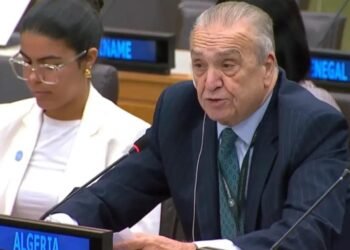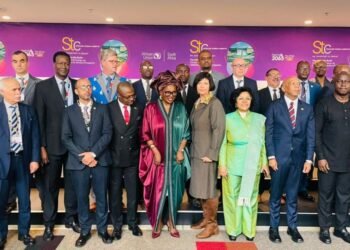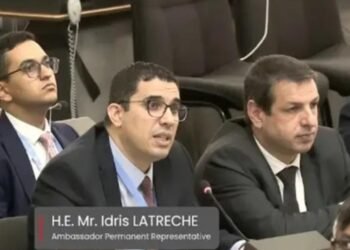
New York (United Nations), June 17, 2026 (SPS) – Countries from Latin America and the Caribbean region affirmed their firm support for the right of the Sahrawi people to self-determination and independence in accordance with United Nations General Assembly Resolution 1514 (XV) on granting independence to colonial countries and peoples, during their speeches before the substantive session of the Special Committee on the Situation with regard to the Implementation of the Declaration on the Granting of Independence to Colonial Countries and Peoples (the Committee of Twenty-Four), which began its work on Monday at the United Nations Headquarters. United New York.
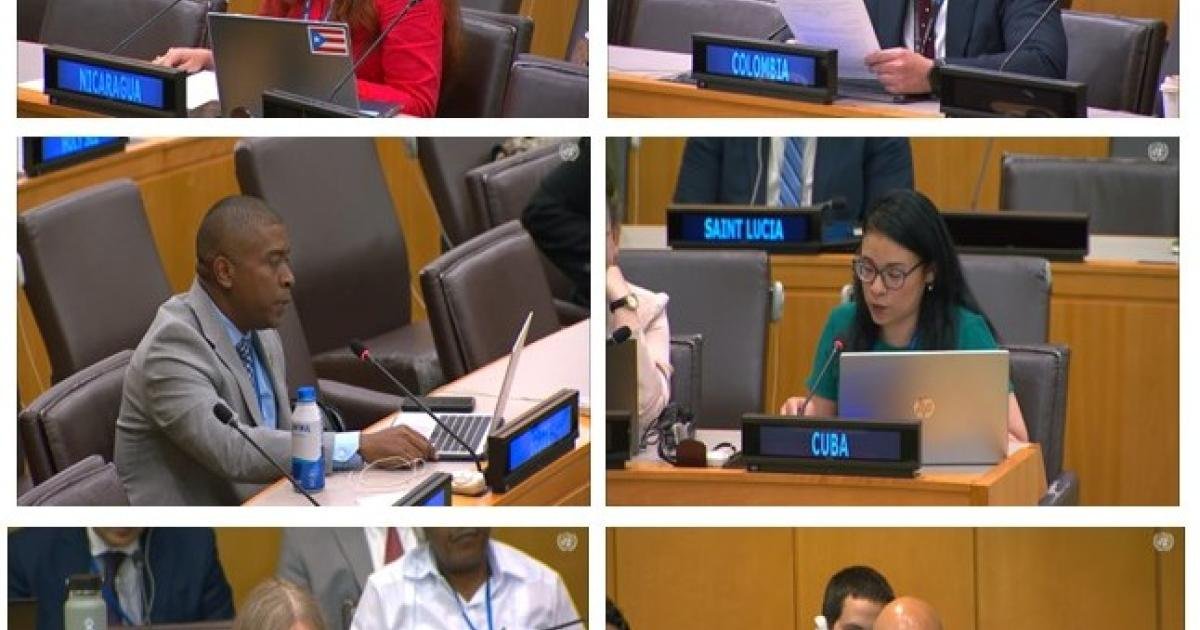
The representative of Nicaragua reiterated her country’s recognition and support for the inalienable rights of the brotherly people of the Sahrawi Arab Democratic Republic, which are freedom, self-determination and national sovereignty, recalling the fiftieth anniversary of the declaration of the Sahrawi Republic, which represents five decades of struggle full of dignity, tireless resistance and loyalty to the principles of the United Nations Charter.
It also recalled the resolutions of the General Assembly that recognized the Polisario Front as the sole and legitimate representative of the Sahrawi people, and praised the determination and insistence of the Sahrawi people to never give up the right to live in peace and freedom on their land.
She pointed out that the issue of decolonization in Western Sahara remains an existing commitment in Africa, stressing the need to keep this issue on the decolonization agenda of the General Assembly, the Fourth Committee, and the Special Committee until a final settlement is reached.
It affirmed that the only just and final solution to this colonial situation lies in holding a self-determination referendum under the supervision of the United Nations in accordance with what was stipulated in the resolutions of the General Assembly and the Special Committee, and called for the resumption of a genuine negotiation process characterized by good faith and devoid of preconditions, allowing the Sahrawi people to exercise their rights to freedom, independence and self-determination once and for all.
As for the representative of Venezuela, she reaffirmed her country’s historic commitment to the issue of decolonization and its solidarity with the Sahrawi people, recalling that since the establishment of diplomatic relations with the Sahrawi Arab Democratic Republic in 1983, Venezuela’s position has remained firm and firm, which is to support the Sahrawi people’s exercise of their inalienable right to self-determination in accordance with international law, the Charter of the United Nations, and the relevant resolutions issued by the Security Council, the General Assembly, and the African Union, especially Resolution 1514. (D-15).
She expressed Venezuela’s concern about the continuation of this colonial situation that has lasted for more than five decades, and stressed that the Sahrawi people have the legitimate right to freely determine their fate, and that no political process can be considered truly just unless it fully recognizes this right. In this regard, I regretted the failure to fully implement the mandate of MINURSO, which was established more than thirty years ago specifically to facilitate the holding of a self-determination referendum, which unnecessarily prolonged the suffering of the Sahrawi people.
In conclusion, she reiterated that resolving the issue of Western Sahara inevitably requires dialogue and respect for international law, and expressed the hope that the political process will achieve effective progress and that the Sahrawi people will be able to freely exercise their right to self-determination as soon as possible, noting that the work of the Special Committee and the work of the United Nations as a whole will remain incomplete until this goal is achieved.
The representative of Cuba stated that the General Assembly, the Security Council and the African Union have adopted numerous resolutions on the issue of Western Sahara, since the Special Committee on Decolonization classified it as a territory subject to decolonization more than 60 years ago, stressing that it is necessary for the international community to commit to implementing United Nations resolutions related to Western Sahara.
She expressed deep regret that Western Sahara remains the last territory subject to colonial occupation in Africa, a continent with a remarkable history of struggle for self-determination and independence of peoples.
She reaffirmed Cuba’s support for reaching a just, lasting and mutually acceptable political solution that leads to self-determination for the people of Western Sahara in accordance with United Nations General Assembly Resolution No. 1514 (XV) regarding granting independence to colonial countries and peoples, stressing her country’s rejection of unilateral decisions that ignore the interests and rights of the Sahrawi people and violate international law, the Charter of the United Nations, and United Nations General Assembly Resolutions No. 1514 (XV) and 2625. (D-15).
In conclusion, she reiterated that Cuba will continue to defend the legitimate aspirations of the Sahrawi people in all multilateral forums, and stressed her country’s firm and firm solidarity with the Sahrawi people and its support for their right to self-determination and independence.
The representative of Belize expressed his country’s solidarity with the Sahrawi people in their legitimate aspirations to exercise their right to self-determination freely and fully, recalling that the International Court of Justice has confirmed that the right to self-determination is a peremptory norm that cannot be derogated from, and also recognized the application of this right to the people of Western Sahara.
He added that despite all this, more than sixty years after the issue of Western Sahara was included on the agenda of the Special Committee, the process of decolonization remains incomplete, expressing Belize’s feeling of concern about the continued waiting of the Sahrawi people to fully and freely exercise their basic right, which is the right that this organization was mandated to safeguard.
He stressed that any solution to the Western Sahara issue must be consistent with the purposes and principles of the United Nations Charter, be acceptable to both parties, and guarantee self-determination for the people of Western Sahara through a free, fair and democratic process, stressing in conclusion that the efforts of the United Nations must serve the fundamental goal of enabling the Sahrawi people to decide their future for themselves, as no external party can make this decision on their behalf.
The representative of Colombia renewed his country’s commitment to reaching a peaceful, just, lasting and mutually acceptable political solution to the issue of Western Sahara within the framework of the decolonization process and in accordance with the Charter of the United Nations. He also reiterated that this solution must allow the Sahrawi people to exercise their inalienable right to self-determination in line with General Assembly Resolution No. 1514 (XV) and other relevant resolutions.
He also stressed that Colombia attaches fundamental importance to the United Nations Mission for the Referendum in Western Sahara (MINURSO), whose presence remains a major factor for stability in the field, stressing the need to maintain the mission’s neutrality, credibility and mandate, as well as strengthening it to ensure the effective performance of its tasks.
The representative of Mexico renewed his country’s commitment to the right of peoples to self-determination, which is a basic principle in its foreign policy. In this context, he welcomed the resumption of direct negotiations between the two parties and praised the efforts led by the Secretary-General of the United Nations to reach a just, lasting and mutually acceptable solution based on the Charter of the United Nations and the relevant Security Council resolutions on the issue of Western Sahara.
He also expressed Mexico’s support for the good offices of the Personal Envoy of the United Nations Secretary-General to Western Sahara, who is charged with facilitating dialogue and enhancing mutual trust, calling on the two parties to explore all possible ways to settle the conflict in Western Sahara and reach a final, lasting and just political solution that is acceptable to all and guarantees the right to self-determination for the people of Western Sahara in line with the will of the General Assembly and the Security Council. (SPS)