Damascus, June 18 (SANA) Syrian officials and international partners met in Damascus on Thursday to launch discussions on reforming vocational education and expanding employment opportunities under the STEP program, a multi-donor initiative aimed at aligning skills training with labor market needs and supporting economic recovery.
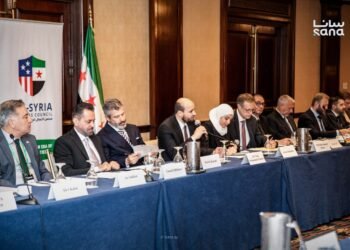
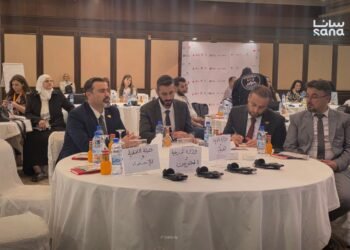
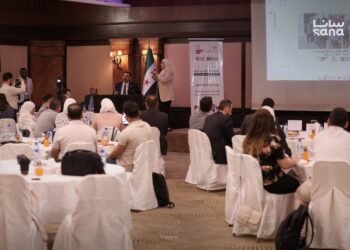
The first meeting of the program’s steering committee was held at the Ministry of Education in cooperation with Germany’s GIZ, bringing together representatives from Syrian ministries alongside officials from the EU, Germany and Switzerland.
The discussions focused on overhauling technical and vocational education and training systems, improving governance and policy frameworks, and expanding “dual education” models that combine classroom learning with workplace training. Participants also reviewed plans for short-term training programs, labor market services, and stronger cooperation between training institutions and the private sector.
Syrian Education Minister Muhammad Abdulrahman Turko said vocational training was becoming a “core pillar” of the education system and a key driver for reconstruction. He said reforms aim to shift from theoretical planning to practical, work-based training that directly matches labor market demand.
International partners described the program as a long-term framework for recovery. Julia Becker, head of the STEP program at GIZ, said the initiative seeks to boost employment opportunities through a package of interventions that includes strengthening vocational education, building partnerships between local companies and Syrian expatriate businesses, and supporting vulnerable groups and returnees.
Tanja Lohmann, Head of the German Agency for International Cooperation (GIZ) in Syria, said the current phase offers an opportunity to establish long-term partnerships with Syrian institutions to support recovery efforts and develop national capacities. She described the steering committee as a key mechanism for setting priorities based on local needs and perspectives.
Swiss representatives highlighted their country’s vocational training model, based on close cooperation between government, industry and educational institutions, as a reference for reform efforts.
The program also includes plans to connect Syrian companies with Syrians abroad to stimulate employment and economic activity, with a particular focus on vulnerable groups and returnees.
The STEP initiative is funded by Germany, Switzerland and the European Union and will run from March 2026 to February 2030, working with Syrian ministries to modernize vocational training, improve infrastructure, and support long-term economic recovery.


R.D/ABD