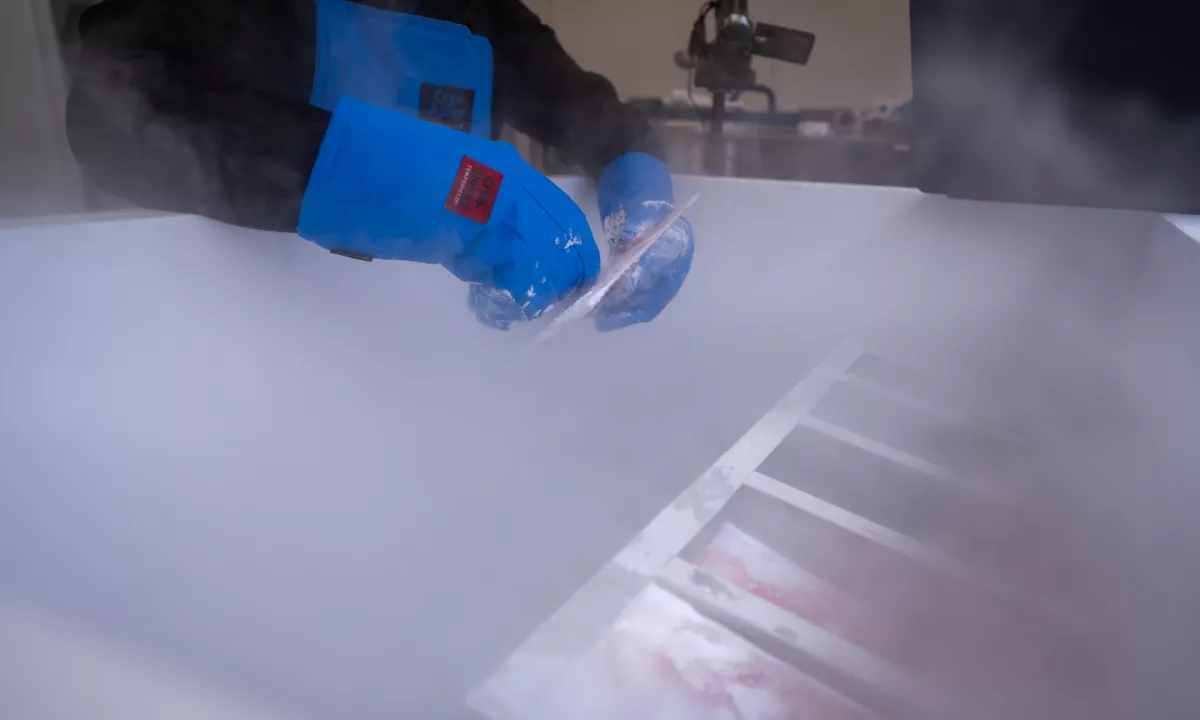
Holders of samples from the failed Biobank will pay for the supply of liquid nitrogen to maintain the samples. Photo: STA
Holders of samples of the failed Biobank will pay for the supply of nitrogen to maintain the samples
Holders of samples from the failed Biobank will pay for the supply of liquid nitrogen to maintain the samples. The company GaiaCell, which stores them, threatened to stop paying for the supply. The Vrtačnik law firm, where they represent part of the owners, today called on JAZMP and GaiaCell to enforce the agency’s decision, according to which GaiaCell may not endanger the samples.
Lawyer Urban Vrtačnik expects that the Public Agency of the Republic of Slovenia for Medicines and Medical Devices (JAZMP) will respect its own decision from September last year, in which they ordered GaiaCell to take care of cells and tissues and to refrain from all actions that would endanger cells and tissues. They also expect that the agency will exercise all legal powers so that GaiaCell will comply with the decision.
As Vrtačnik said at today’s press conference, JAZMP “obviously considers this decision to have been executed, even though this is not true”. The decision orders the company to store the cells until all samples are transferred to another cell and tissue facility.
However, GaiaCell notified the agency last week that it would stop supplying samples with liquid nitrogen on June 15. Cryo-vessels, on the other hand, need nitrogen, as this is how the appropriate temperature for storing samples is maintained. “The cancellation of the contract for the supply of liquid nitrogen is obvious and one of the worst forms of violation of the JAZMP decision, where all red alarms should be on,” emphasized Vrtačnik, who represents around 500 families in this case.
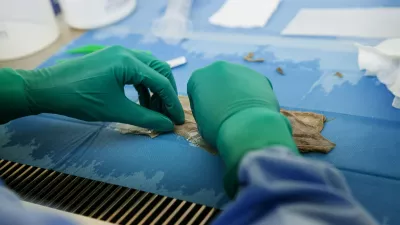
If the cells are destroyed, it would be unique in Europe. “This has never happened anywhere before and this will prove that Slovenia is not capable of enforcing EU legislation and regulations in the field of cell and tissue protection,” the lawyer emphasized.
JAZMP reminded sample holders last week at the time of this announcement by GaiaCell that they can make their own arrangements for the transfer and further storage of samples with another tissue and cell facility if they still allow it, i.e. GaiaCell and Future Health.
According to Vrtačnik, this is absurd. “GaiaCell enters into commercial contracts on the market for payment and stores cells and tissues undisturbed under these contracts. However, it claims the inability to store the cells and tissues it has arbitrarily taken from the Biobank,” he said.
He also said that the parents themselves will pay the cost of supplying liquid nitrogen. As Vrtačnik said, this solution is short-term, and the parents hope that the matter will be resolved during this time by respecting the JAZMP decision, in an administrative dispute or systemically.
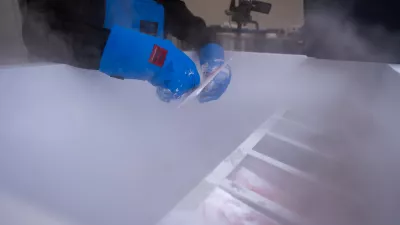
Several administrative disputes are open regarding the legality of the decision. The legal question of whether JAZMP should itself conclude contracts with third-party providers and ensure storage at its own expense has not yet been resolved.
The advocates of the owners of the samples also expect the new government to approach the solution of the situation immediately. “If cells and tissues were an object of special protection for government representatives when they were still in the opposition, we see no reason to depart from this principle,” Vrtačnik said.
GaiaCell received samples from about 4,000 holders from the Biobank in 2024, although it did not have a replacement storage contract. The company Biobanka, which stored the samples of thousands of children for 16 years, has ceased to operate. GaiaCell is convinced that the authorities should pay it for further storage, which is why it has threatened to cut off the supply of nitrogen several times. Around 400 samples were destroyed last year, and the parents still don’t know who is responsible.