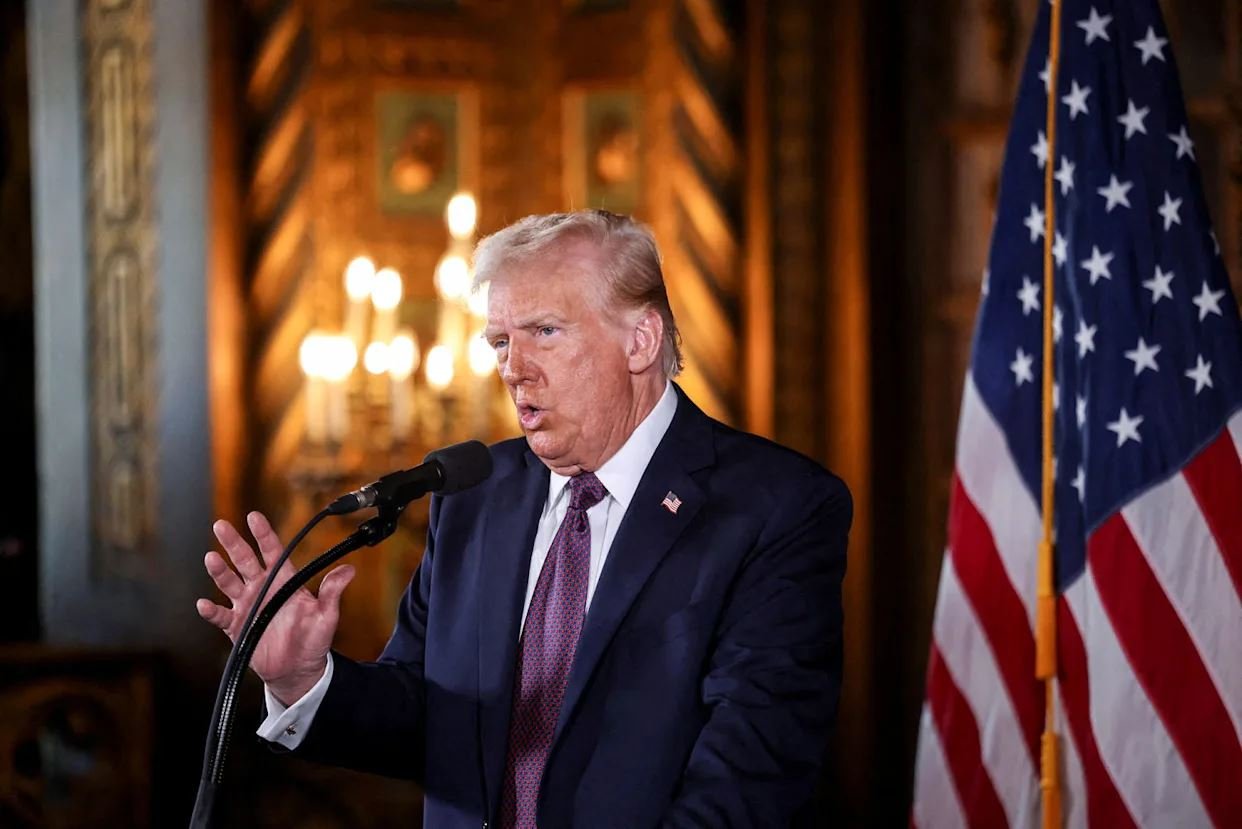
US President Donald Trump announced the signing of a preliminary agreement with Iran to end the conflict; its contents may be made public in the near future.
“I am very happy to say that it is signed, the deal is fully signed,” he said during a meeting with French President Emmanuel Macron at the G7 summit.
How BBC reportsaccording to the American side, the memorandum of understanding was signed electronically by Donald Trump, US Vice President J.D. Vance and Chairman of the Iranian Parliament Mohammad Bagher Ghalibaf.
American officials revealed certain provisions of the agreement, which is expected to be officially signed on June 19 in Geneva. According to them, it is planned to resume shipping through the Strait of Hormuz on the same day.
US officials said that technical negotiations on the Iranian nuclear program will start this week. At the same time, a possible easing of the sanctions regime and the release of Iranian assets will depend on Tehran’s compliance with the terms of the deal.
Trump himself said that the full text of the document will be made available to the public shortly after the signing ceremony.
“This is a very powerful document and I want it to be published. So, probably quite soon,” the president said.
What does the agreement involve?
J.D. Vance, in an interview with CNN, said that the memorandum of understanding between Washington and Tehran is a short document of “about a page and a half” and is of a framework nature. According to him, many provisions will be detailed at subsequent stages of negotiations.
Vance noted that one of the key points of the document is Iran’s commitment to promote “regional peace and stability,” including ending support for “terrorist organizations.”
“The most important thing is that they will make a verifiable commitment not to develop nuclear weapons,” Vance said.
According to the agreements reached, the ceasefire will be extended for another 60 days. During this time, the parties expect to agree on the provisions of the final agreement.
Pakistani Prime Minister Shahbaz Sharif, whose country is mediating in the negotiations, announced the progress made earlier. According to him, the parties agreed on “an immediate and permanent cessation of military operations on all fronts, including Lebanon.”
At the same time, American representatives noted that although Lebanon is part of the ceasefire, the withdrawal of Israeli troops from its territory is not a prerequisite for the agreement. Israel, they say, retains the right to self-defense.

Israeli Prime Minister Benjamin Netanyahu said on the evening of June 15 that the Israeli military will continue to remain in “security zones” in Lebanon, Syria and the Gaza Strip for as long as necessary, maintaining freedom of action.
Earlier, Trump said he had ordered the immediate lifting of the US naval blockade on Iranian ports and confirmed plans to open the Strait of Hormuz after the initial agreement was signed.
Later on social networks, the American president wrote that “vessels are starting to move, many of them with oil, from the Strait of Hormuz.”
End of war or respite?
Iranian Deputy Foreign Minister Kazem Gharibabadi confirmed the cessation of military operations on state television. Iranian media presented the framework agreement as a diplomatic victory for Tehran.
According to Gharibabadi, Qatari mediators held “almost 14-15 hours of lengthy negotiations” in Tehran, which allowed the parties to reach initial agreements.
Iran’s top military leaders said the actions of the Iranian military, as well as Tehran’s allies in the region, showed the United States and Israel that they had “no choice but to accept defeat and capitulate.”
At the same time, the Iranian Foreign Ministry emphasized that they retain “deep mistrust” of the United States and consider the agreements reached as “only a step towards reducing tensions.”
“You need to understand that the agreement has not yet been signed. It can always suddenly break. The signing is expected on Friday, and there is even a possibility that Trump himself will be there, there are such rumors. Be that as it may, there is still time. I think it is no coincidence that after the parties agreed, they still waited and looked around. But the main thing, of course, is that the parties could not agree on the details, because the situation was changing dynamically, and was changing not in favor of the United States.
The United States initially entered hostilities with Iran with the goal of improving its negotiating position. Of course, the maximum task was to change the regime, but it didn’t work out. At a minimum, the goal was to improve our negotiating position, to put pressure on Iran so that it would be more accommodating. As a result, everything turned out exactly the opposite, moreover, I would say that an additional variable appeared in this matter,” said in an interview with the BBC, Iran expert Nikita Smagin.
According to the expert, Tehran realized that the development of the situation, at least in the negotiation process, was gradually developing in its favor. Under these conditions, Washington, or rather the Donald Trump administration, had to soften its position and make certain concessions, since without compromises, reaching an agreement would have been unlikely.
Smagin believes that military actions did not strengthen the US negotiating positions, but, on the contrary, weakened them. It took Trump a while to accept that reality, he said, so the talks included lengthy and difficult bargaining between the parties.
Let us note that until now the main points of disagreement between the parties remained the issues of uranium enrichment and the US demands to prevent Iran from creating nuclear weapons, Tehran’s desire to achieve a complete lifting of sanctions and gain access to tens of billions of dollars of frozen oil revenues.
All news about the war in the Middle East read our story.