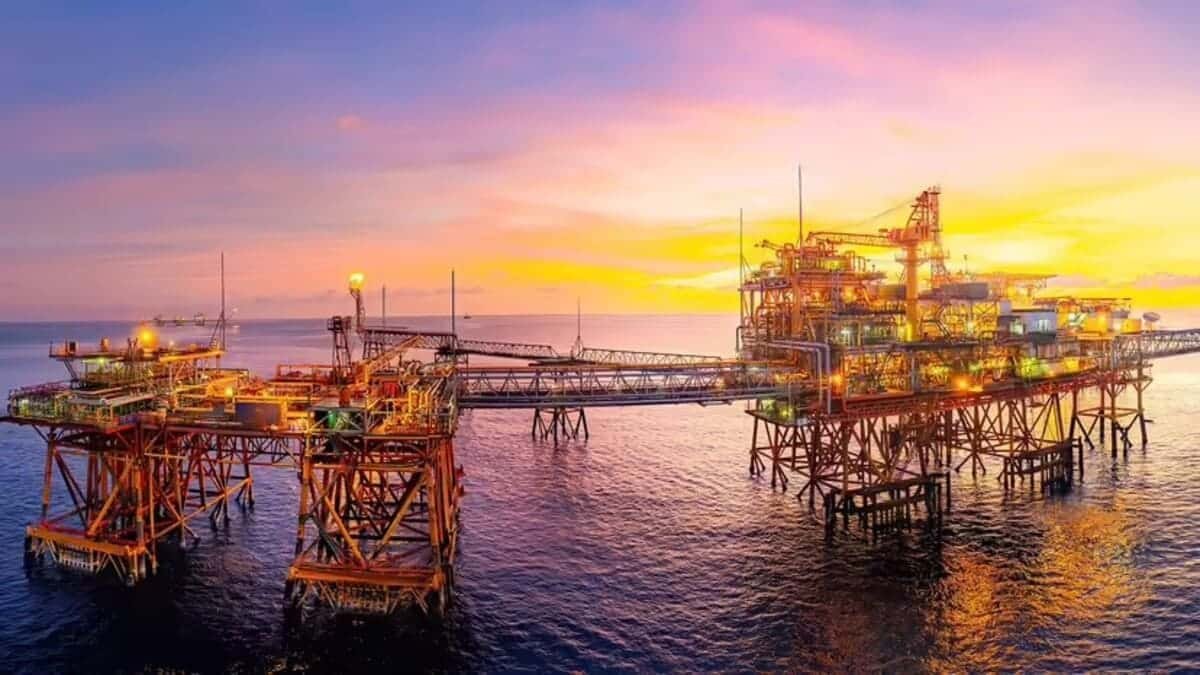
In order to exploit the oil and gas reserves at the bottom of the world’s oceans, mankind has built huge engineering structures. Some of them are real record holders in terms of height, weight or working depth.
Modern offshore oil and gas platforms are considered one of the greatest examples of engineering art. These complexes contain drilling equipment, raw material processing systems, storage tanks and residential blocks for hundreds of professionals. embodies.
Despite the strong winds, high waves and extreme climatic conditions of the open sea, these structures have been in continuous operation for years.
Hibernia is a giant built against icebergs
Located approximately 315 kilometers east of the Canadian island of Newfoundland, the Hibernia platform is one of the heaviest offshore oil rigs in history.
The total weight of the platform at the time of operation is more than 600,000 tons, and together with the concrete structure, ballast and stored liquids, the weight exceeds 1 million tons.
Engineers designed it in such a way that Hibernia can withstand a collision with an iceberg weighing 1 million tons. Even a collision with a 6 million ton iceberg would damage the structure beyond repair.
Today, Hibernia remains one of Canada’s most important oil fields.
Berkut is Russia’s subarctic giant
The Berkut platform located near Sakhalin Island in Russia is one of the largest oil and gas facilities in the world.
Its total weight exceeds 200,000 tons. The project was implemented with the participation of ExxonMobil, Rosneft, Japanese and Indian companies, and the construction cost is estimated at about 12 billion dollars.
52,000 cubic meters of concrete and 27,000 tons of steel were used for the platform.
“Berkut” can work even in minus 44 degrees and in waves 18 meters high. Its length is 105 meters, width is 60 meters and total height is 144 meters.
Troll A is one of the tallest human-made structures
The Troll A platform, located in the North Sea off the coast of Norway, is recognized as one of the tallest structures ever moved by mankind.
More than 369 meters of it is below the water level.
The platform is made of high-strength concrete, steel reinforcement and special cables, and serves to extract natural gas from the Troll gas field.
Experts consider it one of the greatest engineering achievements in the history of the construction of offshore platforms.
Perdido is the deepest oil platform in the world
The Perdido platform in the Gulf of Mexico is the world’s deepest offshore oil platform.
This facility, managed by the Shell company, is located on water at a depth of approximately 2450 meters.
It is connected with wells at a depth of 2300-3000 meters and produces oil and gas.
Because of this, Perdido is considered one of the most complex offshore drilling facilities ever created by mankind.
Petronius is a structure with a height of 610 meters
Located in the Gulf of Mexico, the Petronius platform is one of the tallest freestanding structures on Earth.
The total height from the bottom of the sea to the top is about 610 meters.
The platform is not rigidly fixed. It is specially designed to be able to bend slightly under the influence of waves and currents.
This solution ensures the stability of the structure during strong storms.
Olympus — 100,000 barrels of oil per day
The Olympus platform (also known as Mars B) operates in the Mars field in the Gulf of Mexico.
It has a high production capacity and can produce up to 100,000 barrels of oil per day.
By 2014, more than 700 million barrels of oil were extracted from this field.
The platform has production blocks, drilling complexes and living conditions for about 200 specialists.
Stones FPSO is the deepest oil project in the world
The Stones FPSO complex, located 320 kilometers off the coast of New Orleans, USA, is the world’s deepest oil and gas project.
It operates at a depth of 2896 meters.
Platforms of the FPSO type process oil and gas directly offshore, store it and then load it onto tankers.
How do offshore oil rigs work?
Offshore oil platforms can be compared to a small industrial town built in the middle of the ocean.
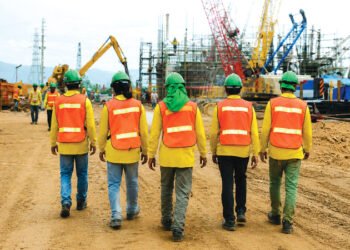
Such complexes will contain drilling equipment, processing systems, control centers and accommodation modules.
Personnel live on the platform itself, and supplies and specialists are delivered by helicopters and supply ships.
Because they are located far from land, safety systems, emergency equipment and support vessels are an integral part of the operation of such facilities.
Along with the development of technologies, automated mining complexes located on the seabed are also increasingly used.