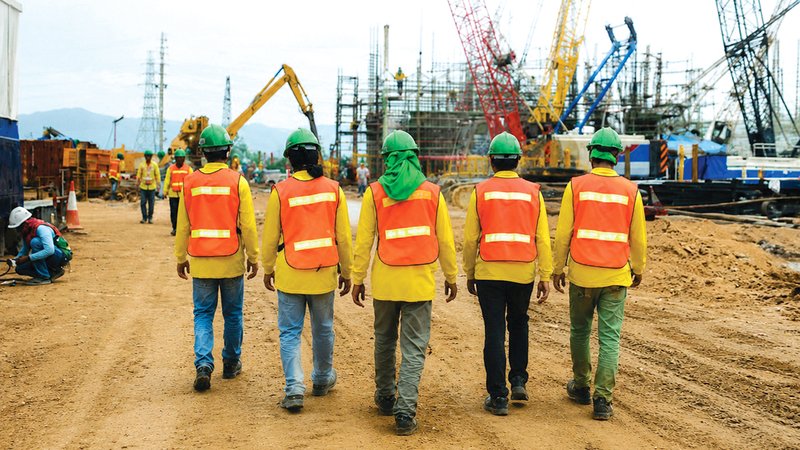
The Abu Dhabi Center for Public Health stressed the importance of adhering to heat stress prevention measures to protect workers during the summer months, and to promote safe working environments, through the “Safety in the Heat” program, which aims to raise the level of awareness of the dangers of exposure to high heat and ways to prevent them, which contributes to reducing injuries and diseases associated with hot weather, stressing the importance of paying attention to five main indicators of exposure to heat stress, and adhering to four basic measures to avoid it.
In detail, the Abu Dhabi Center for Public Health explained that the “Safety in the Heat” program contributes to enhancing awareness of the importance of taking the necessary measures, understanding and implementing heat stress management programs by employers and workers’ supervisors, ensuring their protection from the dangers of working in hot climates in the Emirate of Abu Dhabi. This comes in line with the decision of the Ministry of Human Resources and Emiratisation regarding the noon work ban, which prohibits performing work under the sun and in open spaces, from 12:30 noon to 3:00 pm, during the period from June 15 to September 15 of each year.
The number of beneficiaries of the awareness campaigns organized by the “Safety in the Heat” program, over the course of 11 years, reached more than nine million people, through 22,164 awareness and inspection visits that reflect the broad scope of the program’s impact and the sustainability of its effectiveness. The Abu Dhabi Public Health Center also developed and produced 35 awareness-raising materials in six languages: Arabic, English, Urdu, Hindi, Tagalog and Bengali, and distributed more than 884,200 A copy of these materials, ensuring that essential health information reaches a wide range of target groups.
The Center emphasized in awareness publications for managers, supervisors and workers that managers, supervisors and occupational safety and health specialists have a pivotal role in protecting workers exposed to high heat, stressing the importance of applying the necessary preventive measures to reduce health risks associated with working in hot climates, and starting early in developing heat stress prevention programs to ensure proper planning and effective application.
He pointed out that general responsibilities include ensuring compliance with legal requirements, conducting special risk assessments, applying control procedures to limit exposure to high heat, adhering to the decision to ban work at noon, and ensuring that workers adapt to climatic conditions, in addition to early planning of work to reduce workers’ exposure to heat, and training them to recognize the symptoms of heat stress and ways to deal with it.
The center also stressed the importance of providing cool or air-conditioned areas for workers to rest, providing fluids and meals appropriate for hot weather, developing and implementing an integrated program to prevent heat stress, in addition to ensuring the availability of first aid services at work sites.
The center explained that preventing heat stress requires drinking sufficient amounts of water, reducing the consumption of drinks that contain high levels of sugar, adding a slightly larger amount of salt to food and drink to compensate for the salts lost as a result of sweating, in addition to getting sufficient sleep and rest, and informing the supervisor directly when feeling any symptoms or health condition.
The center has identified four basic measures to avoid heat stress, including drinking at least one liter of water before starting work each day, drinking water regularly at least two liters every two to three hours during the day, and carrying a two-liter water container to drink from regularly, in addition to increasing the amount of salt in meals during the summer to compensate for salts lost due to sweating.
The center warned that there are five main indicators of exposure to heat stress that one should pay attention to, including skin rashes, heat cramps, fainting, heat exhaustion, and heat stroke.