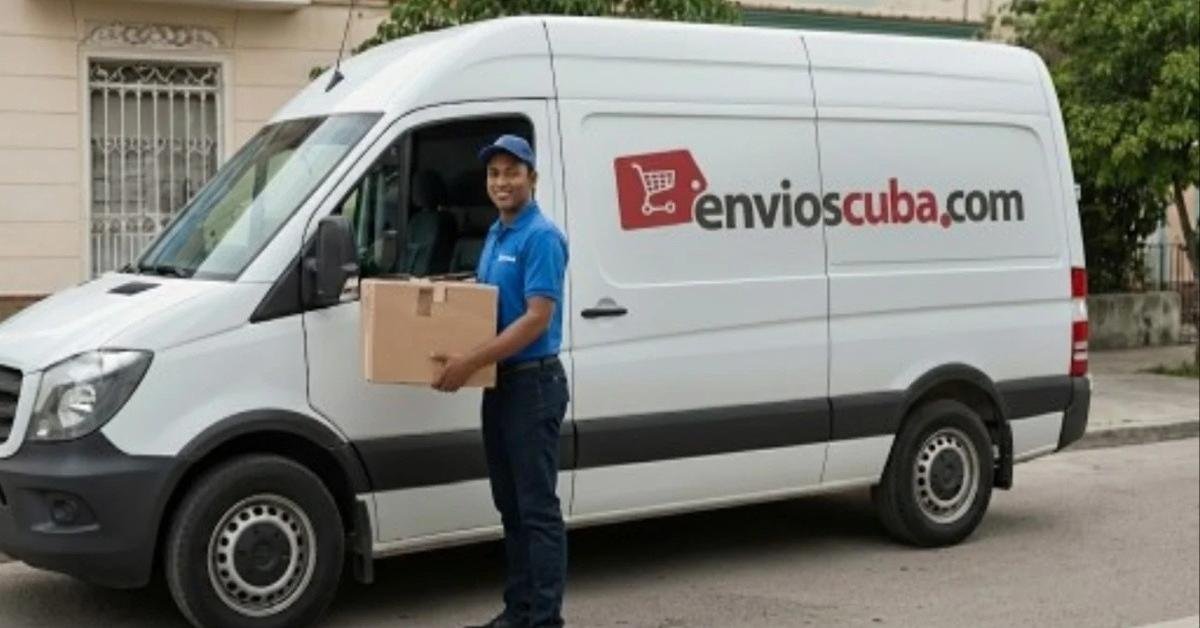
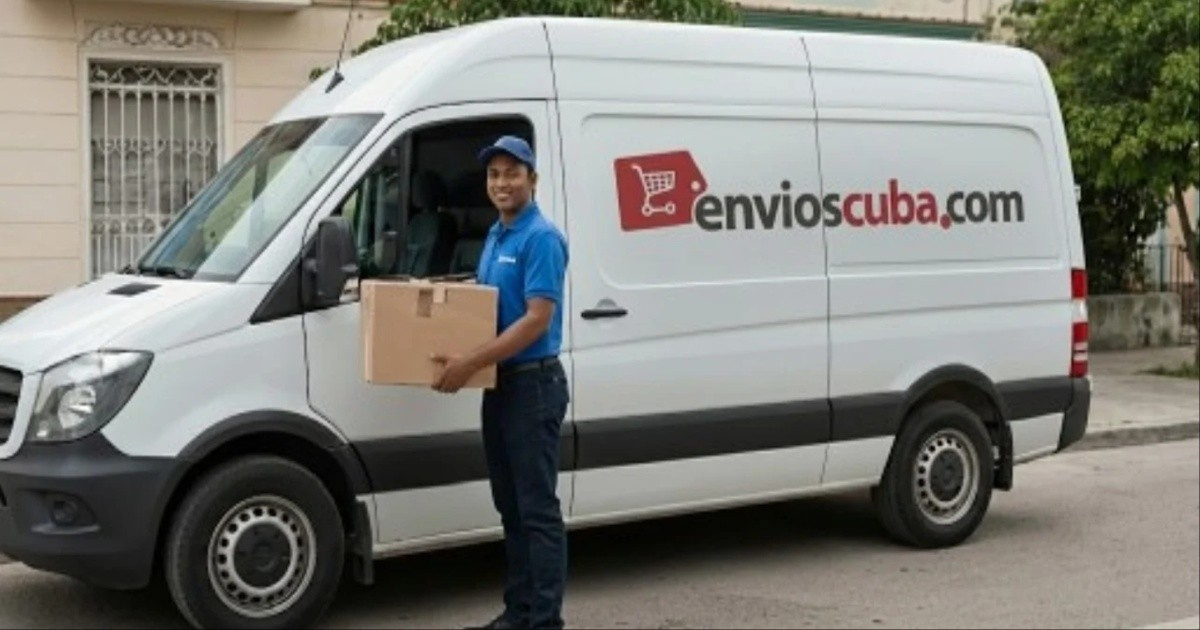
Madrid/“For reasons beyond our control, we cannot continue providing our services.” with that brief messageShippingCuba announced this Sunday the closure of one of the main platforms used by emigrants to buy food, appliances and toiletries for their relatives on the Island.
The company did not clarify whether the suspension will be temporary or permanent nor did it explain the reasons for the decision. ShipmentsCuba was promoted as a platform with more than 10,000 articles and presence in all municipalities of the country.
However, stores and portals such as La Puntilla, Plaza de Carlos III, Puerto Envío, ElectroEnvío, Mercado and Almacén-On operated under its umbrella, linked to the state commercial networks of Cimex and Tiendas Caribe, both under the control of the military conglomerate Gaesa.
Both companies shared the same address in Palma de Mallorca and Almacén-On’s privacy policy even referred to the email contacto@nactws.com
The legal documentation of Almacén-On also reveals that the platform used several Spanish companies connected to each other. While ShipmentsCuba was managed by Nactws, SLU, Almacén-On identified Lorengrave, SLU as responsible
Both companies shared the same address in Palma de Mallorca and Almacén-On’s privacy policy even referred to the email contacto@nactws.com to manage certain procedures and customer complaints. The coincidences point to a coordinated business structure and not to a set of independent stores coincidentally hosted on the same platform.
Formally, EnvoysCuba was managed by Nactws, a Spanish company managed by Sonia Álvarez Pérez. Cuban Diary, from commercial informationattributes the entire capital of the company to Álvarez Pérez.
Research published by CubaNet in 2023 They related Álvarez Pérez to her husbandVladimir Graverán Becerra, and with their daughter, Anabel Graverán Álvarez. The three appear linked to a network of companies created in Canada and Spain to provide technological, remittance and electronic commerce services to Gaesa.
“That seemed like the Police. They asked for more data than the G2,” he tells this newspaper.
Nactws’ business grew dramatically during its first years. The company went from billing around 264,000 euros in 2019 to 2.2 million in 2020 and 4.9 million in 2021, although the trend reversed after the pandemic. The latest data available places its sales at around 1.2 million euros in 2024.
A customer who previously used the service remembers that the purchasing process required a large amount of information about who was paying and the recipient in Cuba. “That seemed like the Police. They asked for more information than the G2,” he tells this newspaper.
In addition to the address and telephone number, the platform requested identity information and other data intended, according to the company, to verify the operation and effect delivery. Its privacy policy contemplated the possibility of sharing them with financial entities, payment gateways and companies in charge of transportation and distribution.
The guarantee conditions of the portal also referred to the workshops of the Tiendas Caribe chain, another of the large state retail networks. The company has not explained how it will now manage pending orders or refunds.
The closure reveals the strong dependence of NavegasCuba on the regime’s commercial and financial system. The platform acted as an international showcase for state stores and converted part of the family help sent from abroad into purchases within the circuit controlled by the State.
Instead of receiving the money directly, relatives obtained goods purchased in euros or dollars from abroad.
Instead of receiving the money directly, relatives obtained goods purchased in euros or dollars from abroad. In this way, the State captured foreign currency outside the country and delivered products within Cuba that were generally sold at very high prices.
The disappearance of DiseñosCuba contrasts, for now, with the continuity of other portals such as Katapulk, Supermarket23, Cubamax and Cuballama. Their pages remained active this Sunday and continued to offer shipments or sales to recipients on the Island.
The difference can be found in the structure of their operations. Some of these companies collect and keep the money outside of Cuba, import through private companies or have their own inventories and distributors. ShipmentsCuba, on the other hand, was directly connected to Cimex and Tiendas Caribe establishments and to the payment infrastructure of the state networks.