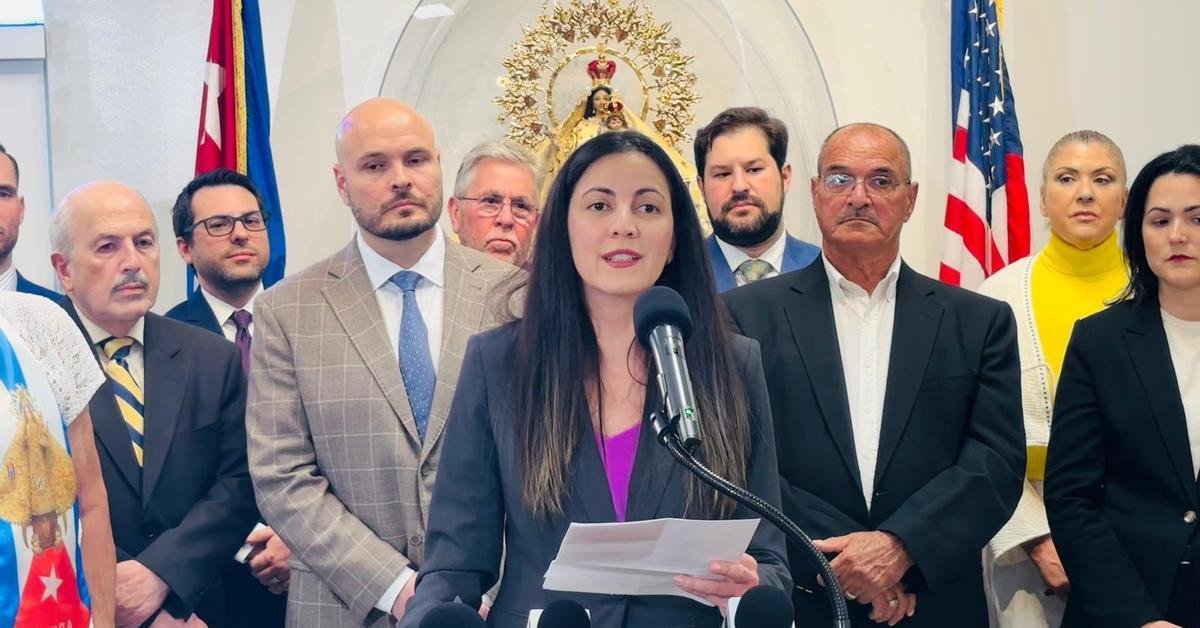
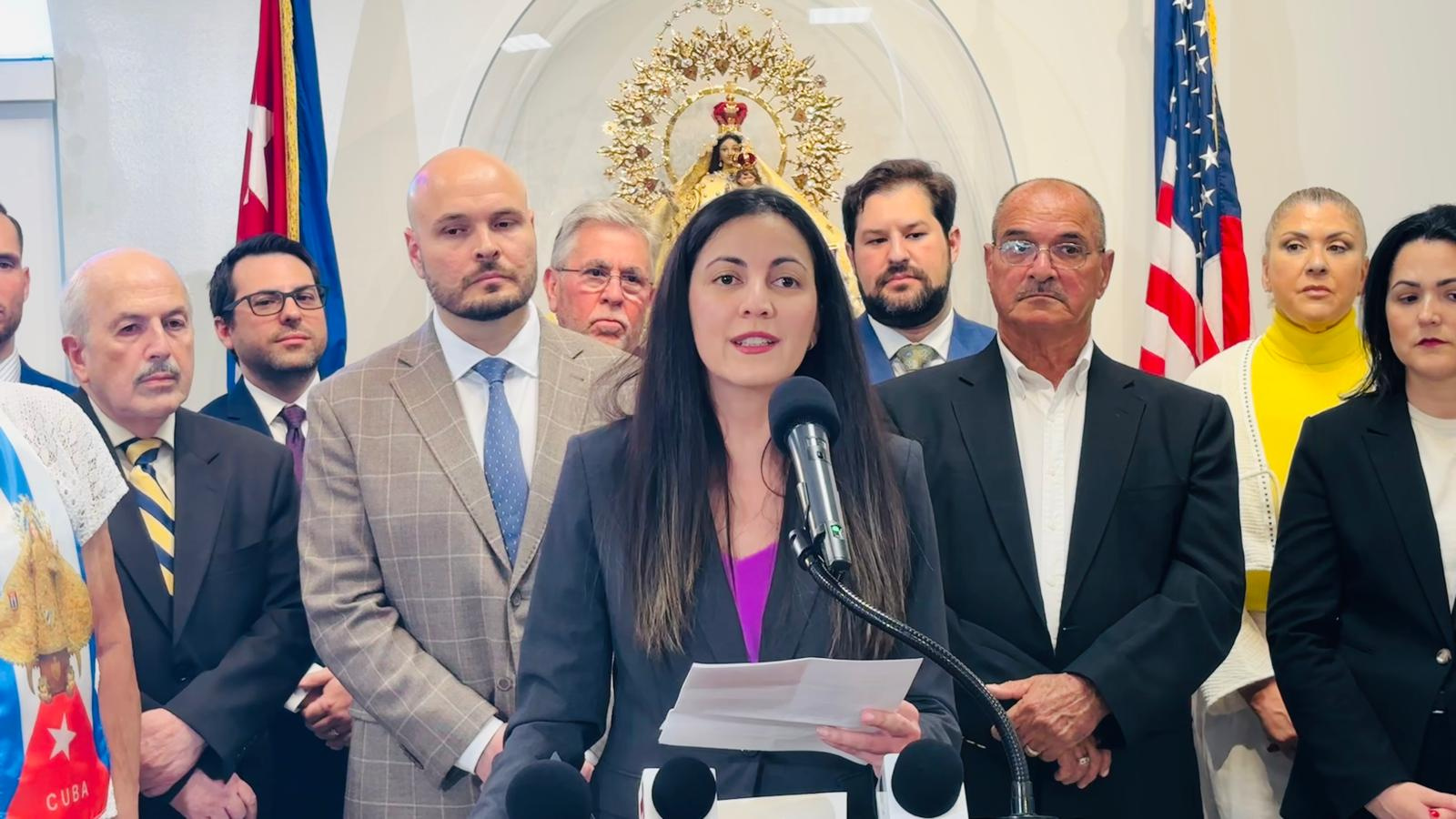
Havana/The opposition platform Release Agreement announced this Monday an alliance with the Cuban-American Lawyers Association (Caba) to recruit legal advisors from the Cuban legal community, both on the Island and in the diaspora, with the aim of establishing a roadmap for a transition in the country.
The axes of the agreement, which was presented at a press conference in Miami, are liberation, stabilization and reconstruction and democratization. According to Jordi Martínez-Cid, president of the Caba, the legal framework for a Transition Law was developed more than fifteen years ago, “together with various exile and dissident groups,” and they hope “it can be implemented on the Island.” “We are ready to provide the structural legal architecture necessary to guarantee a fair, orderly and permanent transition to democracy,” he assured.
In this regard, Rosa María Payá, leader of Cuba Decide and coordinator of the Liberation Agreement, said that this is a phase of “operational preparation.” “We are moving from a unified political roadmap to gathering the institutional management capacity to execute it, with volunteer lawyers from across the diaspora joining this effort through Caba,” he added.
“We are moving from a unified political roadmap to gathering the institutional management capacity to execute it, with volunteer lawyers”
Payá pointed out that they seek to answer one of the most important questions about the future of the country: what will happen the day after a political change. “The transition coalition and the future provisional government must be prepared from day one to ensure the release of political prisoners, dismantle the regime’s repressive apparatus, guarantee fundamental rights, manage the essential functions of the State and restore the rule of law in Cuba,” he detailed.
“We are building the legal foundations of a democratic Cuba, even before the regime changes. We are preparing the rules for the transition and the bases of the rule of law so that they are ready from day one,” said the coordinator of the Liberation Agreement.
Martínez-Cid added that “the Cuban-American Lawyers Association has spent decades defending human rights and the rule of law in our homeland,” which is why they decided to join the work of the Liberation Agreement. “By aligning our vast network of legal professionals, we are moving beyond activism toward concrete preparation.”
And he stated: “The rule of law does not arise spontaneously. It must be built. When the time for change arrives, the Cuban people must have solid legal tools to rebuild the country.”
Payá, meanwhile, stressed that “when a dictatorship collapses, it leaves a void. We are working so that Cubans do not find themselves in that void.”
The opposition leader also participated in the conference Jose Daniel Ferrerexiled in the United States after years of being a political prisoner in the country.
The founder of the Patriotic Union of Cuba (Unpacu) described the alliance as “transcendental” news for the future of Cuba and assured that no national reconstruction process will be possible without independent institutions and a solid legal system. “It is impossible to live in freedom if there is no independence of powers and respect for the rule of law,” he said.
The Liberation Agreement is a pact that unites a broad coalition of organizations from the Cuban opposition movement into a single coordinated force. It establishes a comprehensive transition framework and brings together concrete government capabilities to guide a transition to democracy that will culminate in Cuba’s first free, fair and multiparty elections in more than seventy years.
Caba, for its part, founded in 1974, is one of the most important voluntary associations of lawyers within the Cuban diaspora. Its members include judges, lawyers, paralegals and law students.