-
From:
Deutsche Welle

-
Translated by: Edona Binaku

- June 11, 2026 11:00 AM
- Share to:
The festival “Leipzig Bachfest 2026” honors the composer with a parade of hits. Over 7 thousand fans from 20 countries of the world cast their votes. But Bachu is also celebrated in many other countries around the globe. As in the Eurovision Song Contest, they could share the points: 12 points for the first choice, 10 for the second place and so on. However, the final ranking will be revealed only during the concerts
Johann Sebastian Bach’s repertoire includes magnificent cantatas with timpani and trumpets, but also more emotional works that touch the heart. To find out which are the most beloved cantatas of the worldwide Bach community, the festival conducted a large-scale survey. The fifty most voted cantatas of this “Bach hit parade” will be performed by well-known ensembles in this year’s edition from June 11 to 21.
Bach’s 50 Greatest Hits Parade
More than 7,000 fans from 20 countries voted for their favorite works from Johann Sebastian Bach’s liturgical cantatas. As in the Eurovision Song Contest, they could share the points: 12 points for the first choice, 10 for the second place and so on. However, the final ranking will be revealed only during the concerts.
Leipzig Bachfest 2026 artistic director Michael Maul revealed only a few details.
“I was surprised by the fact that the top ten did not necessarily include the grandest, loudest cantatas in major key, but those pieces that have a quiet and meditative character, where the text deals with existential issues.”
According to Mauli, this also shows why Bachu remains so important to people even today.
However, he added that popular cantatas such as “Lobet den Herrn” or “Nun kommt der Heiden Heiland” certainly have their place among the top 50.
Bach’s New Society as a model
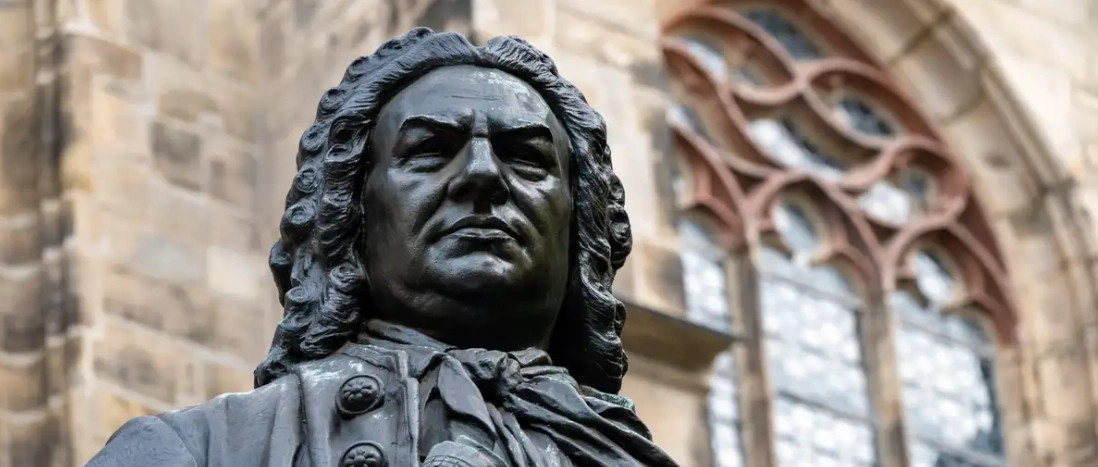
Johann Sebastian Bach worked as Thomaskantor (musical director of the church of St. Thomas) in Leipzig from 1723 until his death in 1750 and, among other things, conducted the famous choir of St. Thomas, which opens the Bach festival every year.
Leipzig is also the headquarters of the international organization “New Bach Society” (Neue Bachgesellschaft), whose mission includes preserving and promoting the music of the iconic composer.
Having this goal, in 1901 the idea was born to organize regular festivals in different cities of Germany, with the main focus on his liturgical music. Some of these cities then started organizing their own Bach festivals.
The concept of regular Bach festivals with a wide variety of concerts spread outside Germany as well. However, because the festivals could not always take place regularly – for example due to wars – the organization is celebrating its 100th Bach festival this year as part of “Leipzig Bachfest 2026”.
How did Bach festivals spread around the world?
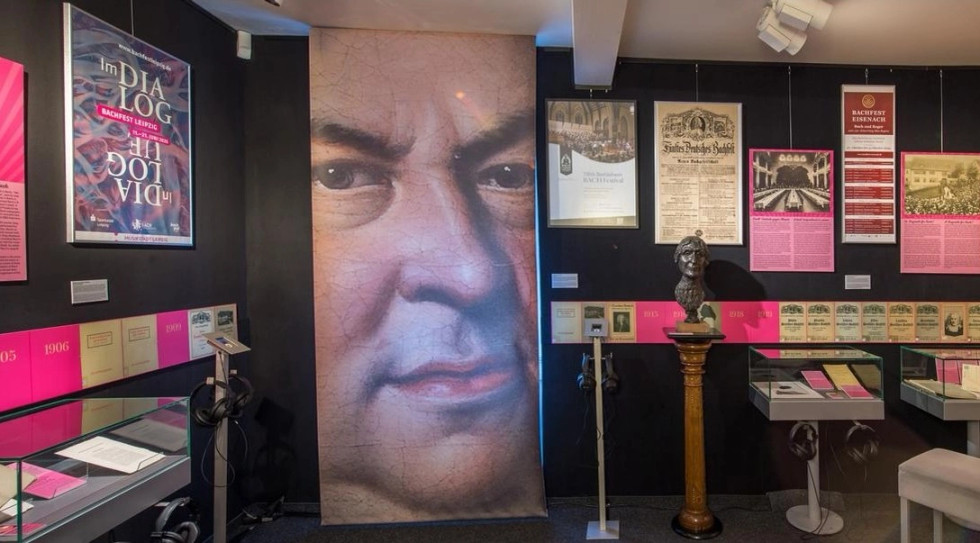
To mark the occasion, the director of the Bachhaus museum, Jörg Hansen, has curated the exhibition “Bach Festivals: A Phenomenon” in Eisenach, the city where Bach was born in 1685. Hansen and his team identified 82 festivals around the world that take place regularly or have been organized for a long period of time.
The historic city of Bethlehem in Pennsylvania, USA, has organized the largest number of Bach festivals to date, says Hansen: “Since 1912, they have organized 118 festivals.”
The newest festival was founded 10 years ago in Jerusalem, Israel, while the largest Bach festivals outside Germany take place in Malaysia and the US state of Oregon.
The exhibition at the “Bachhaus” presents historical objects such as programs, photographs, autographs, films and audio-recordings.
“We also have a showcase filled with souvenirs and program brochures, as well as the latest posters from 58 Bach festivals around the world,” said Hansen.
Who owns Bach?
The exhibit also serves as a history lesson, showing how Bach’s music was used for nefarious purposes by the Nazis during the Third Reich. Then there were disputes after World War II, when the two parts of divided Germany each claimed to consider Johann Sebastian Bach as part of their heritage.
“In communist East Germany, Bach was seen as a friend of the workers and peasants who rebelled against the authorities and the church,” explained Hansen.
In fact, Bach had disagreements with his employer, the church, but they had to do with his salary and the selection of boys for the Choir of St. Thomas.
In contrast, during the post-war economic boom in West Germany, Bach was seen as a commercial product, and international music stars and ensembles were hired for Bach festivals.
However, the international organization “New Bach Society” (Neue Bachgesellschaft) was allowed to organize its festivals every year, alternating the location between East and West.
“Church services were no longer allowed in the official program of Bach festivals”, Jörg Hansen said.
At Leipzig Bachfest 2026, Bach’s religious cantatas will be in the center of attention. Not only in the hit parade, but also under the direction of conductor and organist Ton Koopman with the “Family Choir”. In total, 122 people from 20 countries will come to Leipzig specifically to sing Bach’s cantatas.
This year’s artist-in-residence is Iranian-American harpsichordist Mahan Esfahani, and Bachu is his favorite composer. He is currently recording Bach’s complete harpsichord works for the Hyperion label and will perform pieces from the composer’s secular repertoire in seven prestigious harpsichord concerts during the Leipzig festival.
The festival “Leipzig Bachfest 2026”, with the theme “In dialogue”, takes place from June 11 to 21 in Leipzig. The exhibition “Bach Festivals: A Phenomenon” will remain open until November 1, 2026 at the “Bachhaus” museum in Eisenach.