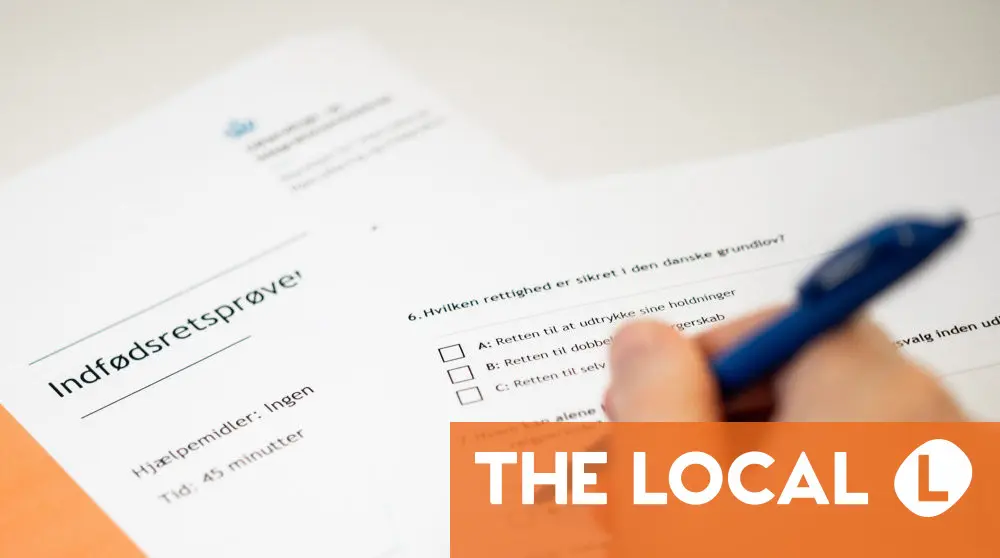
It’s now been exactly a year since the last foreign-born person became a Danish citizen, with two citizenship bills shelved in a row and no sign from the new government as to when the next one will go forward. We explain what’s going on.
On June 11th, 2025, the Danish parliament voted through a bill granting citizenship by naturalization to just over a thousand foreign-born people. Since then, no foreigners have become Danish citizens.
The government canceled the bill scheduled for October 2025with the parliament’s Office of Naturalization (Indfødsretskontoret) claiming parliament did not have time due to Denmark’s presidency of the EU.
The next bill – tabled in parliament in January 22nd this year – was canceled after the election was announced at the end of February.
This means the 2,055 prospective citizens listed in that bill are as a result still waiting – despite having fulfilled all the conditions for citizenship.
The Ministry of Immigration, meanwhile, in March said it was suspending the processing of citizenship applicationsciting the need to wait for clarity on what rules would apply after the election.
Denmark’s citizenship process seems to have completely ground to a halt.
How are citizenships awarded in Denmark?
In Denmark, citizenship can only be granted to foreign nationals via legal nationalisation. This means your application must be approved by a majority vote in parliament.
To do this, the government tables a bill including the names of all people whose application for citizenship have been found to meet the criteria for naturalization in the relevant period. This bill is always given the Danish title Proposal for a law on notification of the right to citizenshipwhich loosely translates to “Proposal for legally granting naturalisation”.
If the bill passes, then the people whose names are on the bill become citizens.
What has the government said about the next citizenship bill?
Nothing at all. There is no mention of citizenship in the government agreement between the four parties.
When the new Migration Minister Morten Bødskov was asked if the new government would liberalize immigration policy, he denied it.
“The immigration policy which the government is driving stands on the back of more than 100 tightening measures since 2019, when the Social Democrats came to power. This is the strictest immigration legislation ever. There hasn’t been any step to the left.”
He has said that he wants to wait until the report of the expert group the former government launched in September 2025 before deciding whether to push ahead with a plan to screen prospective Danish citizens for ‘anti-democratic values’.
This group is expected to report around the New Year.
Bødskov said he could not yet give a timetable as to when a new parliamentary agreement can be struck with the other parliamentary parties. He also has not said if he plans to resubmit the citizenship bill shelved at the end of February to parliament.
READ ALSO: Denmark’s unusual procedure for granting citizenship
So what needs to happen for a new naturalization bill to go before parliament?
It’s not clear.
It could be difficult to simply resubmit the expired citizenship bill from this spring, as the three then government parties that proposed it – the Social Democrats, Liberal Party and Moderates – no longer have their own majority.
It’s uncertain that the two new parties in the government, the Green Left party and the Social Liberal Party, will still support it, or indeed their support party the Red Green Alliance, on which they depend for their majority.
It may require a new parliamentary agreement on citizenship to push ahead as the Liberal Alliance and Conservative last year left the previous agreement.
“I cannot give a timetable for that at this time,” Bødskov said when asked when a new agreement could be made. “I will have quiet discussions with the parties in the Danish Parliament and hope that we can come to an agreement.”
The Local understands that the Ministry of Immigration will not restart the processing of citizenship until a new parliamentary agreement has been made.
One question is whether Bødskov will wait until he has received the conclusions of the expert group on screening before negotiating a new citizenship agreement with other parliamentary parties. Another is whether he will wait until such an agreement is in place before resubmitting this spring’s citizenship bill to parliament (or submitting a new one).
If he decides to wait until the screening report and a new parliamentary agreement, the 2,055 prospective citizens in the bill tabled in January could have at least another six months to wait.