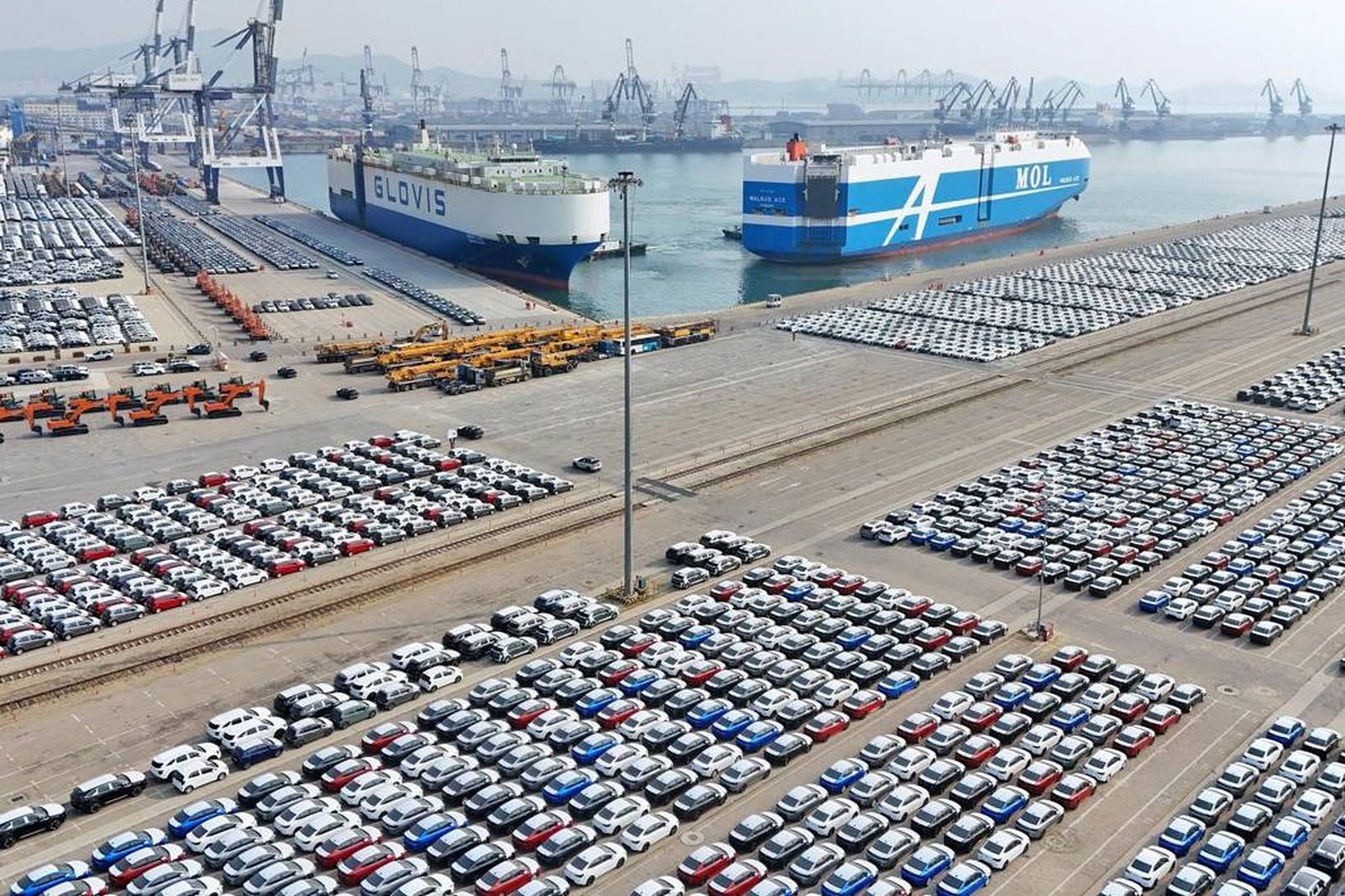
The Chinese electric car giant BYD is in talks with Stellantis, the manufacturer of Jeep, and other car manufacturers about the acquisition of their factories in the countries of the European Union. The talks are said to be part of the company’s international expansion.
Stellantis recently surprised investors with a 22 billion euro write-off on its electric car business, saying the company had overestimated demand for clean-energy vehicles.
“We are not only in talks with Stellantis, we are also talking to other companies,” Stella Li, BYD’s vice president of global operations, told the media over the weekend. “We are looking for any available factory in Europe because we want to use this excess capacity,” she said.
Less demand in China
BYD became the world’s best-selling electric car maker last year, but the company’s profits have shrunk due to weak domestic demand, which has led it to look for bigger markets abroad.
Automaker Stellantis announced earlier this month that it was considering selling an underutilized factory in Spain to its Chinese partner Leapmotor, which could save jobs in the short term while further bolstering Chinese automakers.
This is a question that all European car manufacturers face. The continent’s car market has never fully recovered from the contraction caused by the authorities’ restrictions on gatherings during the covid epidemic. The factories of car manufacturers on the continent thus operate on average only at half capacity.
They also face competition from Chinese automakers, whose rapid technological development and low production costs have won them over.
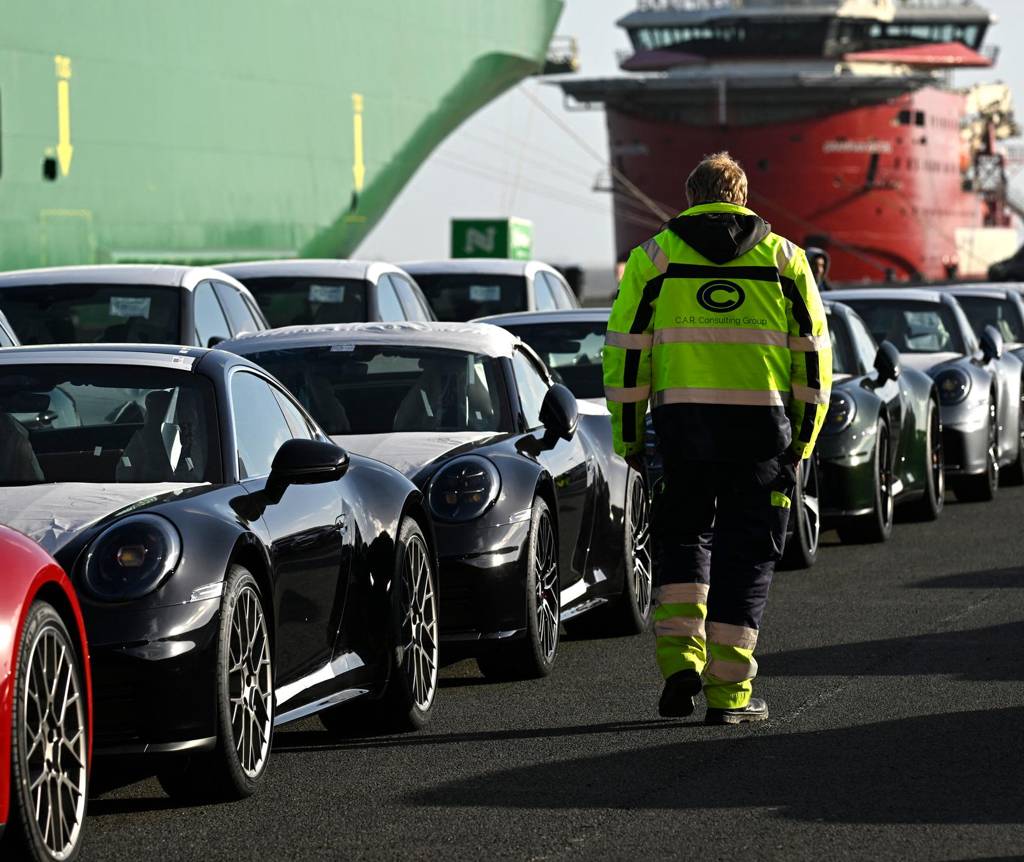
Brand new Porsches are waiting to leave the Volkswagen factory in Germany. The car giant is one of those tempted by what the Chinese manufacturers have to offer.
AFP/Ina Fassbender
Were almost unknown in Europe
As weak demand has increased competition in the Chinese domestic market, Chinese automakers are increasingly looking to Europe as the promised land.
Brands such as BYD, MG, Chery, Geely, Leapmotor, Jaecoo and Xpeng were virtually unknown in Europe three years ago.
Now they already account for nine percent of total sales in Europe and 14 percent of electric car sales, according to a summary by consulting firm Dataforce.
Tariffs and consumer incentives, to which only cars assembled in Europe are eligible, have still been an obstacle for Chinese automakers to gain market share in Europe.
Therefore, they are increasingly looking for ways to overcome these barriers by manufacturing in Europe, either by building factories or, even more simply, by buying them.
Bought a factory in Barcelona
Chery began this trend in 2023 by purchasing a factory that had previously belonged to Nissan in Barcelona, Spain, where the company now plans to produce 200,000 vehicles a year.
The same manufacturer said last month it would open a research and design center in Paris to work on the development of a small electric car for production in Europe for the domestic market.
Nissan, meanwhile, will consider selling its British plant in Sunderland – the last in Europe – to Chery or the Chinese company Dongfeng.
Stellantis, which makes Peugeot, Fiat and Jeep among others, became the first European carmaker to take the plunge when it announced it was considering selling part of its Villaverde plant in Madrid to Leapmotor, in which it owns a 51 percent stake.
Stellantis already has plans to open its factory in Zaragoza, Spain so that Leapmotor can soon produce a car there under its own brand.
An electric SUV sold under the Opel brand could also be produced in Zaragoza in collaboration with Leapmotor.
Marks the first time
And this is just the beginning: this German-Chinese car is to serve as a model for other Stellantis vehicles.
Some European cars already contain a number of Chinese components, such as Renault’s electric Twingo, which was also designed at Renault’s factory in China.
However, Stellantis’ announcement marks the first time that a European car manufacturer has so openly announced such a car manufacturing partnership with a Chinese partner. According to Bloomberg, Stellantis will not stop there.
The manufacturer is also said to be considering selling three factories – one in France, another in Germany and a third in Italy – to Chinese manufacturer Dongfeng, with which the two have had a long partnership.
A delegation from Dongfeng recently visited the factory in France, according to the AFP news agency, according to union representatives there.
Ford and Volkswagen too
Ford also confirmed on Thursday that the company was in talks with Chinese company Geely to sell part of a plant in Valencia, Spain. Geely, which also co-owns Renault factories in Brazil and South Korea, would produce a car for the European market.
The Chinese companies have also tempted the German giant Volkswagen.
CEO Oliver Blume recently said the company was exploring “opportunities for our Chinese cars in Europe or to open up partnerships, perhaps with our partners in China.”
Other options would be to sell factories to munitions manufacturers, he added. “The worst and most costly option is to close a plant,” Blume said.
The CEO of OPmobility, a French auto parts manufacturer, agrees. Selling European car plants to Chinese manufacturers would be “a smart move, rather than adding to oversupply,” said Felicie Burelle.
We must not give in
But “we must not give in to this siren song,” warns Bernard Jullien, an automotive expert at the University of Bordeaux.
“For manufacturers, suppliers, staff and local government officials, it is tempting to choose to sell to a Chinese entity rather than disappear,” he says.
“But this amounts to lending a helping hand to a dangerous competitor, here in the heart of Europe, by giving it a powerful incentive to enter our markets,” Jullien writes in an article on the website autoactu.com.
He sees this concession as the easy way out for a manufacturer like Stellantis, which has lost market share in Europe.
Since Chinese companies have taken the lead in the development of electric cars, he does not rule out that the company decides to outsource the electrification to its Chinese partners.
But this “who’s next to themselves” strategy ends up giving Chinese manufacturers a leg up while destroying European car manufacturing, Jullien writes.
Only the legislator can take action to prevent European car manufacturers from succumbing to this temptation.