I followed this advice.
Not direct advice, but a valuable suggestion from Peter de Vries: “I write when I’m inspired, and I see to it that I’m inspired at nine o’clock every morning.”
I would rather not have known that.
Alpine divorce, i.e. being left behind on the mountain by your partner in a dangerous situation, is something that also happened to me. The fact that this is apparently a widespread phenomenon only recently came to light. The name Alpine Divorce comes from a short story by Robert Barr – the fact that such perfidies occur more often in reality than in literature is a sad realization.
I still want to learn that.
To run a model household.
In a novel about my life there would be the following surprising twist.
Everything was prepared for their emigration to Monterey. Monterey, the place at the beginning of Big Sur, where she had always wanted to live, with the Pacific in mind, sea otters and whales. She had won a post-graduate scholarship to do her PhD in translation studies. But then two things happened: She received a literary prize. And she had fallen in love.
For me this is the most beautiful word in the German language.
I love topographical names: Crooknut tree. Beaver pile path. The Bärenlacke near Trübenbach.
A quote from my favorite poem.
“Do not go gentle into that good night, / Old age should burn and rave at close of day; / Rage, rage against the dying of the light.” It is probably Dylan Thomas’s most famous poem. Not giving in to weakness is a wonderful thought.
My parents did a good job.
When I was six years old I got a piano, an extremely expensive purchase at the time. No matter what adversities occurred and where savings had to be made, my piano lessons were sacrosanct throughout school. This constant, almost daily engagement with music was extremely important for my development as a writer.
I feel grown up because…
… I raised a child alone who says he had a wonderful childhood.
I used to be afraid of that and now I’m not.
I had a period of horrific claustrophobia that erupted while visiting a mine. I couldn’t take the subway for a long time.
That makes me weak.
Vegan Rewilding: The concept of returning large areas of land to nature – without killing animals, neither through hunting nor through the slaughter of farm animals – excites me very much. A pioneer is the Dunsany Nature Reserve in Ireland, which I definitely want to visit. After all the cathedrals, palaces and parking garages I’ve gotten to know, I’m really excited to see European nature as it might have been before humans colonized it.
That made my life easier.
To look at the full half of the glass instead of the empty one.
I would bet on that.
That I would lose any bet.
I don’t dare do that.
Drive a car. When I was driving, I was always tormented by ideas about what could happen. After several years, three cars and countless near-heart attacks, I gave up.
This is what I do when I can’t fall asleep.
Eat a slice of crispbread. Carbohydrates are a reliable sleep aid. Afterwards you have to brush your teeth again, which, because it’s boring, also contributes to your ability to sleep.
I would like that and I can’t afford it.
A house with a large garden on the edge of the Vienna Woods.
This is what I would do if my worst enemy slipped on a banana peel.
Saying to him: “Didn’t you learn anything from the Stan & Ollie movies, you Wappler?”
The world will perish because of this.
The climate catastrophe will not destroy the world, but humanity will.
This will save her.
Evolution will continue as before and hopefully in the next round it will not produce another species that destroys its own habitat.
Who else should answer this questionnaire?
All the people who read books on public transport instead of looking at their cell phones.
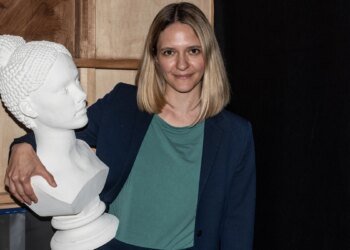
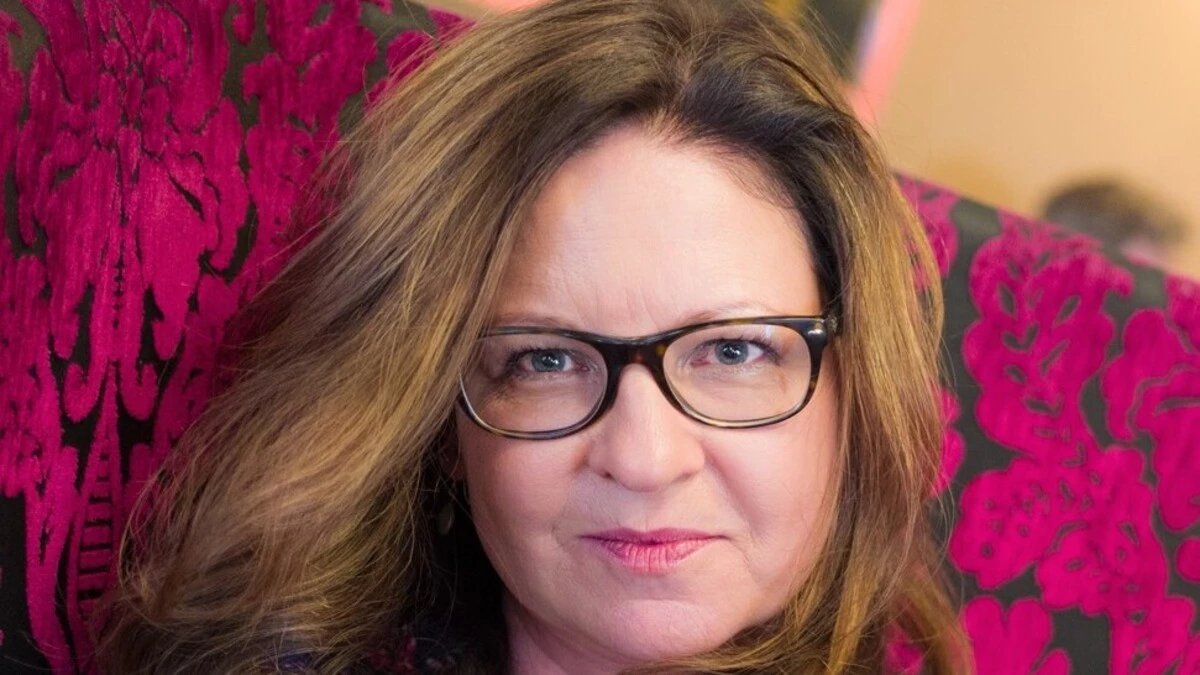
Bettina Balaka is a writer and translator in Vienna. She is an incredibly versatile author and writes novels, short stories, plays, poetry and volumes of essays and publishes books by forgotten writers. Her most recent novel, “The Wizard of Cobenzel,” was published by Haymon.
The “Nineteen Discrete Questions” take up an old tradition: around 1900, the “Proust questionnaire” circulated in French society, which is not called that because Marcel Proust invented it, but because he filled it out. We have come up with our own questions: The “Nineteen Discrete Questions” appear every Saturday. Click here for all editions