Al-Thawra Net/..
The Financial Times reported that US President Donald Trump’s war on Iran “led to a decline in US oil inventories to their lowest level in two decades,” as “his administration is reducing inventories to curb rising prices, while exporters take advantage of declining supplies from the Middle East.”
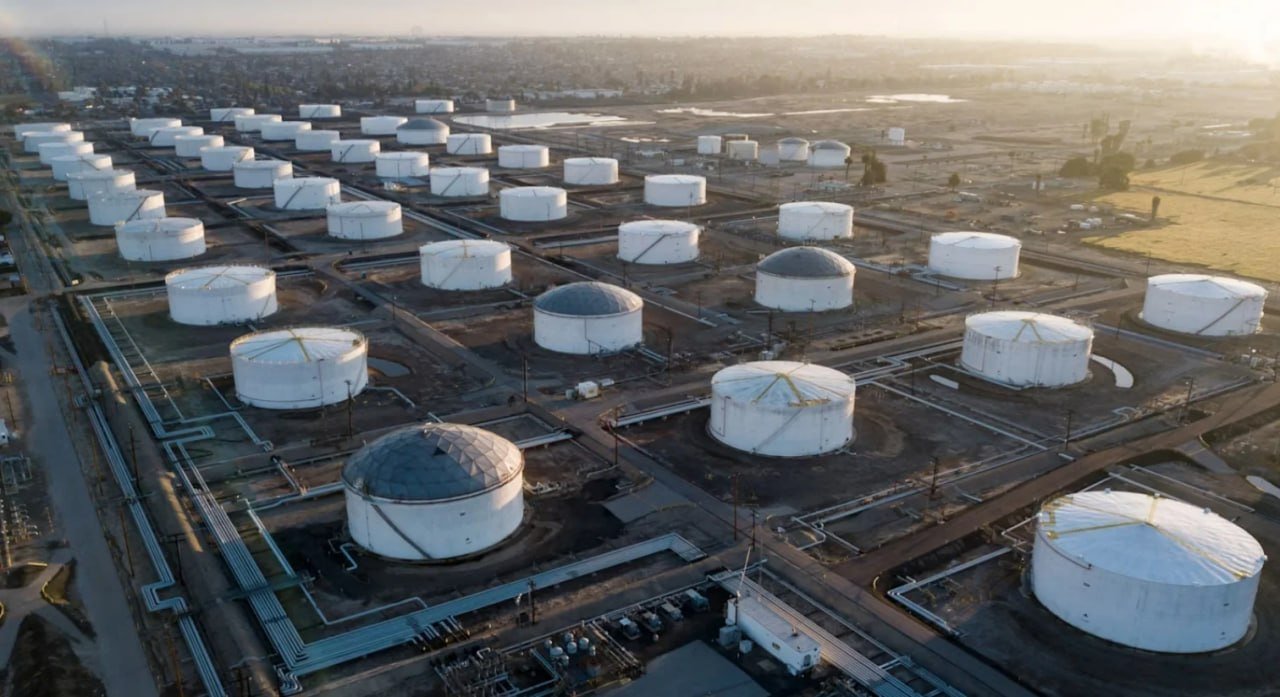
US government data, published yesterday, Wednesday, showed “a decrease in total inventories of crude oil and its derivatives, such as gasoline, by 10.6 million barrels last week, reaching 1.57 billion barrels, which is their lowest level since 2004.”
This sharp decline in oil inventories sparked new warnings from industry analysts, stating that oil prices are likely to rise sharply again within weeks, while the price of US oil rose by 2.6% in trading on Wednesday afternoon, reaching $96.17 per barrel.
In this context, Bob McNally, president of Rapidan Energy Group and a former advisor to the White House, warned that prices could reach $200 a barrel this summer, unless the Strait of Hormuz, the vital energy waterway in the Gulf, which was closed due to the war, is reopened to shipping traffic, as Iran imposed coordination through its competent authorities, in order to ensure the safety of traffic.
“This starts to increase the risk of spillovers into other sectors, the economy, the financial system,” McNally said. “It exposes vulnerabilities in the economy and the financial system in general.”
According to the newspaper, the decline in US oil stocks since the beginning of the war has offset the increase caused by the shale oil revolution, which made the United States the largest oil producer in the world and a major exporter of it.
Last week’s decline was due to a decline in crude oil inventories at companies and governments by 16 million barrels, in addition to an increase in exports to Asia and Europe, as traders rushed to compensate for the shortfall in supplies from the Middle East.
US crude oil shipments jumped from 4.4 million barrels per day to 5.8 million barrels per day last week, which exceeds the production of many OPEC countries, continuing a pattern of sharp increases in exports since the beginning of the war, according to the Energy Information Administration.
This sharp rise in oil prices highlighted the critical situation of global oil supplies as a result of the almost complete closure of the Strait of Hormuz, the waterway between Iran and Oman, through which a fifth of the world’s oil supplies, amounting to about 100 million barrels per day, passed before the war.
In this context, Edward Hayden-Privett, an analyst at “The Officials” company, affiliated with the “Onyx Capital” group, said: “The United States is acting as a last resort for global oil markets, as it works to stabilize them and provide a reserve to compensate for the shortage of supplies in the Middle East.”
But he warned that the United States’ ability to absorb the global oil shock is limited, pointing to increased withdrawals from the country’s strategic petroleum reserve, which the Joe Biden administration also resorted to to reduce prices.
“As this reserve diminishes, it becomes a source of pressure rather than a source of reassurance,” Hayden-Privett added.
This comes as the United States released about 50 million barrels of crude oil from its strategic reserves, and authorized the withdrawal of another 172 million barrels to curb the rapid rise in crude oil and gasoline prices.
Oil prices have gradually declined in recent weeks with Trump announcing that he is close to reaching a peace agreement with Iran, but the escalations witnessed in recent days have weakened these hopes.
Analysts warned that the continued closure of the Strait would raise prices again, in light of the decline in US and global stocks.
A new rise in crude oil prices would also lead to higher fuel prices during the peak driving season in the United States, increasing political pressure on Trump ahead of the midterm elections in November.
American voters expressed their anger at the president’s handling of the economy and inflation, according to a recent poll conducted by the Financial Times.
Gasoline prices in the United States last week averaged $4.44 per gallon, according to the Energy Information Administration, a modest decline in recent weeks but up about 50% since before the war. Trump expects prices to fall sharply when the war ends.
Analysts said that global traders competing for oil will continue to seek American supplies to fill the shortage caused by the war, increasing pressure on American inventories.